An Elevator Lift is more than a moving cabin inside a building. It is a carefully coordinated transport system that carries people or goods between different levels. Its visible parts include the car, doors, buttons, and landing indicators. Behind them, motors, ropes, rails, brakes, sensors, and control software work together.
“The elevator is the most commonly used form of mass transportation in the world,” says Dr. Lee Gray, an elevator historian and professor at the University of North Carolina at Charlotte. His observation gives this everyday machine a wider meaning. Millions of passengers depend on elevators daily, often without noticing the engineering above the ceiling or below the floor.
This guide explains what an Elevator Lift is and how it works in practical terms. It follows the journey of a lift from a button press to a controlled stop. You will see how traction systems use ropes and counterweights, while hydraulic models rely on fluid pressure. Safety systems matter just as much. Overspeed governors, emergency brakes, door interlocks, and backup controls reduce risks when something goes wrong.
The explanation is not perfect. Designs differ between buildings, climates, loads, and maintenance conditions. A lift in a quiet home may operate very differently from one in a crowded hospital. Small details matter. A delayed door sensor can affect the entire ride. Understanding these differences makes elevator performance easier to evaluate, maintain, and improve.
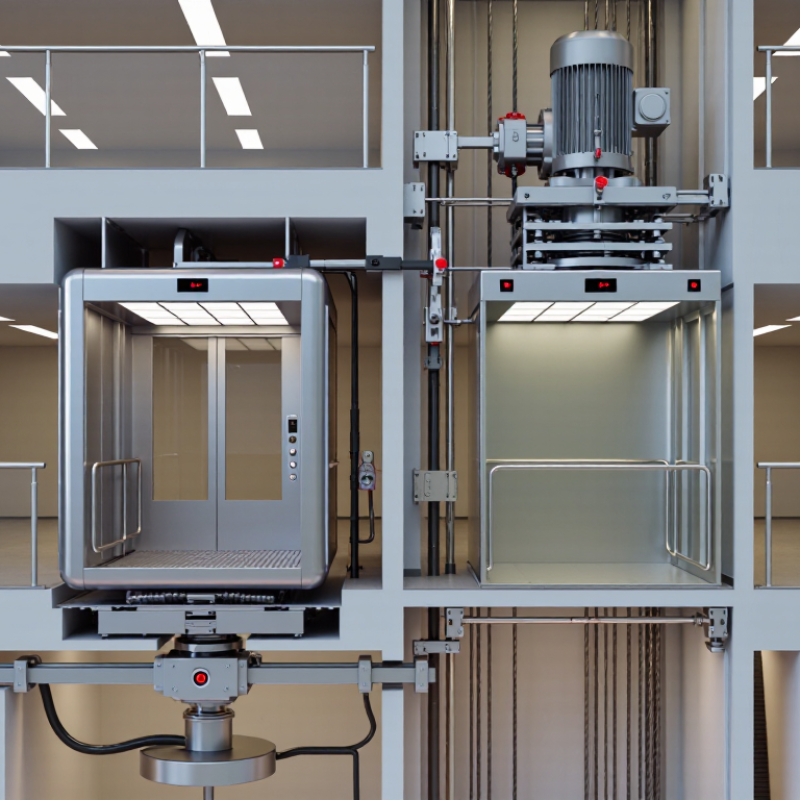
An elevator lift is a powered platform or cabin that moves people or goods between building levels. In everyday English, “elevator” and “lift” usually mean the same machine. The wording is slightly redundant, but it helps readers recognize both terms. A typical lift includes a cabin, guide rails, doors, a motor, and a control system. Some models use ropes and counterweights, while others use hydraulic pressure to move the cabin.
Here is the basic process. When a passenger selects a floor, sensors send the request to the controller. The motor then moves the cabin along fixed rails with carefully managed speed. The doors remain locked during travel and open only when the cabin reaches the landing accurately. Brakes, door sensors, emergency communication, and backup systems add important protection. Small details matter, such as a level floor gap or a delayed door signal.
Not every lift works identically. Low-rise buildings may use hydraulic equipment, while taller structures often use traction systems. A lift can also serve hospitals, warehouses, or private homes, with different cabin sizes and controls. From practical maintenance experience, unusual noise, uneven stopping, or repeated door reopening should not be ignored. These signs may seem minor. They are not always minor. Qualified technicians should inspect the system according to local safety requirements.
An elevator lift is a coordinated machine, not simply a moving cabin. The car carries passengers inside a vertical hoistway. Guide rails keep it aligned, while steel ropes connect it to a drive sheave and counterweight. The motor turns the sheave, raising or lowering the car with controlled traction. The counterweight balances much of the car’s load and reduces motor demand.
The controller acts as the lift’s decision center. It receives calls, checks position, and regulates acceleration, speed, and floor leveling. Door operators open and close the landing and car doors. Mechanical brakes hold the car when it stops. A governor monitors overspeed, while safety gear can grip the guide rails during a serious fault. Buffers sit at the bottom of the hoistway. They are a final protective layer.
The system also consumes meaningful energy. The U.S. Department of Energy’s Building Technologies Office reports that elevators can use about 2–10% of a commercial building’s electricity, depending on traffic and equipment. ISO 25745-2 measures elevator energy performance through movement, standby, and loading conditions. That matters in daily operation. A lightly loaded car still needs lighting, controls, ventilation, and standby power. The diagram looks tidy. Real buildings are not. Door timing, passenger habits, temperature, and maintenance can change performance quickly. A neglected guide rail may increase friction, noise, and energy use before passengers notice.
| No. | Main Component | Category | Primary Function | How It Works | Typical Materials or Features | Safety or Performance Role |
|---|---|---|---|---|---|---|
| 1 | Elevator Car | Passenger Compartment | Carries passengers, goods, or equipment between floors. | The car moves vertically inside the hoistway after receiving a travel command from the control system. | Structural metal frame, enclosed cabin, doors, flooring, lighting, ventilation, and operating buttons. | Provides a stable, enclosed, and accessible space for occupants and loads. |
| 2 | Hoistway | Building Structure | Provides the vertical path in which the elevator car and counterweight travel. | Guide rails and landing entrances are installed within the enclosed shaft. | Reinforced concrete, structural steel, guide rails, buffers, and landing-door assemblies. | Separates moving equipment from the building and helps prevent unauthorized access. |
| 3 | Traction Motor | Drive System | Supplies the mechanical power needed to move the elevator. | In a traction elevator, the motor rotates a sheave that moves the hoisting ropes. Speed is regulated by a drive controller. | Electric motor, traction sheave, bearings, and a variable-frequency drive in many modern systems. | Controls lifting force, travel speed, acceleration, and stopping accuracy. |
| 4 | Hoisting Ropes or Belts | Suspension System | Connects the elevator car and counterweight in a traction system. | The ropes or belts pass over the traction sheave; the sheave movement raises one side while lowering the other. | Steel wire ropes or engineered flat belts designed for repeated bending and high tensile loads. | Transfers lifting force and supports the car during normal operation. |
| 5 | Counterweight | Balance System | Balances much of the elevator car's weight and part of its rated load. | It moves in the opposite direction to the car, reducing the force required from the motor. | Metal frame containing stacked weights, commonly made from cast iron or steel. | Improves energy efficiency and reduces the required motor capacity. |
| 6 | Guide Rails | Guidance System | Guide the car and counterweight along a straight vertical path. | Roller or sliding guide shoes attached to the car and counterweight move along fixed rails. | Precisely aligned steel rails with brackets secured to the hoistway structure. | Limits lateral movement and helps maintain smooth, controlled travel. |
| 7 | Controller | Control System | Coordinates elevator movement, door operation, calls, and floor selection. | It processes signals from landing buttons, car controls, sensors, and safety circuits before sending commands to the drive and doors. | Microprocessor-based control cabinet, relays, circuit boards, and communication interfaces. | Manages operating logic, dispatching, leveling, fault detection, and emergency responses. |
| 8 | Variable-Frequency Drive | Motor Control | Regulates the motor's speed and torque. | It changes the frequency and voltage supplied to the motor to provide controlled acceleration, travel, and deceleration. | Power electronics, inverter circuits, cooling components, and monitoring functions. | Improves ride comfort, stopping precision, and electrical efficiency. |
| 9 | Elevator Doors | Access System | Allow passengers to enter and leave the car at each served floor. | Car doors and landing doors open and close through a door operator after the car reaches the correct floor. | Sliding metal panels, door operator, tracks, rollers, interlocks, and protective sensors. | Prevents travel while doors are open and helps protect passengers from closing-door contact. |
| 10 | Door Interlocks | Safety Device | Ensure that landing doors are closed and locked before movement begins. | An electrical safety circuit verifies the locked condition of each landing door. | Mechanical locking mechanism with electrical contacts and monitoring circuitry. | Prevents the elevator from operating with an unsecured landing entrance. |
| 11 | Overspeed Governor | Safety Device | Detects excessive downward or upward car speed. | If the car exceeds a preset speed, the governor activates a safety mechanism that can engage the car safety gear. | Speed-sensing governor, governor rope, tension pulley, and mechanical trip mechanism. | Provides protection against uncontrolled overspeed conditions. |
| 12 | Safety Gear | Emergency Protection | Stops and holds the elevator car on the guide rails during a serious overspeed event. | When triggered by the governor, wedge or gripping devices engage the guide rails and bring the car to a controlled stop. | Mechanical gripping assemblies mounted beneath or beside the car frame. | Acts as a final protective system against certain uncontrolled car movements. |
| 13 | Buffers | Pit Safety Equipment | Reduce impact if the car or counterweight travels beyond its normal lower limit. | Buffers absorb kinetic energy at the bottom of the hoistway and help limit impact forces. | Spring, polyurethane, or oil buffers selected according to elevator speed and design requirements. | Provides an additional layer of protection at the bottom of the hoistway. |
| 14 | Position Sensors | Monitoring System | Identify the car's location, speed, and floor position. | Sensors send position information to the controller for leveling, stopping, and door-zone confirmation. | Magnetic, optical, encoder-based, or other electronic sensing devices. | Supports accurate floor leveling and reliable automatic operation. |
| 15 | Emergency Communication System | Passenger Assistance | Allows passengers to request help if the elevator stops unexpectedly. | An emergency alarm, two-way communication device, or equivalent system connects the car to assistance personnel. | Alarm button, speaker, microphone, backup power, and communication equipment. | Provides a reliable means of communication during entrapment or equipment failure. |
| 16 | Power Supply and Emergency Lighting | Electrical Support | Supplies electricity for normal operation and essential functions during a power interruption. | The main supply powers the drive and controls; backup power can operate emergency lighting, alarms, or designated systems. | Electrical disconnects, protective devices, batteries, and emergency lighting units. | Maintains essential visibility and communication when normal power is unavailable. |
| 17 | Hydraulic Pump and Cylinder | Alternative Drive System | Raises and lowers an elevator car in a hydraulic elevator. | A pump forces hydraulic fluid into a cylinder to extend a piston; releasing fluid allows the car to descend in a controlled manner. | Hydraulic pump, reservoir, valves, cylinder, piston, and hydraulic fluid. | Provides a practical lifting method for certain low- and mid-rise applications. |
An elevator lift is a guided cabin that carries people or goods between floors. Most modern systems use traction technology. An electric motor turns a sheave, while steel ropes move the cabin and counterweight in opposite directions. The counterweight reduces the motor’s workload. The cabin travels inside rigid guide rails, stopping level with the floor.
The simplest explanation is useful, but incomplete. A controller reads the selected floor, checks door locks, and adjusts motor speed through several stages. The lift accelerates gently, runs quickly, then slows before arrival. Sensors measure position many times during each trip. Brakes hold the cabin when it stops. According to CIBSE Guide D, building transport design must consider traffic flow, waiting time, capacity, and safety. The U.S. Department of Energy also reports that elevators may use roughly 2–10% of a commercial building’s electricity, depending on building size and operation. That range varies, and it should not be treated as a fixed rule.
Tips:
Watch the floor display and listen for unusual scraping, repeated jolts, or doors that reopen without reason. Report these signs to the building manager. Do not force the doors. Keep bags clear of the threshold, where small gaps can catch wheels or footwear. Regular inspections matter, yet maintenance quality can still differ between buildings. A clean cabin does not prove that every mechanical part is performing perfectly.
An elevator lift moves people between floors through a coordinated control system. When you press a hall button, the controller records your direction and checks nearby requests. Inside the shaft, a traction motor turns a sheave. Steel ropes move the car and its counterweight in opposite directions. The counterweight reduces the motor’s workload and helps control energy use. Guide rails keep the car steady, even during acceleration and braking.
Car buttons send floor commands to the controller. Door sensors confirm that the entrance is clear before movement begins. If a door remains open, the lift waits. If a sensor detects an obstruction, the doors reopen. The controller also monitors speed, position, load, and floor level. Brakes engage when the car stops. Safety circuits can prevent travel when a fault appears. In real buildings, response times may vary during busy periods. That delay is normal, but it can feel confusing.
Tips: Stand clear of closing doors. Press your floor button once. Avoid forcing doors apart. Keep heavy loads balanced inside the car. If the lift stops unexpectedly, use the alarm or communication control and follow the displayed instructions. Do not attempt to open the doors yourself. Regular inspections improve reliability, although no mechanical system is completely free from wear. Technicians check ropes, brakes, sensors, door locks, and emergency systems because small faults can become serious.
An elevator lift moves a car between floors using traction, hydraulic pressure, or a compact machine-room-less system. Traction lifts use ropes, sheaves, and counterweights. Hydraulic lifts push the car upward with a piston. The choice depends on building height, traffic, space, and maintenance conditions. The Elevator Escalator Safety Foundation estimates that elevators support about 18 billion passenger trips annually in the United States. That figure shows why dependable protection matters.
Modern lifts include door interlocks, overspeed governors, safety brakes, buffers, alarms, emergency lighting, and load sensors. Door interlocks prevent movement while the landing doors remain open. The governor detects excessive speed and activates mechanical braking. Buffers absorb energy if the car travels beyond its normal limit. ASME A17.1 safety standards address these systems, while local authorities usually require periodic inspections. The U.S. Bureau of Labor Statistics also identifies falls, electrical contact, and caught-in hazards as serious risks for elevator installation and repair workers.
Small details matter.
A clean door track can reduce closing problems, but it cannot replace professional testing. Hydraulic models may suit low-rise buildings, although oil leaks and temperature changes require attention. Traction models often serve taller buildings efficiently, yet rope wear and brake adjustment need careful monitoring. Machine-room-less lifts save space, but cramped service areas can complicate maintenance. No safety feature is perfect. A neglected inspection schedule can weaken even a well-designed system, and that uncomfortable point deserves more attention from building owners.
Typical Rated Speed Ranges of Common Elevator Lift Types
Hydraulic elevators usually operate at lower speeds and are commonly used in low-rise buildings. Traction elevators use ropes, sheaves, and counterweights, allowing higher speeds for mid-rise and high-rise applications. Machine-room-less traction elevators place the lifting machine inside the hoistway and are often selected where building space is limited. Actual rated speeds vary according to building height, capacity, travel distance, and local safety requirements. Common safety features include door interlocks, electromagnetic brakes, overspeed governors, emergency alarms, and buffers.