7 Best Porch Lifts for Home Accessibility in 2026?
A porch should be an everyday entrance, not a barrier that makes someone wait for help. A well-chosen Porch Lift can bridge steps and support more independent access for a wheelchair user or someone with limited mobility. Yet the right choice depends on the home, the user, and the space available. There is no universal winner.
This guide to the 7 Best Porch Lifts for Home Accessibility in 2026 looks at practical details that matter beyond a product’s headline features. These include platform size, weight capacity, travel height, controls, safety gates, weather protection, and backup options. Installation needs and ongoing service deserve attention, too. Small details count. A narrow landing or an outward-swinging door can change what will fit safely.
Product specifications are a starting point, not a guarantee of suitability. Before buying, measure the entry and compare the lift’s requirements with the site. Confirm current ratings and installation guidance directly with the manufacturer or a qualified installer. Ask about maintenance, warranty coverage, and what happens during a power interruption. This comparison can help narrow the choices, but it cannot replace an on-site assessment. That distinction is easy to overlook. A lift that looks ideal online may not suit a particular porch, and that is worth acknowledging.
Understanding Porch Lifts and Their Role in Home Accessibility
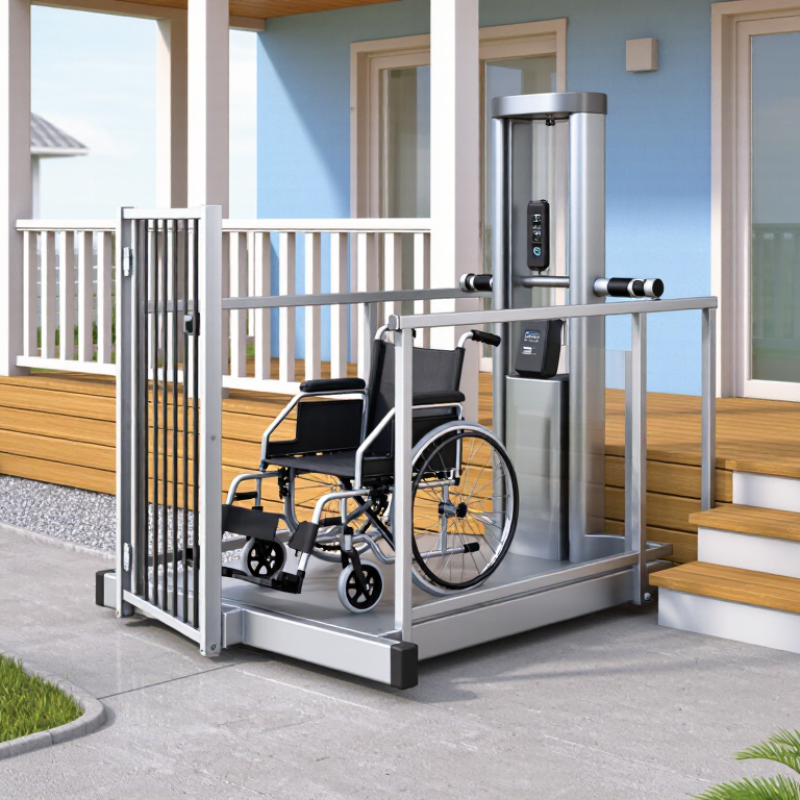
A porch lift is a powered platform that moves a person, wheelchair, or mobility scooter between ground level and an elevated porch. Unlike a stairlift, it carries the user vertically without requiring a transfer out of a wheelchair. That distinction matters. A lift may make a familiar entrance usable again, but it does not automatically solve every access problem. The route to the platform, doorway width, and porch landing still need careful assessment.
The need is not unusual. AARP’s 2024 Home and Community Preferences Survey found that 75% of adults aged 50 and older want to remain in their current homes as long as possible. A porch lift can support that goal by reducing the effort and risk of negotiating outdoor steps. Picture a wheelchair user arriving after rain: a stable platform, clear approach, and non-slip landing become practical necessities, not extras.
Outdoor conditions deserve attention. Ask a qualified accessibility professional to assess drainage, wind exposure, power access, platform size, and emergency lowering options before installation. Check that controls are reachable and that gates close securely. Maintenance matters, too; leaves, ice, and worn components can affect safe operation. Even a well-planned lift may feel exposed in bad weather. A canopy can help, but it cannot replace routine inspection or a clear, unobstructed route.
How to Choose a Porch Lift for Your Home in 2026
Choosing a porch lift starts with the route, not the catalog. Measure the rise from ground level to the porch, then check the clear space at both landings. A tape measure can reveal an awkward gate swing or a narrow doorway before installation begins. A neat brochure measurement is not the same as a usable landing.
Match the lift’s platform size and rated capacity to the person, mobility device, and everyday items they carry. Check whether a wheelchair can turn safely at the top, and whether the approach stays firm after rain. Ask how the lift handles power loss, outdoor exposure, routine servicing, and emergency lowering. ASME A18.1 provides safety requirements for platform lifts; ask the installer how the selected unit and installation meet applicable requirements. Details matter.
Think about future use, too. The 2024 AARP Home and Community Preferences Survey found that 75% of adults aged 50 and older want to remain in their homes as long as possible. That goal may involve more than a lift. A wider landing or a better-lit path could make daily entry easier. Compare written site assessments, not just prices, and ask what maintenance visits include. I would recheck every measurement with the installer; small oversights are easy to miss.
How to Choose a Porch Lift for Your Home in 2026
Ramp Run Needed for Different Porch Heights
At a 1:12 slope benchmark, each inch of rise requires 12 inches of ramp run. The bars show sloped run only—not landings, turning areas, or approach space. A vertical platform lift may be worth considering when a ramp’s footprint is impractical. Compare lift travel, platform size, rated capacity, weather protection, and local code requirements before choosing.
The 1:12 maximum slope is an ADA standard where applicable; requirements for a particular home can vary.
Seven Porch Lift Options Compared for Home Accessibility
Porch lifts differ in travel height, footprint, weather protection, and how riders enter and exit. A low-rise open platform can suit a short porch step, while a taller enclosed lift offers more protection on longer outdoor travel. A compact model may preserve yard space, but its platform can feel tight with a wheelchair and caregiver nearby. Measure the device, not just the doorway.
Other useful comparisons include side-entry and straight-through layouts, which affect where gates and landings must sit. Weather-resistant controls and covers can help with rain, though they do not remove the need for routine inspection. A battery backup may help during a power outage; ask how often it needs testing. For a stair approach, an inclined platform lift may fit where a vertical lift cannot, but the stairs must accommodate its track and parked platform. That matters.
Before choosing among seven options, check the user’s mobility device, total travel distance, landing space, and rated load. Ask an experienced accessibility professional to assess drainage, clearances, gate placement, and the porch structure. Requirements vary by location, so confirm applicable safety rules with the installer or local authority. Measure carefully. A tidy brochure cannot show whether a lift will feel cramped in your actual entryway. And real porches are rarely perfectly level.
Comparing Lift Capacity, Platform Size, and Outdoor Durability
A porch lift’s rated capacity should cover the rider, mobility device, and anything carried on the trip. Check the manufacturer’s stated limit rather than estimating from appearance. I would leave a practical margin, especially when equipment or daily needs may change. A little margin matters. Capacity alone, though, does not tell you whether the ride will feel secure.
Compare platform dimensions with the wheelchair or scooter, including footrests and controls. Check the entry and exit space, door swing, and available room at both landings. Measure the whole route, not just the deck. A platform that technically fits can still make turning awkward. Small details matter. An experienced installer can assess site measurements and explain how the lift will meet the porch and walkway.
For outdoor use, look for specifications covering weather exposure, corrosion resistance, drainage, and protected controls. Rain finds weak seams. Ask how the lift should be cleaned and inspected, and whether its cover or finish suits your local conditions. Snow, standing water, and salty air can change maintenance needs. I would not assume that “outdoor” means maintenance-free; that wording deserves a closer look. Check the installation guidance and service requirements before choosing.
Installation, Safety Features, and Ongoing Maintenance
A porch lift works well only when its location suits the home. A qualified installer should check the porch structure, ground stability, drainage, and available space before choosing a model. The upper landing needs a secure gate and enough room for a wheelchair to turn safely. A site visit can reveal obstacles that measurements alone miss.
Safety features deserve close attention. Look for interlocked gates, a non-slip platform, emergency stop controls, and obstruction sensors. Confirm the lift’s rated capacity against the user, mobility device, and any carried items. Ask how the lift behaves during a power failure, and make sure controls are reachable from both levels. Details matter. A feature list is not a substitute for a hands-on demonstration.
Maintenance should follow the manufacturer’s schedule and the conditions at the home. Leaves, grit, and standing water can interfere with moving parts, especially after storms. Keep the travel path clear, and check gates, controls, and visible fasteners regularly. Small checks help. Arrange professional servicing if the lift makes new noises, moves unevenly, or shows damaged wiring. Even a careful plan can miss something; keep a simple service log and revisit it after the first season.