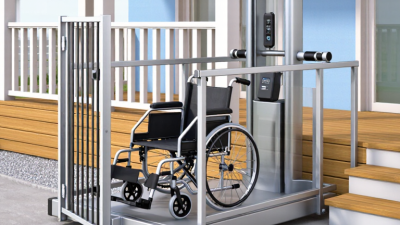
Choosing the best Outdoor Handicap Lift is not simply a matter of comparing prices. The right system must fit the building, the user, and the outdoor environment. A family may need a vertical platform lift beside three porch steps. Another household may require an inclined lift along a long staircase. The difference matters.
Ronald Mace, a pioneer of universal design, described the goal clearly: “The design of products and environments to be usable by all people, to the greatest extent possible, without the need for adaptation or specialized design.” This principle remains valuable when evaluating an Outdoor Handicap Lift. Good access should feel stable, dignified, and easy to operate. It should not look like a temporary obstacle beside the entrance.
This guide examines platform size, weight capacity, weather protection, control placement, backup power, and maintenance access. It also considers practical details, such as standing water near the base, winter ice, exposed wiring, and narrow landing spaces. Those details often decide whether a lift performs well after installation. A quiet motor is helpful. A reliable emergency stop is essential.
No model is perfect. A compact lift may save space but limit wheelchair movement. A powerful unit may require stronger structural support. A lower price can hide demanding maintenance. Personal experience also teaches an uncomfortable lesson: brochures rarely show every installation challenge. Therefore, the best Outdoor Handicap Lift is the safest suitable match for the property, user, climate, and long-term care plan—not automatically the most expensive model.
Outdoor access equipment should match the site, user, and available space. The CDC reports that about 27% of U.S. adults have a disability. Globally, the World Health Organization estimates that 1.3 billion people experience significant disability. These figures show why reliable entry solutions matter.
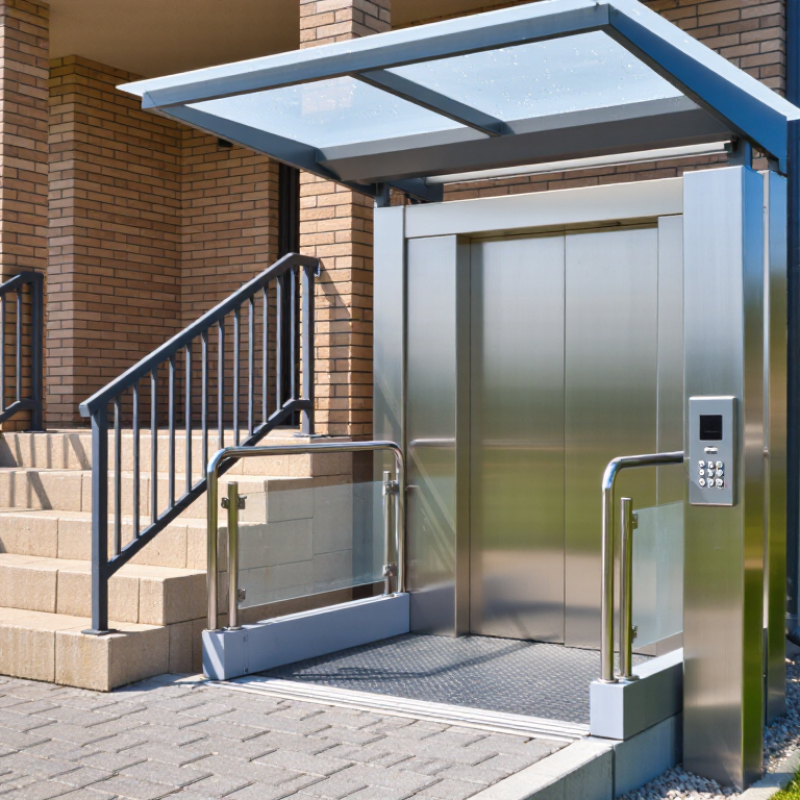
A vertical platform lift moves a wheelchair straight between levels. It suits porches, decks, and short outdoor rises. It needs a stable landing, weather protection, drainage, and safe controls.
An inclined platform lift follows a staircase. It can preserve existing stairs, but the platform requires clear travel space.
Ramps remain simple and familiar. However, their slope, length, turning areas, and handrails must follow applicable accessibility standards, including the 2010 ADA Standards where relevant.
There is no perfect choice. A ramp may look affordable, yet a long rise can consume valuable yard space. A vertical lift may fit better, but exposed components need regular inspection after rain, snow, and freezing temperatures. An inclined lift can help on narrow stairways, though users may feel less independent during transfers.
The U.S. Access Board emphasizes clear floor space, maneuvering room, and safe accessibility routes. Measure the wheelchair, not just the doorway. Check the landing twice.
A professional site assessment should review slope, surface grip, drainage, power backup, emergency lowering, and caregiver access. Small oversights can become daily obstacles.
Choosing the best outdoor handicap lift starts with usable capacity, not the advertised number. A 600-pound lift may support a 250-pound user, a 300-pound mobility scooter, and 30 pounds of equipment. That leaves only 20 pounds of margin. A 750-pound model provides 170 pounds in the same situation. Weatherproof controls, drainage, anti-slip flooring, and a backup lowering system also matter outdoors.
The WHO and UNICEF Global Report on Assistive Technology (2022) estimates that more than 2.5 billion people need assistive products worldwide. That demand includes wheelchairs and mobility scooters with widely different dimensions and weights. Measure the device carefully. Add the user, batteries, shopping bags, and seasonal clothing. Do not rely on a brochure’s capacity alone.
For many heavier scooters, 750 pounds is the more practical rating. Smaller power chairs may work safely within 600 pounds, but clearance can still fail. A lift platform should allow turning space without forcing the user near an edge. ASME A18.1 provides recognized safety requirements for platform lifts and stairway chairlifts, while local installation rules may add inspection requirements. I would also check the ramp angle, anchor surface, wind exposure, and emergency operation. Capacity labels can be confusing. Some specifications describe total load, while others exclude accessories. That detail deserves a second look.
The best outdoor handicap lift is one that creates a safe, usable accessible route while meeting recognized safety requirements. ASME A18.1 covers platform lifts and stairway chairlifts, including structural strength, guarding, gates, emergency operation, and testing. It is a safety standard, not automatically a complete legal approval. Local building authorities may adopt different editions or add requirements.
ADA accessibility requirements focus on practical use. Users need a clear boarding area, suitable door widths, reachable controls, stable handrails, and enough space to turn a wheelchair. The lift should connect to an accessible route without steep gaps or awkward transitions. For public facilities, the route must also support reliable access during normal operating hours. ADA rules may not apply identically to every private residence, so the project type matters.
Tips: Check the current ASME A18.1 edition with the local authority having jurisdiction. Ask for documented inspections and installation records. Examine drainage, lighting, snow buildup, and corrosion protection before choosing equipment. A weatherproof enclosure can help, but it may also reduce usable space. I would not treat a compliance label as proof of accessibility. Measure the site with an experienced professional, then test the controls from a seated position. Small details, such as a slippery threshold or poorly placed call button, can make a technically compliant lift difficult to use.
| Evaluation Dimension | Relevant Requirement or Benchmark | Why It Matters Outdoors | Recommended Verification |
|---|---|---|---|
| Applicable safety standard | The lift should be designed, manufactured, installed, and tested in accordance with the applicable edition of ASME A18.1, which covers safety requirements for platform lifts and stairway chairlifts. | A recognized safety standard addresses items such as structural integrity, guarding, doors or gates, controls, emergency features, and safe travel. | Request the exact standard edition, installation documentation, inspection records, and confirmation that the local authority accepts that edition. |
| ADA accessibility scope | For covered public facilities, the 2010 ADA Standards for Accessible Design generally require an accessible route between accessible spaces. A platform lift may be permitted where the ADA standards allow it, including certain existing-site or vertical-access conditions. | A lift is not automatically an acceptable substitute for a ramp, elevator, or other route in every location. | Have the complete route reviewed by the design professional, building official, or accessibility authority before purchase. |
| Clear accessible route | An accessible route generally requires at least 36 in (915 mm) of clear width, subject to applicable exceptions and site conditions. | Posts, rails, landscaping, snow, or equipment cabinets can reduce the usable approach width. | Measure the route with doors open and account for handrails, edge protection, drainage channels, and seasonal obstructions. |
| Lift platform size | The platform must provide sufficient clear floor area for the intended wheelchair or mobility device and must comply with the applicable lift standard and accessibility provisions. ADA maneuvering space commonly uses a reference wheelchair clear floor area of 30 × 48 in (760 × 1220 mm), but the lift platform and approach must be evaluated together. | A platform that is technically large enough may still be difficult to enter, turn, or exit when the approach is narrow or obstructed. | Confirm the manufacturer’s usable internal dimensions, door opening, turning space, and the largest mobility device expected at the site. |
| Door and gate clear opening | Accessible doors generally require at least 32 in (815 mm) of clear opening when measured with the door open 90 degrees, where the ADA requirements apply. | A narrow gate can prevent entry even when the platform itself is adequately sized. | Measure the actual clear opening, not the nominal door width, and check latch, hinge, and threshold interference. |
| Controls and reach range | Accessible controls should comply with ADA reach-range provisions where applicable. A typical unobstructed forward or side reach range is no higher than 48 in (1220 mm) and no lower than 15 in (380 mm) above the finished floor. | Users may need to operate the lift independently while seated in a wheelchair. | Check control height, operating force, button labeling, visibility, and whether controls can be reached from the wheelchair position. |
| Thresholds and level changes | Accessible routes should minimize abrupt level changes. Changes in level are subject to ADA requirements for vertical and beveled transitions; larger changes generally require a ramp, lift, or other compliant solution. | Small lips, settling, ice, and uneven paving can cause wheelchair casters to stop or tip. | Inspect both platform entries, use a firm transition, and verify drainage without creating a trip or wheel-catching edge. |
| Weather resistance | Outdoor equipment should be specifically rated or configured for exterior exposure, including rain, humidity, temperature variation, corrosion, and ultraviolet exposure. Weather resistance does not replace compliance with ASME A18.1 or local codes. | Moisture and corrosion can affect controls, switches, fasteners, gates, and emergency systems. | Review the installation manual, enclosure ratings, corrosion protection, drainage design, and permitted operating temperature range. |
| Slip resistance and drainage | Walking and wheelchair surfaces should be firm, stable, and slip resistant. Exterior surfaces should be designed to drain water without compromising the accessible route. | Rain, snow, algae, leaves, and standing water increase the risk of slipping or loss of traction. | Specify a suitable deck finish, avoid ponding, and include a cleaning and snow-removal plan. |
| Safety gates and guarding | Platform lifts require protective measures appropriate to the lift configuration, including guarding, gates or doors, interlocks, and protection against unintended movement, as required by the applicable safety standard and code. | Open edges and level differences present a fall hazard, especially where visibility is reduced by rain or darkness. | Verify that gates close and latch correctly, interlocks prevent unsafe travel, and the system cannot operate with a required barrier open. |
| Emergency operation | The lift should include the emergency communication, alarm, manual lowering, backup power, or other features required by the applicable standard, code, and installation type. | Power interruption, severe weather, or a control fault should not leave a passenger stranded without a planned response. | Test emergency features during commissioning and document who is responsible for responding to an alarm or outage. |
| Load capacity | Select a rated load capacity that exceeds the combined weight of the user, wheelchair or mobility device, and carried items. The rated capacity must not be exceeded. | Outdoor users may carry equipment, oxygen systems, or other items that increase the total load. | Compare the lift rating with the heaviest expected mobility device and post or provide the operating limit as required. |
| Travel height and configuration | The appropriate equipment depends on the vertical rise, available footprint, number of landings, approach direction, and whether the installation is a vertical platform lift or a sloped platform lift. | A compact vertical lift may suit a short porch rise, while a sloped configuration may be more appropriate where a straight vertical shaft cannot be installed. | Record finished-floor elevations, landing dimensions, overhead clearance, setbacks, and the complete travel path before selecting equipment. |
| Installation permits and inspection | Local building, electrical, fire, elevator, and accessibility requirements may apply in addition to ASME A18.1 and the ADA Standards. | A lift can meet a product standard but still require permits, site changes, or approval by the local authority having jurisdiction. | Confirm permit needs, foundation requirements, electrical supply, inspection stages, and final approval before installation. |
| Maintenance and accessibility continuity | The owner should follow the lift manufacturer’s maintenance schedule and applicable inspection requirements, keeping safety devices operational at all times. | An out-of-service lift can eliminate the only accessible entrance or route. | Keep inspection logs, arrange preventive maintenance, monitor corrosion and drainage, and establish an alternative accessible route or service plan. |
An outdoor handicap lift must handle rain, dust, temperature changes, and daily use. Weatherproofing begins with sealed control boxes, corrosion-resistant hardware, and protected wiring. An IP rating provides useful evidence, but it needs careful reading. The first number measures protection from solids, while the second measures water resistance. For example, an IP65 enclosure resists dust and water jets, but it is not designed for flooding or permanent immersion. A high rating is not magic.
Drainage deserves equal attention. Water should move away from the platform, door threshold, and lift shaft without collecting underneath. I look for sloped surfaces, clear drain paths, and no low points around the base. Leaves, ice, and mud can block these areas quickly. Small design details matter.
Operating temperature can expose hidden weaknesses. Batteries may lose performance in cold weather, while lubricants can thicken and motors may work harder. Heat can also reduce battery life and damage electronic components. Check the stated operating range, not only the storage range. Condensation is easy to overlook, especially after a cold night followed by direct sunlight. Regular inspections should test seals, drainage, emergency controls, and unusual sounds. A qualified technician can identify problems before they become unsafe. Still, no checklist catches everything. Local wind, shade, salt air, and maintenance habits may change the real-world result.
Select an outdoor lift by measuring height, platform size, power, maintenance, and cost together. Measure from the finished ground to the landing, not the old step edge. A low porch may need a compact vertical lift, while a two-story entrance requires greater travel and stronger weather protection.
I once reviewed a plan where roof water drained beside the platform. The equipment fit, but the location was poor. Small site details matter.
Check the platform with the actual wheelchair, footrests, and caregiver space. A narrow platform can feel unsafe, even when its weight rating seems sufficient. Leave turning room outside the lift.
Consider power reliability as well. Direct electrical power works for frequent use, while battery backup helps during outages. Test the backup system under realistic conditions, not only during installation. It is easy to overlook this step.
Maintenance affects long-term value. Look for sealed controls, corrosion-resistant hardware, clear service access, and simple emergency operation. Ask how often tracks, batteries, safety edges, and fasteners require inspection. Outdoor debris can cause problems faster than expected.
Compare the purchase price with installation, drainage changes, electrical work, service visits, and future parts. The cheapest lift may become expensive after repeated repairs.
Local accessibility requirements and professional installation should also guide the final choice. Don’t judge cost alone.