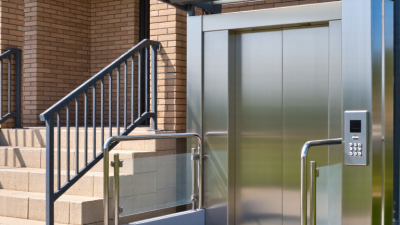
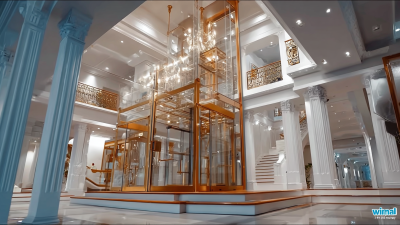
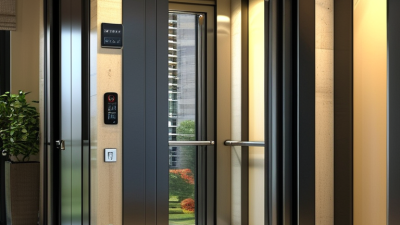
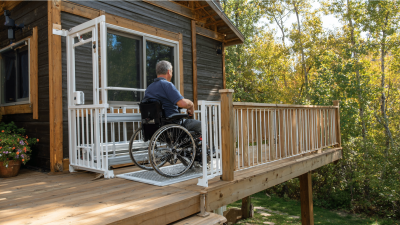
Finding China’s top exterior wheelchair lift manufacturers takes more than comparing prices or product photos. An Exterior Wheelchair Lift must handle daily use, changing weather, and the specific needs of its installation site. A compact platform beside a townhouse entrance may require different dimensions and access arrangements from one serving a public building. Details matter.
When assessing suppliers, buyers can review platform size, rated capacity, travel height, safety features, weather-resistant finishes, and available backup power. Ask how the manufacturer tests its equipment and what installation, maintenance, and technical support it can provide. Request clear specifications and relevant product records rather than relying on broad claims. Ask for evidence. A polished brochure can look reassuring, yet leave practical questions unanswered.
China has manufacturers serving different markets and project types, so a single “top” ranking may not suit every buyer. Compare companies against your site requirements, budget, delivery schedule, and support expectations. Where possible, speak directly with the technical team and confirm who handles installation and after-sales service in your region. Check details carefully. Even a well-built lift can disappoint if measurements, drainage, or routine servicing are overlooked. This overview introduces points to consider when researching Chinese suppliers, while recognizing that each project needs its own assessment.
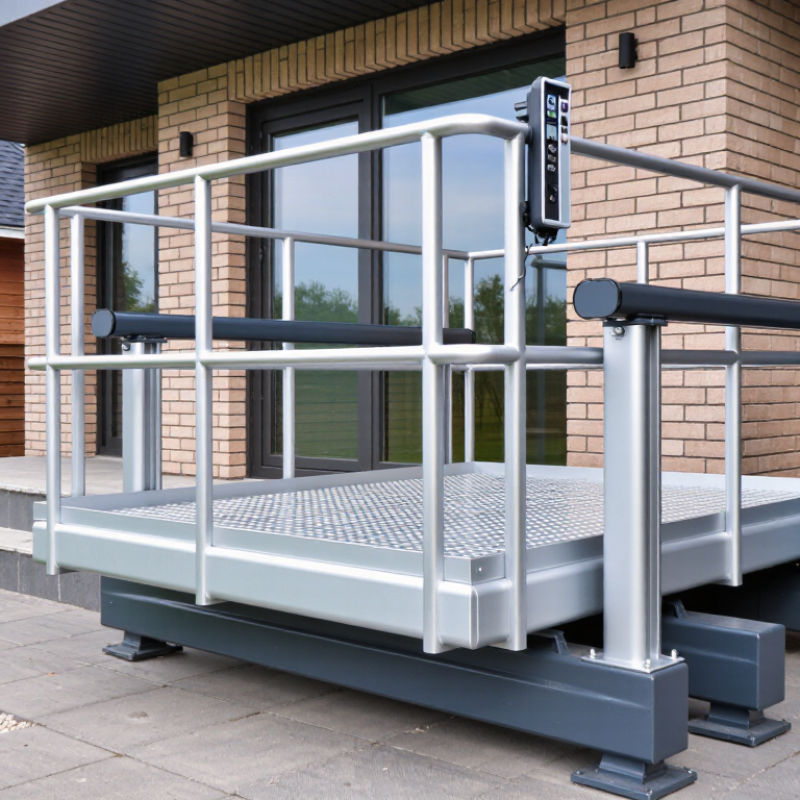
An exterior wheelchair lift moves a person and wheelchair between outdoor levels, such as a porch and garden path. Unlike a stairlift, it carries the wheelchair on a flat platform. The user enters, closes the gate, and presses a control; a motor then moves the platform along a guide rail or mast. Interlocks help prevent travel when a gate is open, while limit switches stop the platform at its landing. Some models also provide emergency lowering if power fails. That matters outdoors.
Weather affects reliable operation. Rain can collect near the lower landing, while leaves, grit, or ice may obstruct the platform or controls. A stable, level base, suitable drainage, and clear access at both stops are practical essentials.
The WHO and UNICEF Global Report on Assistive Technology (2022) estimates that more than 2.5 billion people need one or more assistive products, with nearly one billion lacking access.
That broad figure is not specific to wheelchair lifts, but it shows why usable access matters. Before choosing equipment, measure the rise, platform space, and approach route with the actual wheelchair. A lift can bridge a height change, but it cannot fix a narrow gate or uneven path. I would check those details twice; they are easy to overlook.
Outdoor wheelchair lifts must handle rain, temperature swings, grit, and daily use—not just meet a product specification. The WHO and UNICEF Global Report on Assistive Technology (2022) estimates that 2.5 billion people need one or more assistive products. That scale makes dependable access more than a convenience. For buyers comparing manufacturers in China, ask for documented load testing, installation instructions, and maintenance requirements.
Start with the site. A level, well-drained landing helps prevent water from pooling near the platform. Look for corrosion-resistant structural finishes, weather-protected controls, a textured non-slip deck, and gates with safety interlocks. These are practical safeguards, not decorative options. ASME A18.1 sets safety requirements for platform lifts, while the U.S. Access Board’s 2010 ADA Standards, Section 410, addresses platform-lift access and operation. Confirm which local codes apply before specifying equipment.
Check the details in person. Can a wheelchair user reach the call button without leaning over a rail? Is emergency lowering accessible during a power outage? Ask how the lift performs under the site’s expected wind, rain, and temperature conditions. A weather cover can help, but it cannot replace drainage or routine inspection. That part is easy to overlook. Even a strong finish can fail when water sits in joints; I would want maintenance intervals stated clearly, not promised vaguely.
China Top Exterior Wheelchair Lift Manufacturers?
China’s Exterior Wheelchair Lift Manufacturing Landscape
China’s exterior wheelchair-lift manufacturing landscape brings together metal fabrication, drive systems, electrical controls, and assembly. Many suppliers can tailor platforms to building entrances, porches, or raised garden paths. The details matter. Outdoor equipment faces rain, dust, temperature changes, and repeated daily use.
A well-made unit should have a stable platform, practical controls, and weather-resistant finishes. Ask how the frame is protected against corrosion and where water drains after heavy rain. Request test records for rated load, emergency lowering, and safety interlocks. These checks offer more useful evidence than a polished catalogue alone.
That sounds straightforward, but it isn’t. Product quality and support can differ between factories, even when specifications look similar. Review drawings, wiring details, installation guidance, spare-parts availability, and response times before choosing a supplier. If possible, inspect a finished lift and observe a loaded test. Small issues, such as a slippery platform edge or poorly sealed control box, can become real problems outdoors. Manufacturers that explain limitations clearly may be easier to assess than those promising a perfect fit for every site.
Population aged 60 and above in China, 2020–2024
The growing older population provides demographic context for accessibility products, including exterior wheelchair lifts; these figures are not lift sales or manufacturer market-share data. Source: National Bureau of Statistics of China.
Chinese manufacturers of exterior wheelchair lifts commonly produce vertical platform lifts for homes, clinics, shops, and public buildings. Product capabilities vary, so buyers should compare rated load, travel height, platform size, and installation conditions rather than relying on a catalogue image. Fit matters. A platform that looks spacious online may feel tight beside a wheelchair’s footrests.
Outdoor models typically use weather-resistant finishes, covered controls, and drainage-conscious designs. Ask how the lift handles rain, dust, temperature changes, and standing water at the site. Check the door interlocks, emergency stop, obstruction sensors, and manual lowering procedure. These details are easier to verify in a technical drawing or live demonstration than in a sales description. Small omissions matter.
Some Chinese suppliers can adapt platform dimensions, entry direction, railing height, and control placement to project requirements. Customization may affect lead time and service access, however. Request drawings, load-test documentation, installation guidance, and a clear spare-parts list before comparing quotations. A capable manufacturer should explain operating limits plainly, including what the lift is not designed to do. That answer may reveal more than a polished brochure.
When comparing China’s exterior wheelchair lift manufacturers, look beyond product photos and headline prices. Ask for the rated load, platform dimensions, installation requirements, and operating limits in rain, wind, and cold. Check whether the frame, fasteners, and electrical enclosure suit long-term outdoor exposure. A neat finish matters, but it cannot prove durability.
Request current certificates and test reports, then confirm which model and components they cover. Ask how testing was performed and whether documents can be verified with the issuing organization. Requirements vary by destination, so check local accessibility and building rules with a qualified professional. A certificate alone is not a safety plan. If possible, inspect a working unit and watch how it stops, drains, and responds to an emergency control. Small details count.
Tips: Request a written warranty, spare-parts list, and service response times. Ask who handles installation, troubleshooting, and staff training. Get a sample maintenance schedule, including checks for loose fixings, water ingress, and worn controls. Compare answers in writing; vague promises are hard to assess later. Even a careful review has limits, and I would still ask an independent installer to examine the site before ordering.
Use this comparison framework to assess suppliers of exterior wheelchair lifts. It is an evaluation checklist, not a ranking of specific manufacturers. Confirm that product documentation and local requirements match the intended installation.
| Evaluation area | What to assess | Evidence to request | Practical evaluation guidance |
|---|---|---|---|
| Product type and site fit | Confirm whether the proposed unit is a vertical or inclined platform lift and whether its travel, landing arrangement, and installation footprint suit the site. | General arrangement drawings, site survey requirements, rated load, travel distance, platform dimensions, and installation instructions. | Compare the proposal with measured site conditions. Check access at both landings, clearances, drainage, and any building or accessibility rules that apply locally. |
| Applicable product standards | Check whether the supplier identifies standards relevant to the lift type and the destination market. | A standards list tied to the exact model, test reports where applicable, and product technical documentation. | ISO 9386-1 covers power-operated vertical lifting platforms for persons with impaired mobility; ISO 9386-2 covers power-operated stairlifts and inclined lifting platforms. Verify the applicable edition and local requirements for the project. |
| Quality management | Assess whether production and quality processes are documented and consistently applied. | A current ISO 9001 certificate, its scope, issuing certification body, and certificate validity details. | ISO 9001 is a quality-management-system standard; it does not by itself certify that a particular lift model complies with product safety requirements. |
| Destination-market conformity | Confirm which regulatory requirements apply where the lift will be installed and placed on the market. | For an EU-market product, request the applicable EU Declaration of Conformity and supporting technical documentation; check that the model and applicable legislation are identified. | A CE mark is not a universal quality award. Do not treat a logo alone as proof of compliance; check the declaration and the regulations applicable to the specific product and market. |
| Outdoor weather protection | Review protection against water and dust, corrosion, temperature exposure, and water accumulation for the actual installation conditions. | Enclosure IP rating and its test basis, materials and coating specifications, maintenance instructions, and any stated operating-temperature limits. | IEC 60529 defines the IP Code for enclosure protection. An IP rating does not, by itself, establish resistance to corrosion, UV exposure, flooding, or every outdoor condition. Match the specified protection to the site. |
| Safety functions and emergency operation | Check the safety features and procedures for foreseeable operating interruptions or emergencies. | Model-specific safety documentation covering controls, obstruction protection, emergency lowering or rescue procedures, and user instructions. | Confirm which features are included in the quoted configuration. Ask how users can summon assistance and how trained personnel should respond to a power failure or equipment fault. |
| Factory testing and traceability | Assess how the supplier checks the finished unit and identifies components or production batches. | Inspection and test records for the supplied unit, serial-number details, and documented procedures for non-conforming products. | Request records linked to the quoted model or unit rather than relying only on general statements about factory testing. |
| Warranty and exclusions | Review warranty duration, start date, covered parts and labor, exclusions, and the process for making a claim. | Written warranty terms, a parts list, claim procedure, and any separate terms for outdoor components or installation work. | Compare the written terms, not verbal assurances. Clarify responsibility for shipping, travel, labor, and damage caused by unsuitable installation or maintenance. |
| After-sales response and spare parts | Evaluate service coverage, technical support channels, spare-parts arrangements, and response commitments for the installation location. | Written response-time commitments, service contact details, spare-parts list, ordering process, and availability or lead-time statements. | Response times and parts availability are supplier commitments, not guaranteed by a product certificate. Make them specific to the destination country and contract. |
| Installation, training, and maintenance | Confirm who is responsible for installation, commissioning, user handover, and routine maintenance. | Installation scope, commissioning checklist, maintenance schedule, user manual, and training or handover records. | Identify qualified local service personnel and clarify any inspection or maintenance obligations imposed by the local authority or applicable rules. |
| Reference installations | Look for relevant experience with comparable outdoor exposure, travel height, and operating conditions. | Installation case details, operating history where available, and permission to contact references. | Prioritize projects similar to the proposed site. A general project count alone may not show suitability for a particular climate or installation type. |
Note: Standards, certification, and regulatory obligations depend on product configuration and destination market. Verify current requirements with the relevant local authority or a qualified compliance professional before purchase and installation.