
Why Is There Thermal Paste on CPU Pins?
Thermal Paste On Pins can look alarming: a gray smear across tiny metal contacts, where even a small obstruction seems risky. But thermal paste does not belong on CPU pins. It is intended for the heat spreader, between the processor and cooler, where it fills microscopic gaps and helps transfer heat. On the underside, paste usually means too much was applied, the cooler was handled carelessly, or the processor contacted residue during removal.
The details matter. Many common pastes are electrically nonconductive, but that does not make contamination harmless. Paste can interfere with contact, collect dust, or prove difficult to remove from delicate pins. Some specialty compounds may conduct electricity, creating additional risk. A processor with pins on its underside also differs from one designed for a socket with pins, so identify the CPU type before attempting cleanup. Don’t force a brush or tool between contacts.
Hardware specialist Roman Hartung is a relevant voice on CPU cooling, but no verified quotation from him on paste-covered pins is available here. Rather than inventing one, this introduction uses an original repair-bench takeaway: “Keep paste on the heat spreader, and keep contacts clean.” Simple advice. Still, inspection can be tricky. A faint mark may be residue, not damage, and a rushed cleanup can bend pins that were straight before. The following guide explains why paste gets there, what risks are real, and how to assess the CPU before taking action.
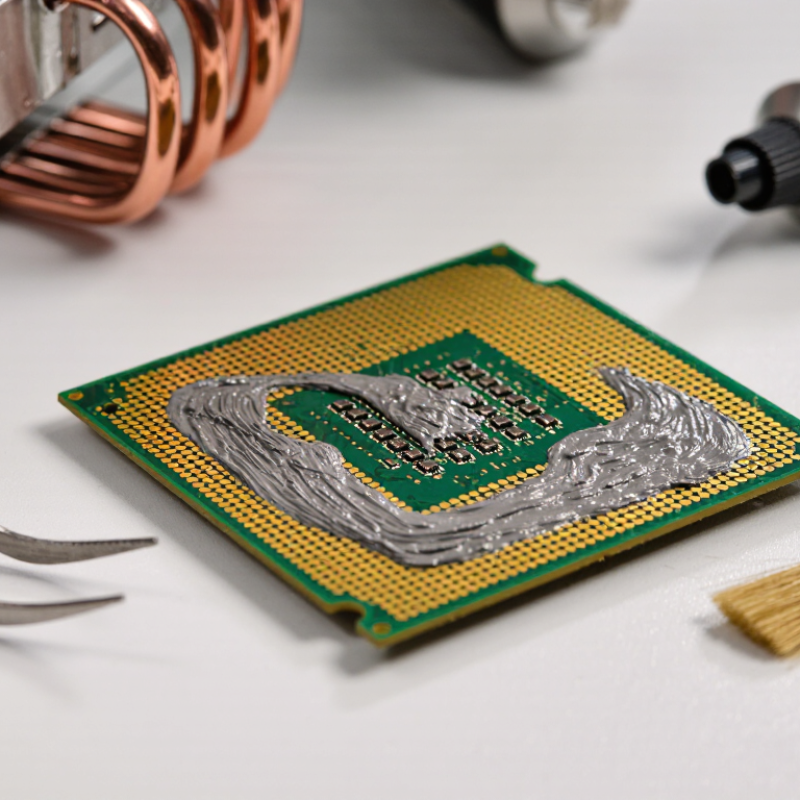
How Thermal Paste Reaches CPU Pins
Thermal paste usually starts on the metal heat spreader, not on the CPU pins. A small amount sits between the processor and cooler, where mounting pressure spreads it into a thin layer. Too much paste can squeeze over the edge. If the processor is tilted or dragged during installation, that excess may smear onto the underside and reach exposed pins.
Handling can also transfer paste. A paste-covered glove, tool, or work surface may leave a dab behind. On processors with pins attached to the underside, even a small smear can collect between rows. It may be hard to spot. The exact path is not always obvious, so do not assume the paste appeared only during installation.
Many common pastes are not electrically conductive, but their composition varies. Treat contamination carefully anyway. Paste between pins can interfere with contact, and pins are easy to bend while cleaning. Avoid scraping or wiping across them with force. If you inspect the processor, use bright, angled light and look for residue near the pin bases. It is tempting to blame the cooler, but handling, excess application, and removal can all contribute. The source may remain uncertain.
