
Why Choose the Right Excavator Bucket?
Choosing the right Excavator Bucket is a practical decision with consequences for cycle time, fuel use, and wear. A bucket that is too large may slow loading in dense material. One that is too small can mean more passes and longer truck queues. The difference is visible at the face: sticky clay clinging to the corners, or a clean bucket cutting through loose aggregate.
The scale of construction makes these choices matter. The U.S. Census Bureau reported approximately $2.15 trillion in U.S. construction spending during 2024. That figure does not measure bucket performance, but it shows the size of the work where equipment efficiency counts. For technical context, Caterpillar’s Performance Handbook explains how material properties and bucket fill factors affect production estimates. ISO 7451 also provides a standardized method for stating excavator bucket capacities, helping buyers compare specifications on a consistent basis.
Capacity alone is not the answer. Consider material density, machine size, digging conditions, and the job’s loading target. A general-purpose bucket may suit mixed site work, while a narrower profile can help with trenching. There is no perfect choice for every site. Even careful estimates can miss changing moisture or ground conditions, so actual performance should be checked in the field. That part is easy to overlook. A well-matched bucket supports smoother work; a poorly matched one can turn a small compromise into repeated lost time.
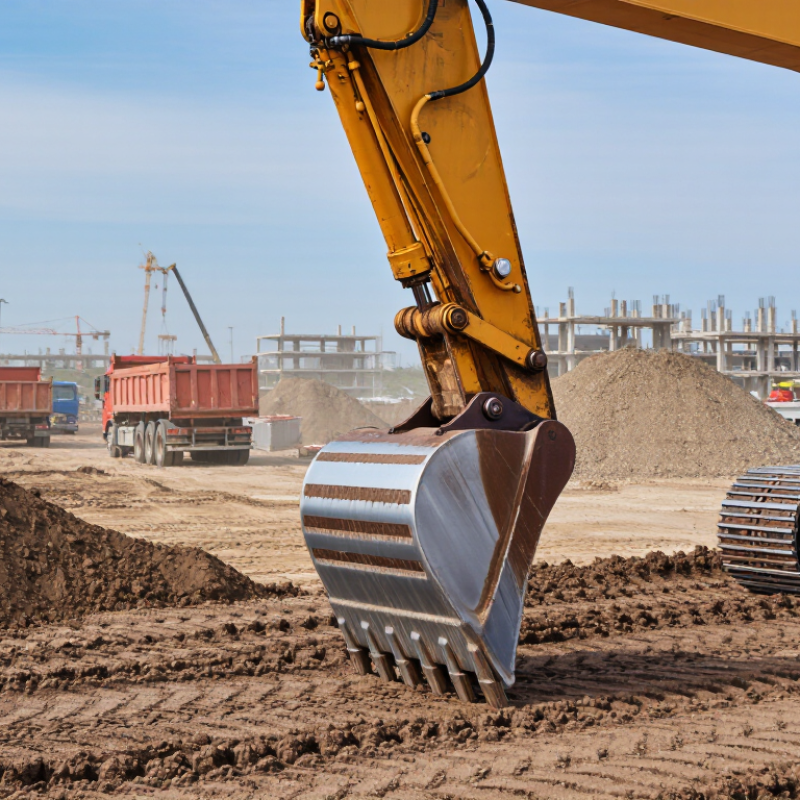
What an Excavator Bucket Does and How It Works
Why Choose the Right Excavator Bucket?
What an Excavator Bucket Does and How It Works
An excavator bucket cuts into soil, holds the material, and carries it to a spoil pile or truck. Its cutting edge or teeth break into the ground as the operator lowers the boom and extends the arm. Then the bucket curls inward, gathering material against its back and sides. Simple motion. But soil does not always cooperate.
The bucket connects to the excavator’s arm through pins or a compatible quick coupler. Hydraulic cylinders move the boom, arm, and bucket linkage, giving the operator control over reach and curl. To dig, the operator positions the cutting edge, draws the arm inward, and curls the bucket. To unload, the bucket rotates outward. A smooth cycle depends on balanced movements, not just hydraulic power.
Bucket shape affects how easily material enters and leaves. A narrower bucket can suit trenching, while a wider one can move loose soil faster. Teeth help penetrate firm ground, but they may leave a rougher finish than a smooth cutting edge. Capacity matters, too: an oversized load can slow work and strain the machine. There is no perfect bucket for every task. Even a sensible choice involves compromise, especially when the ground changes halfway through the job.
