
Why Choose Zinc Die Casting for Your Project?
Why Choose Zinc Die Casting for Your Project?
A small zinc component can carry a surprising amount of design responsibility. Think of a compact latch housing: its thin ribs, crisp lettering, and smooth edges may all need to emerge from one production process. Zinc Die Casting can suit parts like this because molten zinc flows into detailed steel dies and solidifies quickly. The result can combine fine features, consistent dimensions, and a finish that needs less secondary work. That is useful, but not automatic.
As a clearly illustrative expert voice, die-casting engineer Elena Morris might put it this way: “Choose zinc when the part’s detail, repeatability, and production volume justify the tooling.” That is not a verified quotation from a real industry source. It captures a practical design question: does the complete part benefit from zinc’s capabilities enough to offset die and tooling costs? A real project should confirm this with supplier data and prototype testing.
The decision depends on more than the alloy name. Engineers should review wall thickness, draft angles, expected loads, operating temperatures, surface requirements, and annual quantities. A supplier can assess whether a feature will fill reliably or create difficult tooling. Small details matter. A sharp internal corner, for example, may complicate die design or affect filling. Zinc is not ideal for every environment or component, either. Compare its performance with alternatives under actual service conditions. A little caution helps. The right choice is the one supported by part geometry, production needs, and measured results—not by a material’s reputation alone.
What Zinc Die Casting Is and How It Works
Why Choose Zinc Die Casting for Your Project?
What Zinc Die Casting Is and How It Works
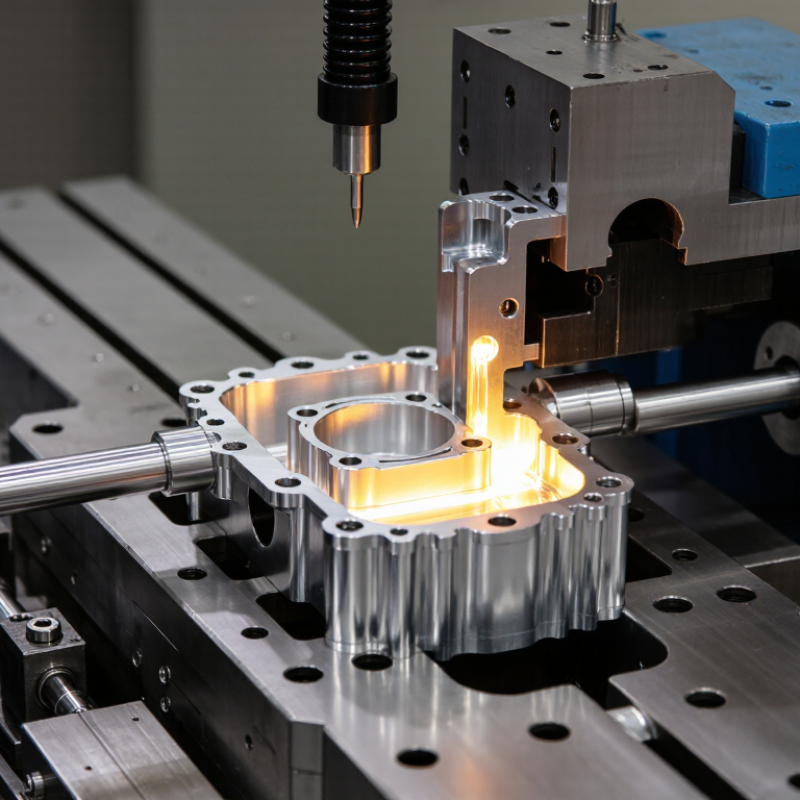
Zinc die casting forms metal parts by forcing molten zinc alloy into a shaped steel die under pressure. The die has two halves that close around a cavity matching the part’s design. Once the metal cools and solidifies, the halves open, and ejector pins release the casting. It happens quickly. The part may then need its gates, runners, or thin flash trimmed away.
This process can produce detailed features, smooth surfaces, and consistent dimensions across repeated parts. Small bosses, ribs, and openings can often be formed directly in the die, reducing later machining. However, results depend on alloy choice, part geometry, die design, and process control. A sharp corner or uneven wall can complicate filling and cooling. Even a sound design may need revision after the first sample; that possibility is easy to underestimate.
Tips: Share expected quantities, critical dimensions, and surface requirements early. Ask how the part will be ejected and where trimming marks may appear. Review a sample before approving production. A drawing can look complete, but it rarely answers every manufacturing question.
