
Why Choose Laser Cleaning Equipment for Your Business?
Why choose Laser Cleaning Equipment for your business? The answer begins with the work in front of you: rust on a steel bracket, residue around a weld, or coating on a component that must remain intact. Laser cleaning uses a focused beam to remove surface contaminants, with settings adjusted to suit the material and task. It can reduce reliance on abrasive media and chemical consumables, while producing less secondary waste in some applications. Results depend on surface condition, operator skill, and process settings. It is not a universal replacement for established cleaning methods.
Market forecasts suggest growing commercial interest. MarketsandMarkets’ Laser Cleaning Market report estimated a market value of about USD 0.7 billion in 2023 and projected roughly USD 1.3 billion by 2028, at a 13.3% compound annual growth rate. These are forecasts, not evidence that every buyer will achieve a return. A careful evaluation should compare cycle time, labor, consumables, maintenance, and the cost of integrating the system. Ask suppliers for trials using your actual parts. Inspect the results under production conditions. That detail matters. A clean sample in a showroom may behave differently from a greasy component on a busy line. Laser Cleaning Equipment can be a strong fit, but the case should be proven on your surfaces, not assumed from a brochure.
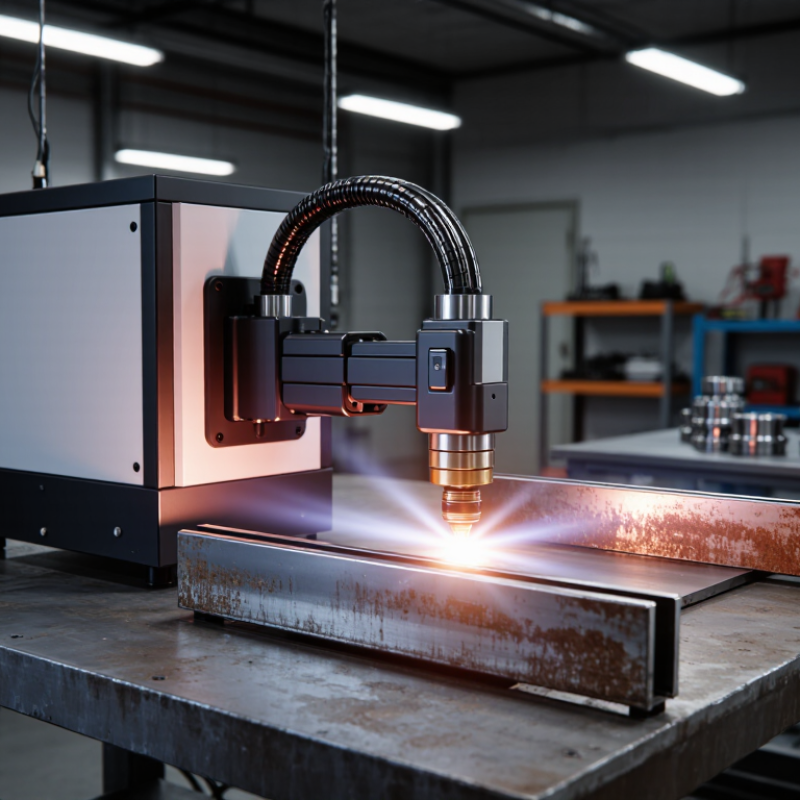
What Laser Cleaning Equipment Is and How It Works
Laser cleaning equipment directs a controlled laser beam at a surface to remove rust, paint, oil, or oxide. The beam’s energy is absorbed by the unwanted layer, causing rapid heating and removal through vaporization or tiny bursts of material. The operator moves the beam across the workpiece, much like painting a narrow strip of light. No abrasive grit. No direct contact with the surface.
Pulse settings, beam speed, and distance affect the result. A thin oxide layer on steel behaves differently from paint on aluminum, so operators usually test a small area first. It is tempting to expect one setting to fit every surface. It won’t. Grand View Research estimated the global laser cleaning market at about USD 0.7 billion in 2023 and projected a 4.9% compound annual growth rate from 2024 to 2030. This market estimate indicates growing interest, not guaranteed savings or cleaning performance.
Tips: Start with a small test patch. Check the surface under bright light, and use suitable fume extraction and eye protection. Record settings that work; small changes in coating thickness can alter the finish.
