
Why Choose Brass Pipe for Your Project?
Choosing a Brass Pipe is not merely a matter of selecting a golden-colored tube. The right choice depends on what the pipe will carry, its operating pressure, temperature, and connection type. Brass can offer useful corrosion resistance, machinability, and dependable joining options in suitable systems. But no material fits every application.
Metallurgist John R. Davis, editor of ASM’s Copper and Copper Alloys handbook, provides a useful technical foundation for evaluating copper alloys. A practical paraphrase of that material-selection approach is: “Match the alloy to the service conditions, not just the pipe dimensions.” Treat this as guidance, not a verbatim quotation. A project team should check the manufacturer’s specifications, applicable standards, and compatibility with the conveyed fluid before choosing an alloy. Details matter.
In practice, that means looking beyond the product label. Check wall thickness, pressure rating, temperature limits, fitting compatibility, and installation requirements. A pipe exposed to moisture or chemicals may need a different alloy than one used in a simple indoor water line. Brass Pipe can be a strong option when its properties suit the environment and maintenance plan. It is not automatically the best option. Even experienced buyers can miss small compatibility details, so verify them before ordering. A careful comparison can prevent leaks, premature wear, and costly rework. Start with the application, confirm the technical data, and ask the supplier for documentation when details remain unclear.
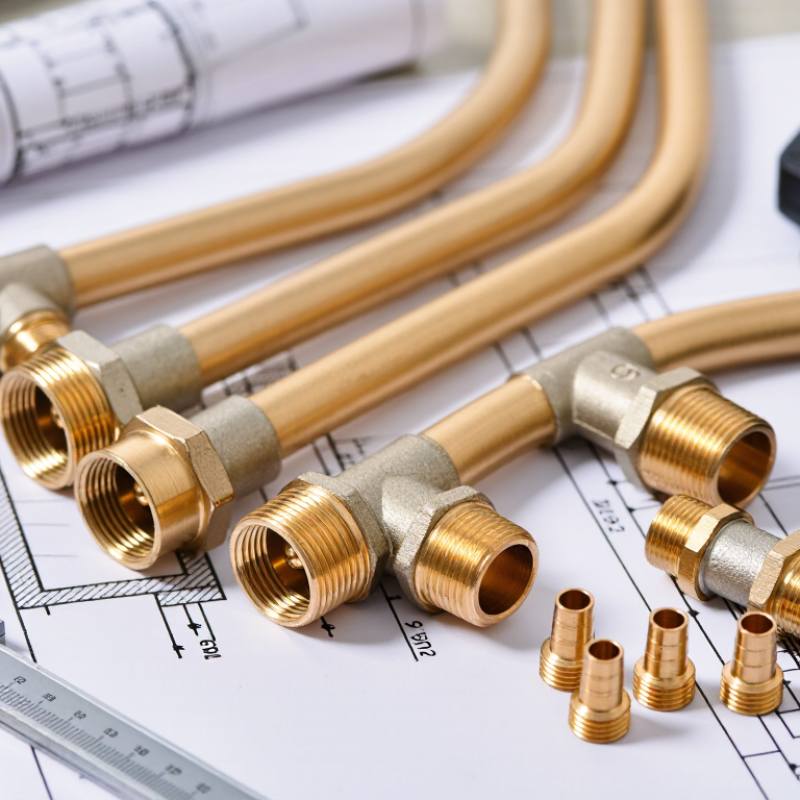
What Is Brass Pipe and How Is It Made?
Brass pipe is made from a copper-zinc alloy, with its exact composition chosen for the intended service. One useful industry reference is the Copper Development Association’s C23000 alloy data: it specifies 84–86% copper, with zinc making up most of the remainder. ASTM B43 covers seamless red brass pipe made from this alloy. The composition matters. It influences strength, corrosion behavior, and how readily the metal can be formed.
Manufacturing commonly begins with a heated billet. A press pushes the metal through a die to create a hollow shape; drawing and sizing can then refine its diameter and wall thickness. Annealing may soften the metal between forming steps. Workers cut the pipe to length and check dimensions and surface quality. The process sounds tidy on paper. Actual sequences vary by product and mill, so specifications should be checked rather than assumed.
Tips: For a project, confirm the alloy, nominal size, wall thickness, and applicable standard before ordering. Look closely at the cut end: an even wall and clean finish are practical clues, not proof of compliance.
