
Why Choose an IR Corrected Lens for Your Application?
An IR Corrected Lens is designed to maintain sharper focus across visible and near-infrared wavelengths. This matters when a camera switches between daylight and infrared illumination. With a conventional lens, different wavelengths may focus at different distances, softening edges and reducing detail. The effect can show up in a face, a printed label, or the fine lines of a machine part. That matters.
Choosing the right lens is not just a matter of reading a product label. Check the sensor format, working distance, field of view, aperture, and the wavelengths your system will use. A lens corrected for near-infrared light may perform differently outside its specified range. Pairing it with the intended camera and filter helps avoid surprises during installation. Small differences in focus can become obvious at the image edges.
These lenses can be useful in machine vision, inspection, and day-and-night imaging, especially when consistent focus is important. Still, “IR corrected” does not guarantee the best image in every setup. Lighting, sensor sensitivity, lens quality, and alignment all play a part. Test the complete system under realistic conditions, including the actual illumination and target distance. Not always. If your application uses only visible light, a standard lens may be a more suitable choice. This guide explains what IR correction changes, where it helps, and which specifications deserve a closer look before you choose. One detail is easy to overlook: the final result depends on the whole imaging system, not the lens alone.
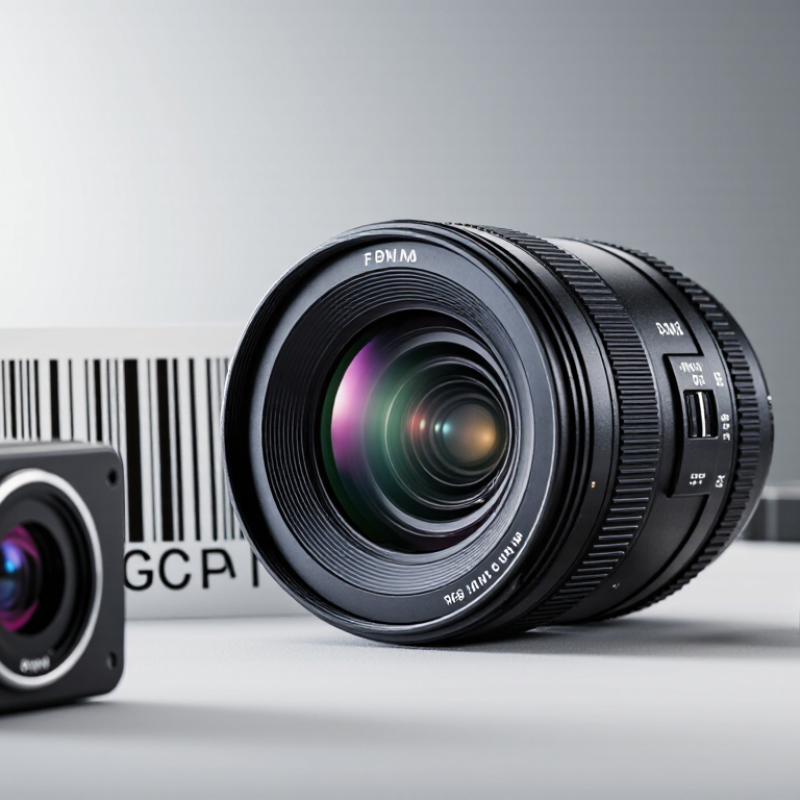
What an IR-Corrected Lens Is
An IR-corrected lens is designed to keep focus more consistent across visible and near-infrared wavelengths. Ordinary lenses can focus these wavelengths at different distances because glass bends each wavelength differently. The shift may look small, yet it can soften fine details when a camera switches from daylight to infrared illumination. Think of a crisp edge on a metal part becoming slightly blurred after the lighting changes. Focus can drift. An IR-corrected design helps reduce this shift, though it does not remove every optical limitation.
Tips: Check the lens’s specified wavelength range before choosing it. “IR-corrected” does not mean it performs equally well at every infrared wavelength. Test focus under the lighting and camera settings you will actually use. Details matter.
The right lens depends on the sensor, working distance, aperture, and required field of view. A lens corrected for near-infrared use may not suit a system operating farther into the infrared spectrum. It is also worth checking image sharpness near the frame edges, not just at the center. The label alone is not a guarantee of a good match. A simple test image can reveal issues that a specification sheet may not make obvious.
| Dimension | What It Means | Why It Matters | Practical Check |
|---|---|---|---|
| Definition | An IR-corrected lens is designed to maintain usable focus across a specified visible and near-infrared wavelength range. | It can reduce focus differences between visible light and near-infrared light compared with a lens optimized only for visible wavelengths. | Check the lens documentation for its stated wavelength range; “IR corrected” does not describe one universal range. |
| Focus shift | Different wavelengths can refract differently in optical materials, causing the best-focus position to change with wavelength. | With mixed visible and near-infrared illumination, focus shift can soften images or make focus inconsistent. | Test focus using the same illumination and filters that will be used in the finished system. |
| Typical spectral range | Many machine-vision lenses described as IR corrected are intended for visible and near-infrared imaging. The exact limits vary by design. | A lens suitable for one near-infrared band may not perform equally well at a different wavelength or in the thermal infrared. | Compare the lens specification with the sensor response, illumination wavelength, and any optical filter in the system. |
| Image sharpness | Optical correction can help preserve focus across the specified bands, but resolution and aberration performance still depend on wavelength and lens design. | Improved focus consistency may support clearer images when switching between visible and near-infrared illumination. | Evaluate sharpness at the center and edges of the image at each wavelength you plan to use. |
| Day-and-night imaging | A suitable IR-corrected lens can be used in systems that alternate between visible light by day and near-infrared illumination in low light. | It can reduce the need to refocus when illumination changes, provided both bands fall within the lens’s specified range. | Confirm compatibility with the camera’s sensor, filter arrangement, and near-infrared illuminator. |
| Monochrome sensors | Monochrome cameras can detect near-infrared light when their sensor and any installed filters allow it. | An IR-corrected lens may help keep visible and near-infrared images in focus, but it does not make an IR-blocking camera filter transparent. | Check whether the camera has an IR-cut filter and whether it can be removed or switched for the intended application. |
| Color cameras | Color cameras often use filters to limit near-infrared light because it can affect color reproduction. | Lens correction alone does not prevent unwanted IR from reaching the sensor or correct color shifts caused by it. | Review the camera’s spectral response and use an appropriate IR-cut or bandpass filter when required. |
| What it does not guarantee | IR correction does not automatically guarantee equal transmission, contrast, resolution, or distortion performance at every wavelength. | Optical performance can vary across the specified band and across the image field. | Use measured test images or wavelength-specific performance data for critical applications. |
| Selection factors | Important factors include wavelength range, sensor format, image circle, focal length, aperture, working distance, and mounting requirements. | A lens must suit the complete imaging system, not just the sensor or illumination wavelength. | Verify mechanical fit, coverage, focus range, and performance under the intended operating conditions. |
