147 Mill Ridge Rd Suite 232
Lynchburg, Virginia 24502
Phone 757-982-3665

Why Choose an Industrial Quadcopter for Your Business?

Why Choose an Industrial Quadcopter for Your Business?

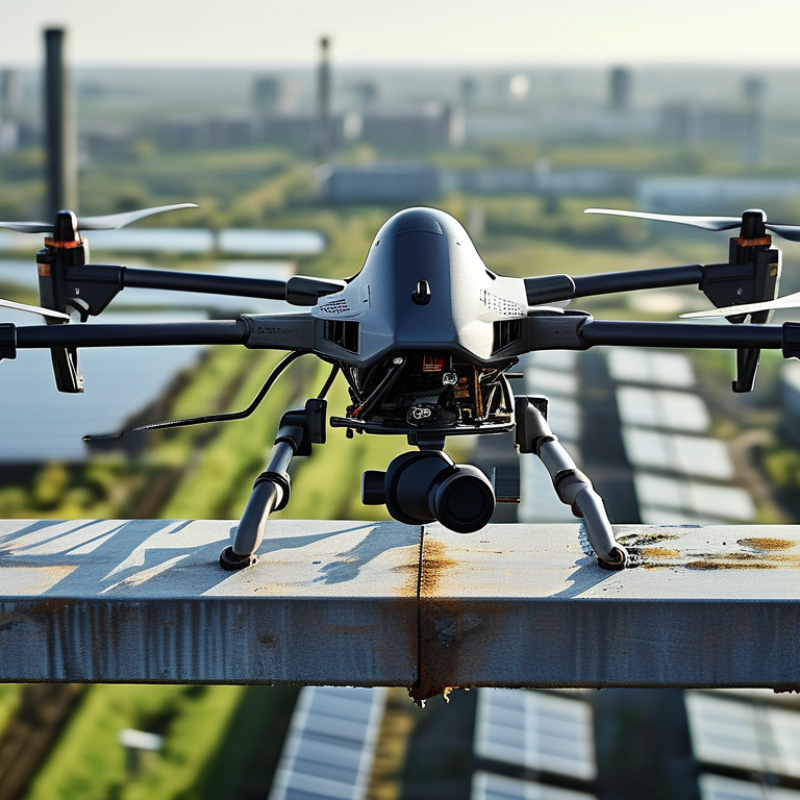
An Industrial Quadcopter can turn difficult fieldwork into measurable operational data. It can inspect roofs, towers, bridges, warehouses, and solar farms without placing workers near unnecessary hazards. Its four-rotor design also offers stable hovering, precise positioning, and practical maneuverability in confined areas. That matters.

Industry reports support this shift. PwC’s Skies Without Limits study estimated that drone technology could contribute £127 billion to the United Kingdom’s economy by 2030. The report identified infrastructure, transport, agriculture, and logistics as major opportunity areas. The FAA’s Aerospace Forecast 2024–2044 also reflects the continuing expansion of commercial drone operations in the United States. These findings suggest that drones are becoming business tools, not occasional gadgets.

Drone analyst Colin Snow has stated, “The value of a drone is not in the aircraft; it is in the data it produces.” That principle explains why an Industrial Quadcopter should be evaluated beyond flight time or camera resolution. Businesses should examine sensor quality, software integration, pilot training, maintenance, cybersecurity, and regulatory compliance. A thermal camera may reveal a failing electrical connection, while an RGB camera can document surface damage with geotagged evidence. Small details become useful records.

The decision is not always perfect. Battery limits, weather, signal loss, and employee training can reduce productivity. Some companies may also discover that outsourcing flights is more practical. Still, when repeated inspections require speed, safety, and consistent data, an Industrial Quadcopter can provide a strong and defensible return on investment.

Why Choose an Industrial Quadcopter for Your Business?

What Is an Industrial Quadcopter?

What Is an Industrial Quadcopter?

An industrial quadcopter is a professional unmanned aircraft with four powered rotors. Its value comes from controlled data collection, not simply from flying. A reinforced frame, replaceable batteries, and stabilized flight systems support demanding field work. Common payloads include high-resolution cameras, thermal sensors, LiDAR, and multispectral cameras.

Unlike recreational aircraft, industrial models connect flight planning with inspection software and documented workflows. A technician can examine a bridge joint, solar panel, or warehouse roof without standing on it. Real-time positioning can improve repeatability, while obstacle sensing reduces operational risk. However, sensors do not guarantee accurate decisions. Poor lighting, wind, dust, and weak image overlap can still damage the final report.

The commercial drone market reflects growing industrial adoption. MarketsandMarkets projects this market to rise from approximately 20.8 billion U.S. dollars in 2023 to 54.6 billion by 2030. Its report identifies inspection, mapping, and surveying as important applications. The Federal Aviation Administration also tracks continued expansion in commercial small unmanned aircraft operations.

It is not magic.

A quadcopter still needs trained operators, maintenance records, secure data handling, and realistic flight planning. Battery endurance may remain limited during heavy payload missions. Weather can stop a planned inspection completely. In practice, the strongest business case appears when the aircraft replaces repeated climbs, road closures, or slow manual surveys. The technology is useful, but the workflow must prove its value.

How Industrial Quadcopters Support Business Operations

Industrial quadcopters support operations by turning hard-to-reach work into repeatable data collection. They can inspect roofs, towers, stockyards, solar fields, and construction zones without sending workers across unstable surfaces. Thermal, optical, and measurement sensors produce evidence for maintenance decisions. PwC’s Clarity from Above report estimated drone-powered business services could represent 127.3 billion dollars in value. That figure is old. Not every flight pays. In practice, the value comes from faster site checks and clearer records.

A quadcopter can follow a planned route, capture the same asset weekly, and flag visible changes. Maintenance teams can compare images instead of relying on memory. This supports safer inspections, inventory checks, progress tracking, and emergency assessment. The AUVSI Economic Impact Report projected more than 82 billion dollars in U.S. economic impact and 100,000 new jobs by 2025. The projection does not guarantee savings for every company. Battery limits, rain, wind, pilot training, and weak data workflows still slow adoption. A drone may collect excellent images, yet poor analysis can delay action. That is the part many buyers underestimate.

Tips: Define one measurable task first, such as reducing a roof inspection from two hours to forty minutes. Select a payload for the task, not impressive specifications. Store flight logs, maintenance records, and captured data securely. Train operators to recognize unsafe weather and sensor limits. Review results with field technicians. Their criticism may expose blind spots. Calculate total operating costs, including batteries, software, insurance, training, and downtime. Federal Aviation Administration registration data shows a large commercial drone population in the United States, but adoption alone proves nothing. Measure fewer site visits, faster reports, and reduced exposure to hazards.

Why Choose an Industrial Quadcopter for Your Business?

How Industrial Quadcopters Support Business Operations

Compared with conventional manual inspection workflows, industrial quadcopters can reduce inspection time and personnel exposure while increasing the area covered in a working day. The index uses the conventional workflow as a baseline of 100; actual results vary by site conditions, flight regulations, payload, weather, and mission complexity.

Key Advantages Over Conventional Aerial Tools

Why Choose an Industrial Quadcopter for Your Business?

Industrial quadcopters offer practical advantages over conventional aerial tools. They can inspect roofs, flare stacks, bridges, and transmission corridors without placing workers at height. A trained crew can launch near a work zone, capture thermal or visual data, and review defects before leaving.

PwC’s Clarity from Above report estimated the global value of drone-enabled solutions at $127.3 billion, showing the commercial scale of this shift. The figure is older, but the operational logic remains relevant.

Cost and repeatability matter most. Helicopter inspections require larger crews, fuel, scheduling, and strict weather planning. A quadcopter usually needs fewer personnel and can repeat the same flight path after maintenance work.

According to the FAA’s Aerospace Forecast, commercial small unmanned aircraft operations are expected to keep expanding through 2044. That growth reflects demand for safer access and faster data collection, not simple gadget interest.

Minutes count.

The technology is not flawless. Wind can reduce flight time, while heat, dust, and electromagnetic interference may affect performance. A sharp image also does not equal a reliable engineering conclusion.

Inspectors still need calibrated sensors, documented procedures, and professional judgment. In field use, I would treat the aircraft as a data-gathering tool, not a replacement for qualified inspection teams.

Battery planning, pilot training, and data security require attention before purchase. Many businesses underestimate those details.

How to Evaluate an Industrial Quadcopter for Your Business

Why Choose an Industrial Quadcopter for Your Business?

How to Evaluate an Industrial Quadcopter for Your Business

An industrial quadcopter should solve a measurable business problem. Start with the worksite, not the aircraft. A 2024 FAA Aerospace Forecast reported more than 800,000 commercial small drones operating in the United States. That growth increases equipment choices, but also raises evaluation pressure. Measure flight time under real payloads, not empty-aircraft claims. Test wind stability beside buildings, towers, and power infrastructure. A five-minute battery loss can change an entire inspection schedule.

Review payload capacity, sensor accuracy, positioning reliability, and weather protection. Thermal cameras need clear calibration records. Mapping work may require RTK positioning and repeatable flight paths. Check whether the control system records audit trails and protects stored imagery. The NIST UAS cybersecurity guidance emphasizes access control, secure updates, and data protection. These details affect operational trust. They are easy to overlook during a short product demonstration.

Tips: Build a field scorecard before requesting quotations. Include endurance, payload, IP rating, repair time, training hours, and total ownership cost. Ask for logged performance data from comparable sites. Battery life often looks better in controlled tests. That is a useful warning. Also calculate downtime, replacement parts, software fees, and crew time. No scorecard is perfect. Revisit it after three real missions.

Safety, Compliance, and Return on Investment

An industrial quadcopter can reduce exposure before it reduces costs. It inspects roofs, tanks, towers, and confined structures without placing workers on ladders. A camera passes over corroded bolts. A thermal sensor reveals an overheated connection. The evidence is safer and easier to review.

Safety depends on disciplined operations, not aircraft size. Teams should document pilot competence, weather limits, battery condition, maintenance, and emergency procedures. Airspace checks and remote identification requirements must follow the relevant aviation authority. The National Institute of Standards and Technology stresses repeatable testing for robotic systems, which supports clearer procurement and training decisions. Records matter. A missing checklist can weaken an otherwise strong safety program.

The financial case needs honest measurement. PricewaterhouseCoopers estimated that drone technology could influence 127 billion dollars in business services and labor, in its Clarity from Above report. That figure is broad, not a guaranteed saving. A practical calculation compares inspection hours, access equipment, shutdown time, and avoided exposure against training, insurance, software, and maintenance. Field teams often find hidden costs, especially weather delays and data processing. The spreadsheet may still be wrong. Pilot time, image review, and repeat flights should be tracked per project. When a quadcopter completes a tank inspection in one shift instead of several, the return becomes visible. Not every mission justifies flight. That restraint improves compliance and protects the investment.

Why Choose an Industrial Quadcopter for Your Business? — Safety, Compliance, and Return on Investment
Evaluation Dimension Relevant Data or Requirement Business Value Planning Considerations Reference Basis
Safety and Operational Risk
Personnel exposure Industrial aerial inspections can reduce the need for workers to enter elevated, confined, unstable, or difficult-to-access areas during the initial visual assessment. Lower exposure to falls, traffic, energized equipment, and other site hazards. Use the aircraft to collect data first; keep essential access work subject to a formal risk assessment and permit-to-work process. General application of the hierarchy of controls and job-hazard-analysis principles.
Redundant flight control For industrial use, specify systems with documented flight-control, navigation, and communication-failure responses rather than relying only on consumer-grade features. Improves predictability during inspection, mapping, and emergency-return procedures. Verify automatic return-to-home behavior, loss-link settings, obstacle-awareness functions, and operator training. Risk-based UAS operational planning; requirements vary by aircraft and jurisdiction.
Environmental tolerance Industrial aircraft should be selected against the actual operating environment, including wind, rain, dust, temperature, electromagnetic interference, and lighting conditions. Fewer canceled missions and more consistent inspection data. Do not treat an ingress-protection rating as permission to fly in every weather condition. Follow the aircraft operating manual. Manufacturer operating limitations and site-specific risk assessment.
Battery and energy safety Lithium-based flight batteries require controlled charging, storage, transportation, inspection, and end-of-life procedures. Reduces the likelihood of thermal incidents, downtime, and equipment damage. Use a battery log, quarantine damaged packs, control charging areas, and train personnel in emergency response. Applicable battery-transport rules, facility fire procedures, and manufacturer instructions.
Compliance and Governance
United States operating framework Routine commercial small-UAS operations in the United States generally fall under FAA Part 107, subject to aircraft weight, operating category, location, and mission-specific requirements. Provides a defined framework for pilot qualification, operating limitations, and airspace responsibilities. Confirm current rules for remote-pilot certification, airspace authorization, night operations, operations over people, and remote identification. U.S. Federal Aviation Regulations, 14 CFR Part 107.
Visual line of sight Under standard U.S. Part 107 operations, the remote pilot or a qualified visual observer must be able to see the aircraft sufficiently to manage the flight, unless an approved alternative applies. Supports safer separation from obstacles, people, and other aircraft. Document observer roles, communications, weather limits, and site boundaries in the operating procedure. 14 CFR §107.31 and related operating provisions.
Altitude and speed controls In the United States, standard Part 107 limits include a maximum groundspeed of 87 knots and generally no more than 400 feet above ground level, subject to specified exceptions. Creates measurable operational boundaries for mission planning. Local airspace restrictions, controlled-airspace approvals, and site obstacles may impose stricter limits. 14 CFR §§107.51 and 107.41.
Data protection Inspection imagery may reveal personnel, assets, layouts, production processes, or security-sensitive information. Reduces privacy, cybersecurity, and unauthorized-disclosure risks. Define access permissions, retention periods, encryption, transfer methods, and deletion rules before collecting data. Applicable privacy, cybersecurity, contractual, and critical-infrastructure requirements.
Operational documentation A mature program normally includes a flight risk assessment, maintenance log, battery log, pilot qualification record, pre-flight checklist, incident process, and inspection-data procedure. Improves audit readiness and repeatability across sites and operators. Assign ownership for approvals, records, corrective actions, and periodic procedure reviews. ISO 21384-3 operational-procedure principles and local aviation requirements.
Return on Investment Model
Illustrative inspection scenario Example planning case: one inspection requires 16 labor-hours using conventional access methods and 6 labor-hours using a quadcopter-assisted workflow. 10 labor-hours saved per inspection, before considering equipment, training, travel, and reporting costs. This is a calculation example, not a universal performance claim. Measure actual site results during a controlled pilot. Illustrative business-case assumption.
Annual labor-hour saving At 24 comparable inspections per year: 10 hours saved × 24 inspections = 240 labor-hours saved annually. Creates a measurable productivity benefit that can be valued using the company’s fully loaded labor rate. Exclude hours that are merely transferred to data processing, review, maintenance, or compliance administration. Transparent calculation based on the illustrative scenario.
Annual labor-cost benefit Using an illustrative fully loaded labor cost of $60 per hour: 240 hours × $60 = $14,400 per year. Provides a starting point for payback and total-cost-of-ownership analysis. Replace the example rate with actual wages, benefits, travel, contractor, access-equipment, and downtime costs. Illustrative calculation; currency shown in U.S. dollars.
Avoided access cost If a conventional inspection requires $1,200 of temporary access equipment per mission, avoiding that cost on 12 suitable missions produces a potential gross saving of $14,400. May significantly improve the business case where scaffolding, lifts, shutdowns, or rope access are frequently required. Access work may still be necessary for repairs, close-contact testing, or areas outside the aircraft’s safe operating envelope. Illustrative calculation; validate with site purchasing records.
Payback-period formula Payback period = Initial program cost ÷ Annual net benefit. Enables comparison between aircraft options and existing inspection methods. Annual net benefit should subtract training, insurance, maintenance, software, data processing, compliance, battery replacement, and labor costs. Standard capital-investment calculation.
Illustrative payback example If initial program cost is $24,000 and annual net benefit is $12,000, estimated payback is 2 years. Makes the investment decision traceable and easy to audit. Use sensitivity analysis for utilization, weather cancellations, inspection frequency, labor rates, and equipment life. Illustrative calculation; not a guaranteed financial result.
Selection Criteria for an Industrial Quadcopter
Payload and sensor compatibility Choose the aircraft according to the required sensor mass, power demand, stabilization needs, and inspection accuracy—not only maximum takeoff weight. Supports fit-for-purpose visual, thermal, zoom, mapping, or measurement workflows. Confirm total payload weight, flight-time impact, calibration requirements, and data-export compatibility. Aircraft technical documentation and inspection-task requirements.
Data quality and repeatability Repeatable routes, camera settings, image overlap, timestamps, and geotagging improve comparison between inspection periods. Enables trend analysis, defect tracking, and more defensible maintenance decisions. Establish standard mission templates and quality-control checks before scaling the program. Good-practice principles for aerial inspection and asset data management.
Total cost of ownership Evaluate aircraft, sensors, batteries, chargers, software, training, insurance, maintenance, repairs, storage, compliance, and data processing over the planned service life. Prevents an apparently low purchase price from becoming a high-cost operating program. Compare cost per completed inspection, not only the initial equipment price. Standard total-cost-of-ownership methodology.
Note: Regulatory requirements differ by country, airspace, aircraft category, operating site, and mission type. The financial figures marked as illustrative are transparent planning assumptions and should be replaced with verified internal operating data before investment approval.