
Why Choose a Precision Faucet Lever Handle?
Why Choose a Precision Faucet Lever Handle?
A faucet is used many times each day, often without conscious thought. That small movement deserves careful engineering. A Precision Faucet Lever Handle offers controlled operation, tactile feedback, and a cleaner visual connection between hand and water flow. Its balanced lever should move smoothly, without scraping, wobbling, or sudden resistance.
Donald Norman, a leading product-design authority, wrote, “Good design is actually a lot harder to notice than poor design.” That principle applies directly here. A well-made handle feels natural. Fingers meet a softly shaped edge. The lever turns with measured pressure. Water temperature changes gradually, not abruptly. These details may seem minor, yet they shape every morning routine.
Material selection also matters. Solid brass, corrosion-resistant finishes, and durable cartridge components can support long-term performance. However, appearance alone proves little. A bright finish may hide weak internal construction. Buyers should check the handle’s mounting system, cartridge quality, warranty coverage, and cleaning requirements. These points are less exciting, but they reveal real value.
There is room for honest reflection. Even a premium Precision Faucet Lever Handle cannot compensate for poor installation or unsuitable water pressure. Fit must come first. A professional plumber can verify compatibility and alignment before installation. The best choice combines reliable mechanics, comfortable control, and practical maintenance. It should look refined beside a basin, but it must also work quietly when nobody is watching.
What Is a Precision Faucet Lever Handle?
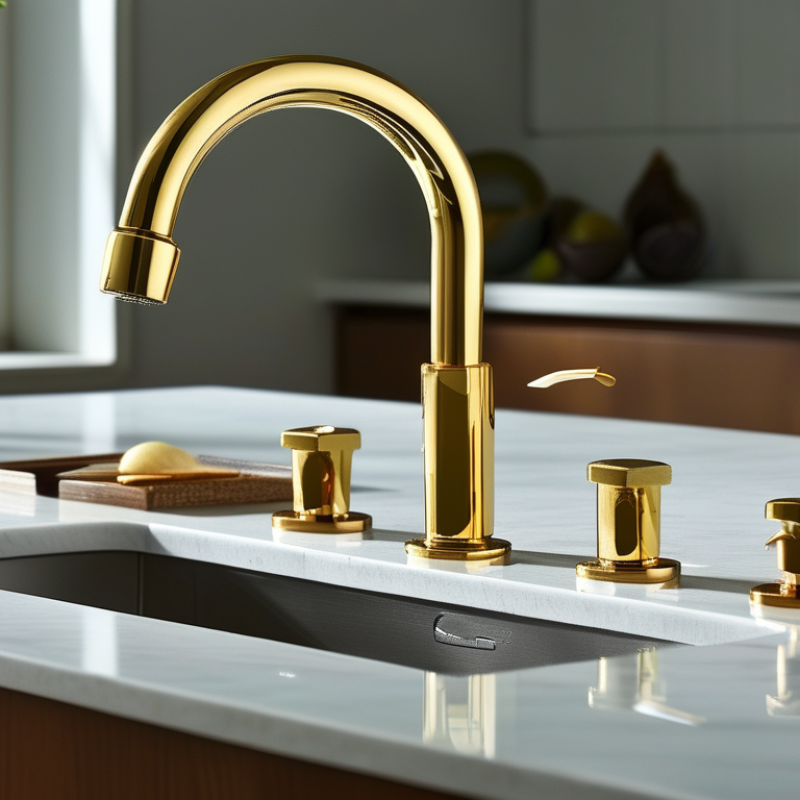
A precision faucet lever handle is a single control that adjusts water flow and temperature through a cartridge mechanism. Its movement is usually short, smooth, and predictable. Lift the lever gently, and water begins flowing. Move it sideways, and the temperature changes.
The key is control, not decoration. A well-designed handle can help users find a comfortable temperature without repeated adjustments. This matters in kitchens, bathrooms, and accessible facilities. The U.S. Access Board’s ADA Standards require operable parts to work with one hand, without tight grasping, pinching, or wrist twisting. Lever handles generally support this requirement better than small round knobs.
Precision also affects water use, although the handle is not the only factor. The U.S. Environmental Protection Agency’s WaterSense specification limits qualifying bathroom faucets to 1.5 gallons per minute, compared with the older 2.2-gallon standard. That represents a potential reduction of about 30 percent. A controlled lever can make that lower flow feel more usable.
Still, the assumption is too neat. A lever cannot correct a worn cartridge, poor installation, or unclear hot-water markings. In real use, I have found that resistance and feedback matter more than appearance. A slight pause between cold and hot can prevent accidental temperature jumps. The best handle feels simple, but its simplicity depends on careful engineering, durable materials, and regular maintenance.
