
Why Choose a Diaphragm Slitting Machine?
Battery production is scaling quickly, and small process errors become expensive at high throughput. The International Energy Agency’s Global EV Outlook 2024 reports global electric-car battery demand reached about 750 GWh in 2023. That was roughly 40% higher than in 2022. This figure describes demand, not separator output. Still, it shows why stable converting operations matter. A separator may look like a thin, quiet web on a roll. In production, its edges, width, tension, and cleanliness can affect downstream handling and cell consistency.
A Diaphragm Slitting Machine cuts wide separator rolls into narrower formats for battery assembly. Its value is not simply speed. Operators need repeatable slit widths, controlled web tension, clean edges, low dust generation, and quick changeovers. A drifting blade or uneven rewind can turn a neat roll into a wrinkled, telescoping one. That is easy to overlook.
Choosing equipment should begin with the material. Compare separator thickness, coating, width range, roll diameter, and required line speed against documented machine trials. Ask suppliers for measured tolerances, inspection methods, and references involving similar films. IEA market data cannot prove a particular machine’s performance. Request evidence from the actual process. Small tests help.
There is no universally best configuration. Even a strong specification can miss factory constraints, such as operator experience or limited space for dust control. This guide explores why manufacturers choose diaphragm slitting equipment, which features deserve verification, and what trade-offs merit a second look. The details matter.
What Is a Diaphragm Slitting Machine?
What Is a Diaphragm Slitting Machine?
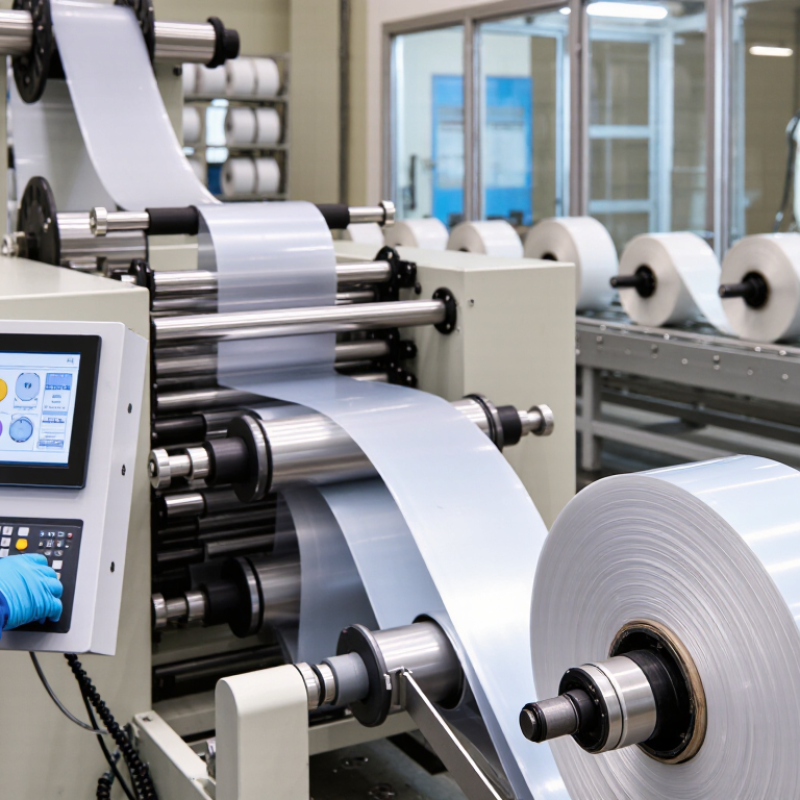
A diaphragm slitting machine converts a wide roll of thin separator film into narrower rolls. The film unwinds, passes through guiding and tension-control sections, then meets slitting blades. Those blades cut the moving web lengthwise. Rewinding shafts collect the finished rolls. In battery production, consistent width and clean edges help the separator fit later assembly steps. The machine does not make the diaphragm itself. It processes material that has already been manufactured.
Cutting quality depends on more than blade sharpness. Operators typically check web tension, blade alignment, roll winding, and edge condition during setup. A small alignment error can cause uneven edges or drifting material. Dust and static may also affect handling, especially with delicate, porous films. Results vary with material thickness and machine configuration, so a setting that works for one film may not suit another. No setup is perfect. That is worth remembering.
Tips: Inspect a sample roll before a long run. Check for burrs, wrinkles, and width variation. Record settings that work, but verify them again when the material changes.
