Why Use a Bucket Filling Machine for Your Business?
Why Use a Bucket Filling Machine for Your Business?
A Bucket Filling Machine can turn a slow, inconsistent packing station into a controlled production point. It measures product volume, fills containers, and supports repeatable sealing or lidding. That matters when operators handle heavy buckets throughout an eight-hour shift. Less lifting can also reduce fatigue and improve workplace consistency.
Market evidence supports this investment. Grand View Research valued the global packaging machinery market at approximately USD 52.83 billion in 2023. Its report forecasts continued growth through 2030, driven by automation, labor challenges, and stricter quality expectations. PMMI’s 2024 industry reporting also identifies automation and labor efficiency as major packaging priorities in North America. These figures do not guarantee a return. They show a direction.
Jorge Izquierdo, Vice President of Market Development at PMMI, has stated, “Automation is no longer a luxury; it is a necessity.” His point deserves a practical reading. Automation should solve a measured problem, not decorate a factory floor. A suitable Bucket Filling Machine may improve fill accuracy, reduce product spills, and create cleaner production records. It can also connect with conveyors, checkweighers, and labeling systems. However, machine performance depends on product viscosity, bucket size, target weight, and cleaning requirements. A machine that fills paint may not handle thick food products effectively. That mistake is expensive.
The best decision begins with real production data. Record current filling time, giveaway, labor hours, and rejected buckets. Then compare those costs with installation, training, maintenance, and downtime. Sometimes, a semi-automatic system is wiser. Bigger is not always better.
What Is a Bucket Filling Machine and How Does It Work?
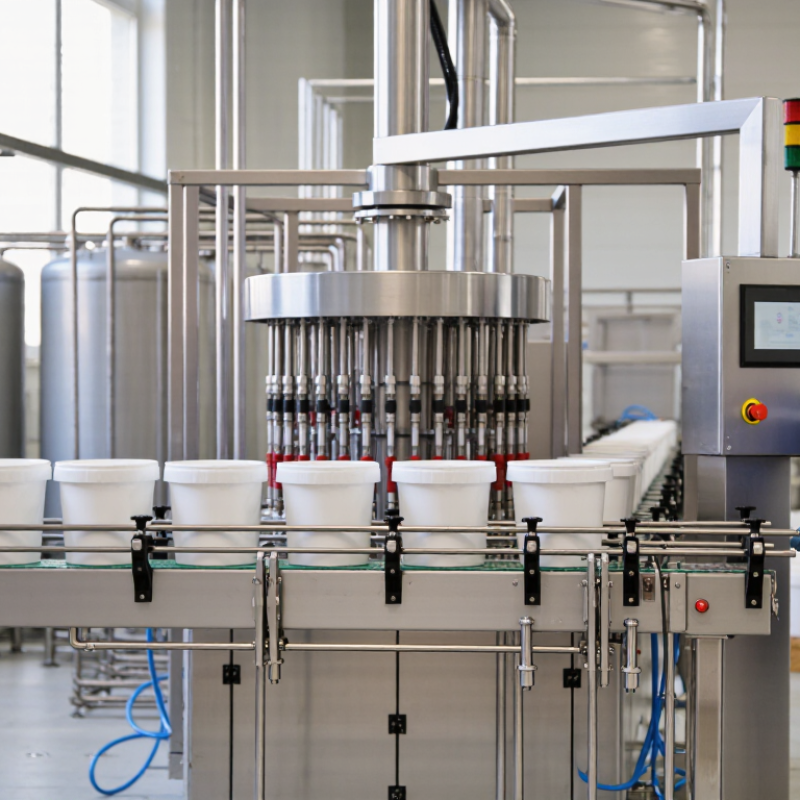
A bucket filling machine dispenses a controlled amount of product into open-top buckets. It may handle paint, coatings, chemicals, powders, granules, or food ingredients. The process begins when an empty bucket enters the filling station. A conveyor or indexing system positions it beneath the nozzle. A sensor confirms its location. Then, a pump, auger, gravity valve, or piston delivers the measured product. Load cells can check weight during filling. The control system stops the flow when the target value is reached.
The machine’s working method depends on product behavior. Thick liquids usually need pumps and anti-drip nozzles. Free-flowing granules may use vibration or gravity gates. Dusty powders require enclosed transfer paths and filtration. Operators can adjust fill volume, speed, and container size through the control panel. It is not magic. Poor calibration still creates waste. A flexible machine may also require more setup time between batches.
Industry data explains why this equipment receives attention. The International Federation of Robotics reported 541,302 industrial robots installed worldwide in 2023. Deloitte’s 2023 Smart Manufacturing and Operations Survey found that 86% of manufacturing leaders considered smart manufacturing important for competitiveness. Bucket filling machines support this shift by recording weights, reducing repetitive handling, and improving batch consistency. However, the real result depends on nozzle design, product viscosity, cleaning routines, and operator training. Check the seal. A small leak can damage accuracy, packaging, and workplace cleanliness.
What Are the Main Advantages of Using a Bucket Filling Machine?
A bucket filling machine can improve accuracy, speed, and daily production control. In practical operations, it helps dispense consistent amounts into buckets, whether the product is liquid, powder, or small granules. This consistency reduces overfilling, spills, and costly rework. It also makes inventory planning easier because each batch uses a more predictable quantity.
Labor efficiency is another important advantage. One operator can often monitor filling, sealing, and material supply instead of handling every bucket manually. Less repetitive lifting may also reduce physical strain. In a busy packing area, this creates a steadier workflow. Less waiting. Some machines also support quick adjustments for different bucket sizes, which is useful when product lines change frequently.
The benefits depend on proper setup. A machine that is poorly calibrated can repeat the same mistake many times. That point is easy to overlook. Regular checks, careful cleaning, and suitable contact materials are essential, especially when products vary in viscosity or density. Operators still need training and should inspect sample buckets during production.
A filling machine is not magic; it cannot replace practical judgment.
It may also require space, maintenance, and an initial investment that smaller businesses must review carefully. When matched with the right product and workload, however, it can provide reliable output and clearer control over everyday filling tasks.
How to Choose the Right Bucket Filling Machine for Your Business?
Choosing the right bucket filling machine starts with your product, not its advertised speed. In a real packing line, viscosity, particle size, and temperature affect filling results. Water-like liquids may suit timed filling. Thick sauces often need piston or servo-controlled dosing. Granular products require a different approach. Check bucket sizes, target weight, and required output per hour. A fast machine is useless if it damages delicate material.
Measure your workspace before requesting a quotation. Leave room for operators, lids, conveyors, and routine cleaning. Stainless steel contact parts are practical for many food and general industrial applications. Ask how quickly they can be removed and washed. Small gaps can trap residue. That detail matters more than polished photographs. Confirm filling accuracy through product trials with your actual buckets and materials. Request recorded results, not only brochure figures.
Your team also needs controls that workers can learn without guesswork. Clear settings, guarded moving parts, and accessible emergency stops support safer operation. Review changeover time, spare-part availability, training, and service response. A nearby technician may prevent hours of lost production. I have seen buyers choose capacity too early, then struggle with limited floor space. No calculation is perfect. Leave flexibility for seasonal demand, but avoid paying for speed you rarely use. Test the complete line, including weighing, sealing, and label placement.
What Factors Affect Installation, Operation, and Maintenance?
Why Use a Bucket Filling Machine for Your Business?
A bucket filling machine can improve output, reduce manual handling, and create more consistent package weights. Installation depends on several practical factors. The floor must support the machine’s weight and vibration. Operators also need enough space for loading, discharge, cleaning, and emergency access. Electrical supply, compressed air, ventilation, and product flow should be checked before delivery. Powder, granules, and sticky materials behave differently, so the filling system must match the product. A small oversight here can cause repeated stoppages later.
Operation becomes smoother when staff understand the control panel, filling settings, and safety procedures. Product density may change with humidity or batch conditions. Therefore, operators should inspect sample weights during production instead of trusting one calibration. The first setup may need adjustment. That is normal, but every change should be recorded. Maintenance includes cleaning contact parts, checking seals, inspecting sensors, and tightening loose connections. Neglected dust can affect accuracy. Worn components may also create uneven filling and unnecessary waste.
Tips: Keep a simple daily checklist. Record fill weights, cleaning times, alarms, and replaced parts. Train more than one operator, because knowledge should not depend on a single person. Use approved tools and follow the equipment manual. Schedule inspections before problems become urgent. It sounds basic. It often works.