
Why Choose a 16A Switch for Your Electrical Projects?
A switch is a small component, but its rating affects how safely it handles a connected load. A 16a Switch may suit certain fixed electrical applications, yet the number alone does not prove that it is right for every circuit. Voltage, load type, wiring capacity, installation conditions, and the manufacturer’s instructions all matter. A motor or other inductive load, for example, may behave differently from a simple lighting load. Ratings deserve context.
The safety stakes are real. NFPA’s Home Fires Involving Electrical Failure or Malfunction report estimates that electrical distribution and lighting equipment was involved in about 32,000 U.S. home fires annually from 2015 to 2019. This figure covers a broad equipment category; it does not attribute those fires to switches alone. Still, it shows why component selection and sound installation practices deserve attention. A rating is not a safety guarantee.
This guide explains what a 16A rating means, where it may be appropriate, and which details to check before choosing one. Look closely at the switch label, the intended load, and the circuit specifications. If any of these are unclear, have a qualified electrician verify compatibility. It is tempting to treat a higher number as an automatic upgrade. That shortcut can mislead. The right switch is the one correctly matched to the complete installation.
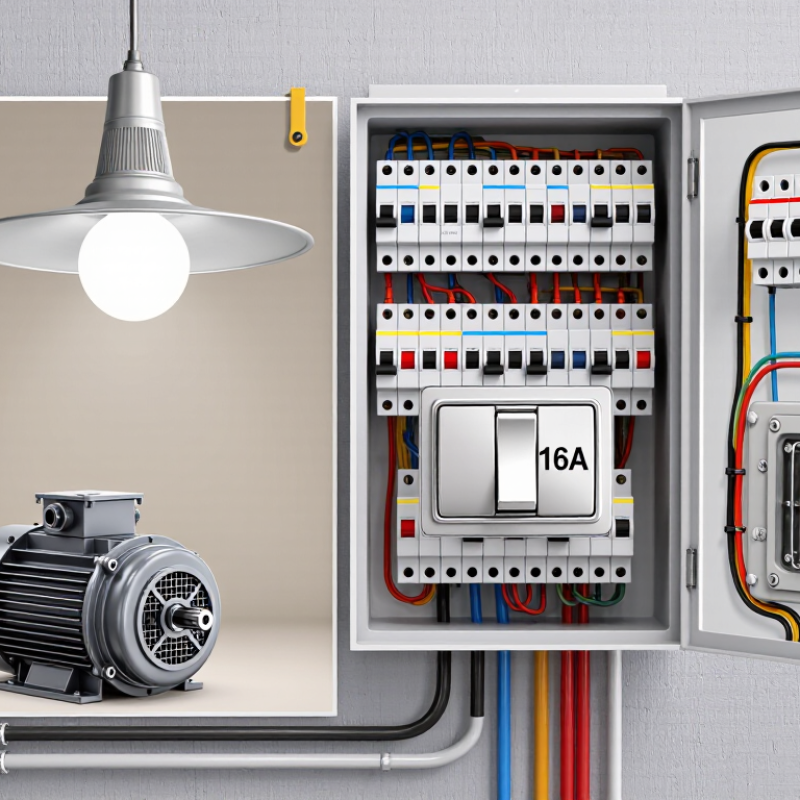
Understanding the Rating and Function of a 16A Switch
A 16A switch is rated to carry a current of up to 16 amperes under its specified operating conditions; the number is not a promise that every connected appliance is suitable.
At 230V, 16A corresponds to a theoretical 3,680 volt-amperes, calculated as voltage multiplied by current. For a mainly resistive load, that is roughly 3,680 watts, but motors and other inductive devices can draw higher starting currents. Check the switch’s voltage and load-type markings, not just its headline amp rating.
The relevant technical reference is IEC 60669-1, the international standard for switches used in household and similar fixed electrical installations. Its requirements address switch construction and performance; they do not replace checking a particular product’s ratings or installation conditions.
In practice, a warm switch face, loose terminal, or repeated tripping deserves attention. Small signs matter. Cable size, enclosure, ambient temperature, and switching frequency can affect safe operation.
I would not treat 16A as an automatic allowance for continuous full-load use; the circuit design and manufacturer’s instructions still matter. For a real installation, have a qualified electrician verify the load and wiring.
