What Is a Wheel Motor and How Does It Work?
A Wheel Motor places the driving mechanism close to the wheel, rather than sending power through a long drivetrain. In many electric vehicles, it combines a compact motor, bearings, seals, and control connections inside or beside the wheel hub. When the controller delivers electrical current, magnetic forces create torque. That torque turns the wheel directly. It sounds simple. The details matter.
Some wheel motors are electric, while others use hydraulic pressure in construction or agricultural equipment. This difference changes their design, maintenance needs, and operating limits. An electric version may support regenerative braking, but it can also increase unsprung mass. That extra weight may affect ride comfort, steering response, and suspension performance. Heat is another concern. Tight spaces can make cooling difficult during repeated acceleration or heavy loads.
This guide explains the main components and the working process in practical terms. It also considers torque delivery, sensors, inverters, sealing, and service access. Manufacturer data remains essential because motor ratings vary widely. A diagram may show clean energy flow, yet real systems face vibration, water, dust, and uneven roads. That distinction matters.
From an engineering perspective, wheel motors can simplify mechanical layouts and improve packaging. However, they are not automatically more efficient or easier to repair. Experienced technicians inspect wiring, bearing play, insulation, and temperature records before judging performance. Some explanations oversimplify these trade-offs. A careful comparison should not.
What Is a Wheel Motor?
A wheel motor is an electric motor installed inside or beside a vehicle’s wheel. It sends torque directly to that wheel, instead of using a long driveshaft, gearbox, or differential. The term is not perfectly standardized. Some designs place the motor inside the hub, while others mount it close to the wheel and use a short reduction gear.
Inside the motor, stationary coils create a magnetic field around a rotating section. An electronic controller changes the current many times each second. This produces controlled wheel torque for starting, climbing, or slowing down. A battery supplies electrical energy, and sensors report wheel speed and motor position. During deceleration, the motor can work as a generator and return some energy to the battery.
The effect feels immediate.
There are practical trade-offs. A wheel motor can simplify the drivetrain and allow separate control of each wheel. That may improve traction on wet roads or loose gravel. However, placing extra mass at the wheel can reduce suspension response. Heat also becomes difficult to remove in a compact, enclosed housing. Water seals, bearings, cables, and impact protection need careful engineering.
Real-world testing matters here. A design may perform well on a test stand but struggle after repeated pothole impacts. I once underestimated that difference. Temperature, tire size, load, and road surface all change the motor’s actual performance.
How Does a Wheel Motor Generate Motion?
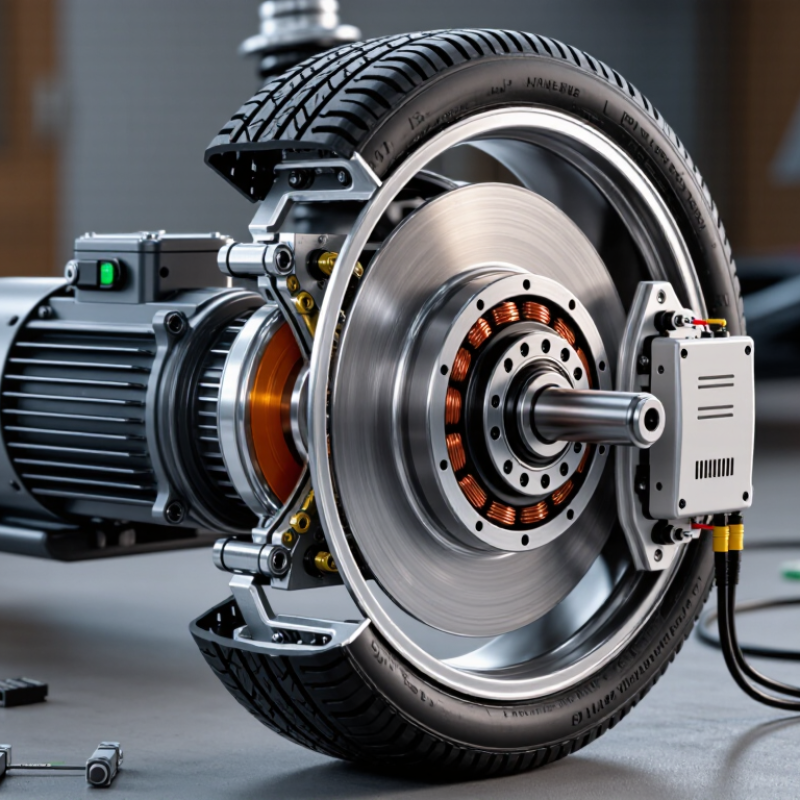
A wheel motor creates motion by turning electrical energy directly into wheel rotation. In many designs, the motor sits inside the wheel hub. The stator remains still, while the rotor connects to the wheel and turns with it. When electric current enters the stator coils, it produces a changing magnetic field. That field attracts and repels magnets on the rotor, creating torque.
Torque is the turning force. The controller switches current through different coil groups at precise moments, keeping the magnetic pull ahead of the rotor. This moving magnetic pattern makes the wheel follow it. More current usually produces more torque, while higher rotational speed requires careful control of voltage and timing. Sensors may report rotor position, speed, and temperature. The controller uses this information many times per second.
The process sounds simple. Real systems are less tidy. Friction, heat, road resistance, and tire deformation reduce useful output. During acceleration, the motor may draw substantial current, warming the windings and power electronics. During braking, it can work in reverse and send some energy back to the battery. However, recovered energy is never completely free. Testing on wet roads, steep slopes, and uneven surfaces reveals weaknesses that a clean diagram hides. Engineers must also manage the wheel’s added weight, because extra unsprung mass can reduce ride comfort and tire contact. A practical inspection checks cable seals, bearing condition, temperature readings, and unusual vibration before trusting performance claims.
What Are the Main Parts of a Wheel Motor?
A wheel motor, often called an in-wheel motor, places electric propulsion inside the wheel assembly. Its main parts work closely, but each has a different job. The stator remains fixed and carries copper windings. When current enters these windings, it creates a rotating magnetic field. The rotor responds to that field and turns the wheel through its hub connection.
Permanent magnets usually sit inside or around the rotor. Their magnetic strength affects torque, efficiency, and heat production. Bearings support the rotating assembly and keep movement smooth under cornering loads. A sealed housing protects the motor from water, dust, and road salt. The inverter sits nearby, or connects through short high-current cables. It changes battery power into precisely timed electrical pulses.
Heat is a serious design issue. The stator needs a thermal path through the housing, often using liquid cooling or conductive metal surfaces. Sensors monitor temperature, rotor position, and speed. Without accurate feedback, control becomes rough and inefficient. A 2023 U.S. Department of Energy assessment identifies thermal management and power electronics as major electric-drive development priorities. The IEA Global EV Outlook 2024 reported nearly 14 million electric cars sold in 2023, increasing pressure for compact, efficient drive systems.
However, the design is not automatically better. Motor parts inside the wheel increase unsprung mass, which can make suspension response harsher on broken pavement. That trade-off is easy to underestimate. In practice, sealing, bearing durability, and cable protection may matter as much as peak torque. The boundary between elegant packaging and excessive wheel weight remains debatable.
How Is a Wheel Motor Installed and Controlled?
A wheel motor combines the electric motor, reduction gears, and wheel hub in one compact assembly. It sends torque directly to the wheel, reducing the need for long drive shafts and several mechanical parts. The design can improve packaging and response, but it also places heat and vibration near the tire. That location matters.
Installation begins with checking the wheel motor’s rating, mounting pattern, axle dimensions, and load capacity. The technician should inspect the hub, bearings, brake clearance, and wiring route before lifting the vehicle. The motor must sit squarely against a clean mounting surface. Uneven contact can create vibration, premature bearing wear, or loose fasteners. Torque specifications should come from the motor manufacturer or vehicle engineer. Guesswork is not acceptable here. High-voltage systems require isolation, protective equipment, and a qualified technician. A small wiring mistake can damage the controller or cause dangerous movement.
Control usually comes from an electronic motor controller linked to throttle, brake, speed, and temperature sensors. It regulates current to adjust torque and motor speed. During setup, technicians verify sensor signals, wheel direction, emergency shutdown functions, and communication faults. The vehicle should first run on a secured test stand, then at low speed in a controlled area. This staged approach reveals incorrect polarity or unstable software safely. Regenerative braking also needs careful calibration, especially on wet surfaces. Even experienced installers can overlook cable strain near a moving suspension joint. That detail deserves a second inspection.

