
What Is an Explosion Proof LED Floodlight?
An explosion-proof LED floodlight is a lighting fixture built for locations where flammable gas, vapor, or dust may be present. Its housing is designed to contain certain internal ignition events and limit the chance of heat or flame reaching the surrounding atmosphere. It also uses LED technology, which can provide bright, directional light with less frequent lamp replacement. Not a magic shield.
The key details are in the enclosure, seals, cable entries, and operating temperature—not just the LED chip. A robust metal housing and carefully fitted joints help protect sensitive components from dust, moisture, and impact. Picture a loading bay at dusk: the fixture must light a wide work area while handling vibration, grime, and changing temperatures. Still, one product description cannot confirm suitability for every site.
When assessing an explosion-proof led floodlight, check its markings, temperature rating, ingress protection, mounting options, and manufacturer documentation. Match the fixture to the specific atmosphere and conditions where it will operate. A common mistake is assuming that “explosion-proof” means suitable for any hazardous location. It does not. Ask the manufacturer or a qualified lighting professional to clarify ratings and installation requirements. Consider beam angle and glare, too; a powerful light can leave shadows behind equipment or shine directly into a worker’s eyes. The right choice depends on the actual environment, not a dramatic product photo. Some details are easy to overlook. That is worth remembering.
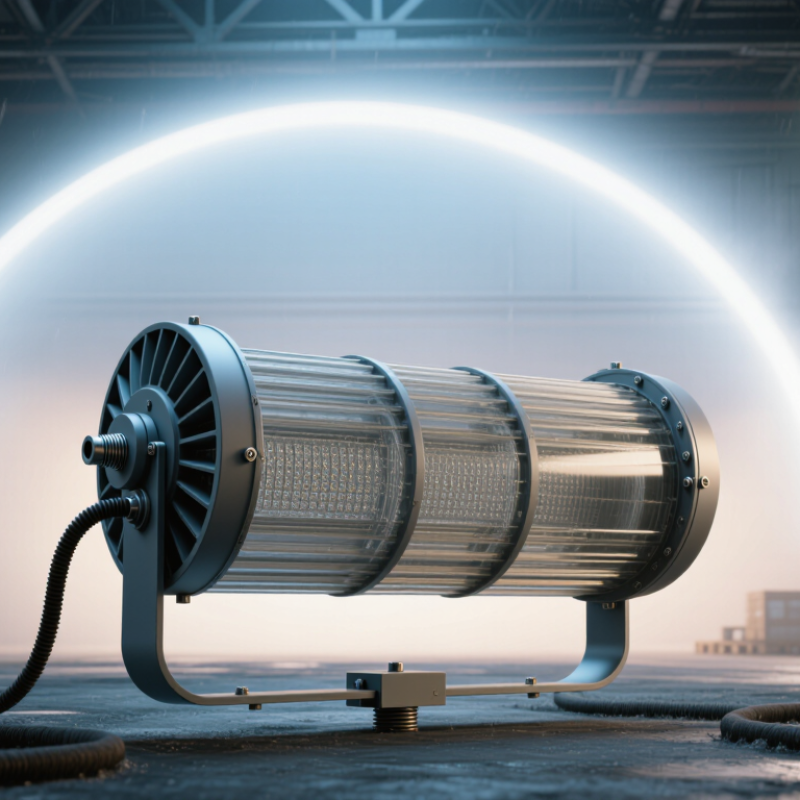
Definition and Purpose of an Explosion-Proof LED Floodlight
What Is an Explosion Proof LED Floodlight?
Definition and Purpose of an Explosion-Proof LED Floodlight
An explosion-proof LED floodlight is a sealed lighting unit built for areas where flammable gas, vapor, or dust may be present. Its enclosure is designed to contain an internal ignition and keep flames or hot particles from reaching the surrounding atmosphere. It does not make an area explosion-proof. The correct protection depends on the site’s hazard classification and the light’s approved rating.
Its purpose is to provide dependable illumination while helping reduce the risk of lighting equipment becoming an ignition source. A rugged housing, protected wiring entries, and carefully managed operating temperature all matter. So does the beam pattern: a wide beam can brighten a loading area, while a focused beam may suit a walkway. Details vary by model and application. A fixture can look sturdy yet still be unsuitable for a particular environment.
Tips: Check the hazard classification, temperature rating, and ambient limits before selecting a floodlight. Have qualified personnel verify installation and cable entries. Keep the lens and seals clean; damage can be easy to miss. And remember, “explosion-proof” is a rating, not a guarantee against every hazard.
