
What Are Chemical Building Blocks Used For?
Chemical Building Blocks are the molecules used to make larger, more specialized substances. Some become polymers for packaging, fibers, and medical devices. Others help form coatings, adhesives, detergents, fertilizers, or ingredients used in medicines. Their job is often invisible: a clear liquid enters a reactor, then emerges as a resin, powder, or durable film.
The scale is substantial. The OECD’s Global Plastics Outlook reports that global plastic production reached 460 million tonnes in 2019, twice the 2000 level. That figure illustrates one major use of chemical feedstocks, though it does not represent every building block or end product. The International Energy Agency’s The Future of Petrochemicals also describes petrochemicals as a significant source of demand for oil and gas. These reports show why choosing a building block matters: its performance, energy needs, and potential waste can shape products far downstream. Small molecules. Large consequences.
Paul T. Anastas, a chemist and green chemistry expert, co-authored the principle: “It is better to prevent waste than to treat or clean up waste after it is formed.” That idea offers a practical lens for evaluating Chemical Building Blocks. Manufacturers consider cost and performance, but also consistency, process efficiency, and the materials left behind. The picture is not perfectly neat: a useful molecule can still create difficult trade-offs across its supply chain. Understanding what these building blocks do—and how they are selected—helps explain how everyday materials begin.
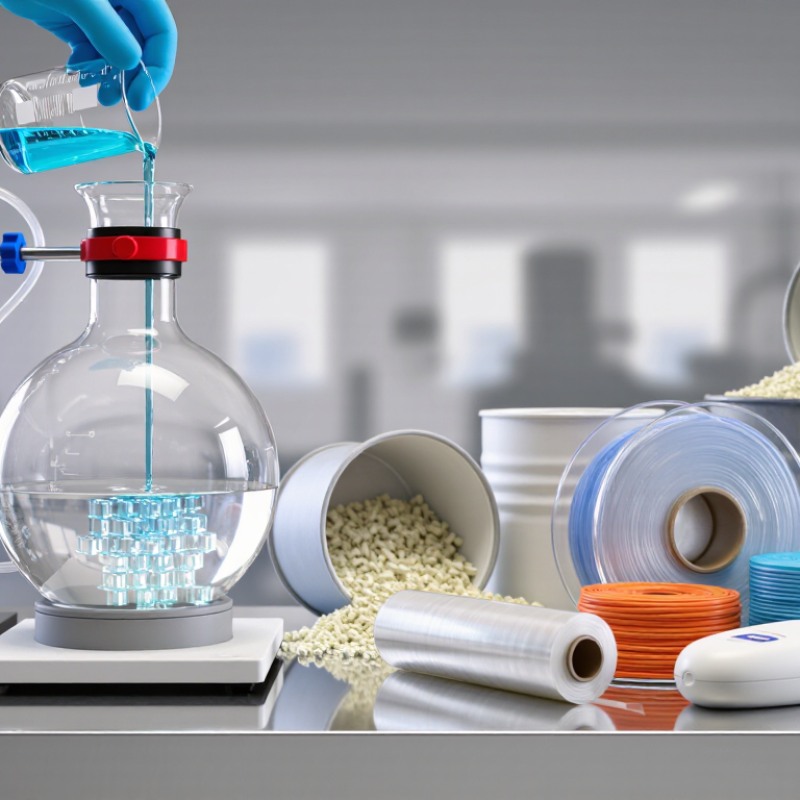
Chemical Building Blocks Defined: Small Molecules Used to Make Complex Products
Chemical building blocks are small molecules used as starting materials for larger, more useful substances. Ethylene can become polyethylene, found in packaging and pipes. Ammonia supplies nitrogen for fertilizers, while methanol helps make resins and coatings. These molecules are not finished products. They are more like carefully chosen ingredients, transformed through controlled reactions into materials with specific properties.
The scale is substantial. The OECD’s Global Plastics Outlook reports that global plastics production rose from 234 million tonnes in 2000 to 460 million tonnes in 2019. Many plastics begin with chemical building blocks such as ethylene and propylene. The International Energy Agency’s Future of Petrochemicals report also notes that petrochemicals are expected to drive more than a third of oil-demand growth through 2030. Small molecules, large supply chains. Still, production volume alone says little about a material’s full footprint. A useful building block must also perform reliably, use resources efficiently, and fit the product’s end-of-life plan. That last part is often harder than it sounds.
