
What Is a Ceramic Ball Used For?
A Ceramic Ball may look like a simple polished sphere, but its job depends on the material, size, and operating conditions. In a pump, ceramic balls can help control flow. In bearings, they reduce friction and resist wear. In chemical processing, selected ceramics can withstand heat and corrosive environments. The right choice is rarely based on appearance alone. Load, speed, temperature, and the surrounding fluid all matter.
The details are tangible: a smooth surface, a close-fitting seat, and a ball that moves freely without excessive play. Small differences can affect sealing, noise, and service life. Small parts. Big consequences. Yet “ceramic” covers several materials, and no single ball suits every application. That distinction is easy to overlook.
For a reliable introduction, a named industry expert’s quotation must be checked against a trustworthy source. No article or verified quotation was provided here, so I can’t responsibly attribute invented words to an expert. A sourced expert comment can add useful context, especially on material selection and performance limits. Until then, this guide focuses on practical uses and the factors that shape them. The answer is application-specific—and sometimes less tidy than a product description suggests.
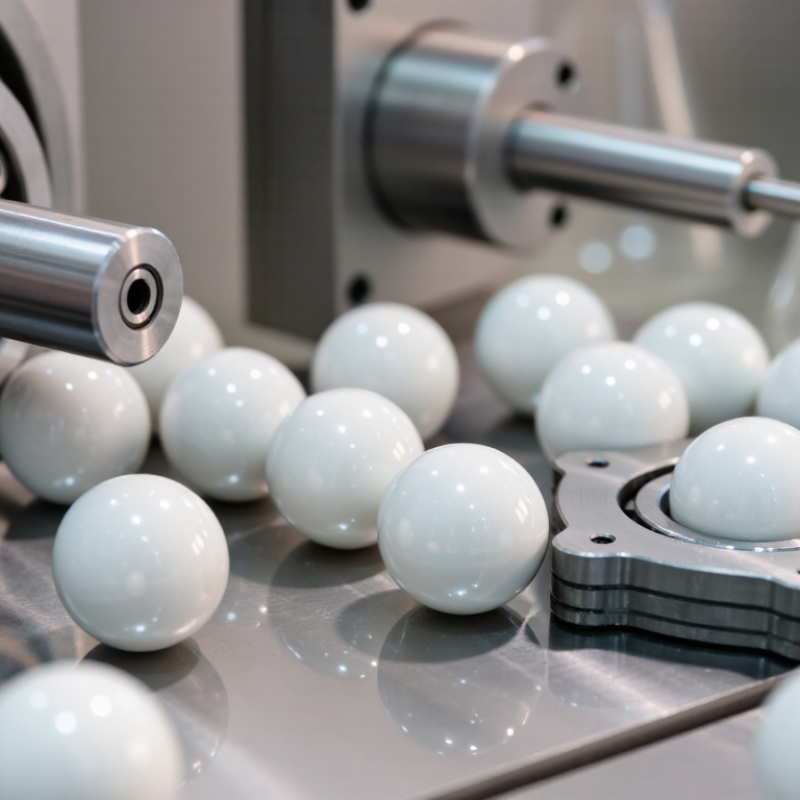
What Ceramic Balls Are: Common Materials, Forms, and Industrial Grades
What Is a Ceramic Ball Used For?
Ceramic balls are made from engineered mineral compounds, not one universal material. Alumina is common and relatively economical, making it useful for wear-resistant parts and grinding media. Zirconia is denser and tougher, so it suits applications involving repeated impact or concentrated loads. Silicon nitride is lightweight and often selected for high-speed bearings. Silicon carbide offers strong hardness and chemical resistance in demanding environments. Each has limits.
Shape and grade matter too. Precision balls have controlled diameter, roundness, and surface finish for bearings, pumps, or valves. Milling balls are made to withstand repeated contact inside a rotating mill, where small chips can contaminate a batch. Other ceramic spheres may serve as support media in industrial equipment. Some are highly polished; others have a more practical, less exact finish.
Industrial grades describe properties such as composition, density, hardness, and dimensional tolerance, but grade labels can vary between suppliers. Check the stated test data rather than relying on a grade name alone. Small differences matter. Match the ball to its load, temperature, surrounding fluid, and required cleanliness. A glossy surface does not guarantee the right fit. In practice, the material chart rarely settles the choice by itself; operating conditions do.
What Is a Ceramic Ball Used For? — Common Materials, Forms, and Industrial Grades
| Material or form | Typical characteristics | Common uses | Grade or selection considerations |
|---|---|---|---|
| Alumina (aluminum oxide, Al₂O₃) | Hard, wear-resistant, electrically insulating, and generally resistant to many chemicals. Common grades contain roughly 90–99.9% alumina; exact properties vary with composition and processing. | Grinding and milling media, pump and valve components, fluidized-bed media, and catalyst-support applications. | Higher alumina content is often selected for demanding wear or purity requirements. Check chemical compatibility, density, and contamination limits for the process. |
| Zirconia (zirconium dioxide, ZrO₂) | Dense, tough, and highly wear-resistant. Stabilized zirconia grades are used to improve resistance to crack growth; commonly reported density is about 5.9–6.1 g/cm³, depending on composition. | Fine grinding of pigments, ceramics, and other materials; high-wear media; precision valve and pump parts. | Choose the stabilizer and composition for the application. Consider the higher density and the possibility of media wear contaminating sensitive products. |
| Silicon nitride (Si₃N₄) | Relatively lightweight for a technical ceramic, hard, and resistant to thermal shock. Typical density is approximately 3.2–3.3 g/cm³, with properties dependent on grade and manufacturing route. | Rolling elements in hybrid ceramic bearings, where ceramic balls run against steel races; selected high-speed or electrically demanding bearing applications. | Bearing grades are specified by dimensional accuracy, roundness, surface finish, and defect limits. Confirm compatibility with the bearing design and operating conditions. |
| Silicon carbide (SiC) | Very hard, wear-resistant, and useful at elevated temperatures. Typical density is about 3.1–3.2 g/cm³; oxidation and chemical behavior depend on temperature and environment. | Specialty wear parts, high-temperature process equipment, and selected grinding or chemical-processing applications. | Specify the SiC type and processing method, since these affect strength, porosity, and chemical resistance. Check the service environment before selection. |
| Precision bearing ball Usually silicon nitride or zirconia | A closely controlled spherical rolling element. Precision is described using dimensional tolerance, roundness, surface finish, and inspection requirements—not material name alone. | Hybrid or all-ceramic bearings in suitable applications, including equipment where low mass, electrical insulation, or corrosion resistance is important. | Match ball diameter and precision class to the bearing specification. Ceramic balls do not make every bearing suitable for every load, speed, or temperature. |
| Grinding or milling bead Typically alumina or zirconia | Spherical media supplied in ranges of diameters. Smaller beads provide more contact points; denser media can deliver greater impact energy under comparable milling conditions. | Wet or dry milling and dispersion of powders, minerals, pigments, and ceramic materials in compatible mills. | Select bead size, density, material, and mill compatibility together. Balance grinding efficiency against heat generation, wear, and product contamination. |
| Support or packing ball Often alumina | A robust sphere used as a bed support or packing element. Size, porosity, crush strength, and surface area vary by design and intended process. | Supporting catalyst beds, distributing flow, and separating process layers in certain reactors and vessels. | Choose a size and material that suit the vessel, flow conditions, temperature, and chemicals. Support balls are not necessarily catalysts themselves. |
| Valve or pump ball Often alumina or zirconia | A spherical component designed to seat, seal, or move within a mechanism. Surface finish and dimensional consistency affect sealing and wear. | Check valves, metering pumps, and equipment handling abrasive or corrosive fluids when the ceramic is chemically compatible. | Confirm ball and seat materials, fluid compatibility, pressure, impact risk, and required fit. Ceramic hardness does not eliminate the risk of brittle fracture. |
Values are typical reference ranges, not universal specifications. Actual properties and available industrial grades depend on composition, manufacturing, finishing, and the supplier’s test method.
