Why Are Vertical Lifts Essential for Efficient Material Handling?
In today’s fast-paced logistics environment, efficient material handling is crucial. Vertical lifts play a significant role in this process. They enable businesses to move materials quickly and safely, optimizing space in warehouses. By elevating goods, vertical lifts reduce the need for excessive floor space. This can lead to increased productivity and minimized operational costs.
Many industries rely on vertical lifts for their functions. For instance, manufacturing plants benefit from vertical lifts during assembly. Retailers use them to manage inventory effectively. However, some companies may not fully understand their value. They may overlook opportunities to enhance their operations.
Despite their advantages, vertical lifts require careful consideration. Choosing the right model is not straightforward. Factors like load capacity and height must match specific needs. Companies often face challenges in implementation. They may encounter budget constraints or technical issues. Addressing these concerns is essential for maximizing the benefits of vertical lifts.
The Definition and Functionality of Vertical Lifts
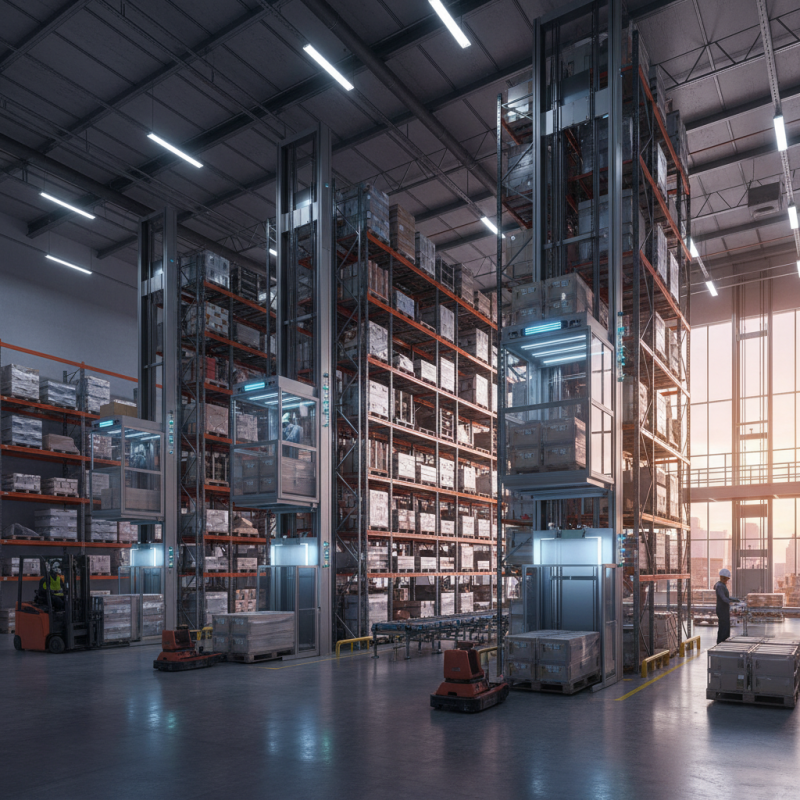
When we talk about vertical lifts, we refer to machines that move materials between different heights. They are vital for efficient material handling. By reducing manual labor, vertical lifts enhance workplace safety and productivity. Workers can transport goods quickly and with minimal risk.
Tips: Ensure your workspace has enough clearance for a vertical lift. This prevents accidents and makes operations smoother. Regular maintenance checks are also crucial. A neglected lift can lead to delays and unsafe conditions.
Vertical lifts can vary in design and load capacity. Some fit into tight spaces, while others handle heavy loads. It's important to choose the right kind for your needs. However, not all facilities maximize their use. Sometimes, lifts sit idle, owing to poor planning. Reflect on how you utilize these tools in your operations. Efficient use could save both time and money.
Key Benefits of Vertical Lifts in Material Handling Processes
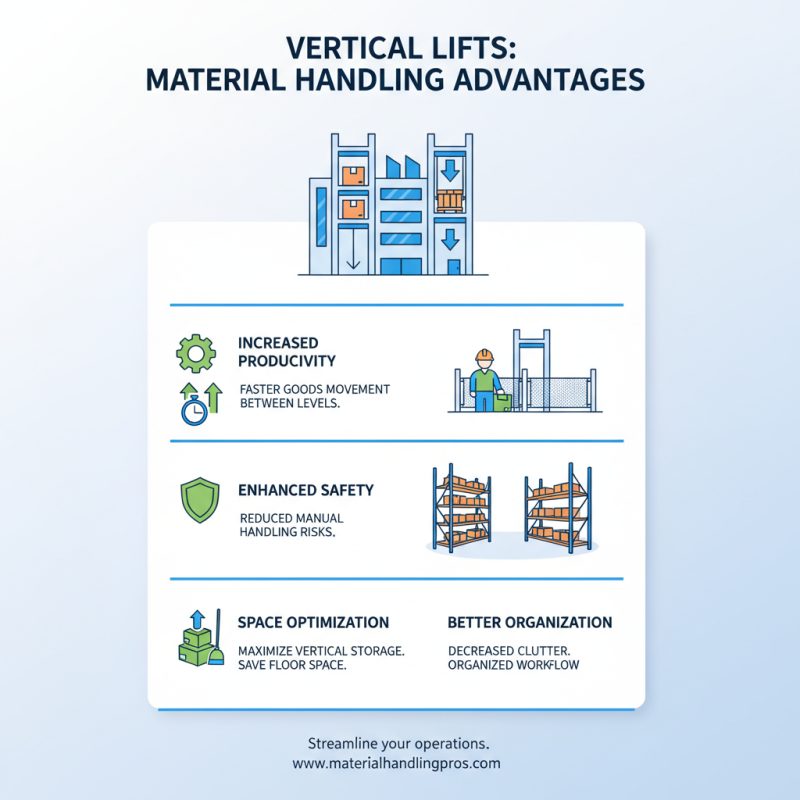
Vertical lifts play a crucial role in material handling processes. They provide an efficient way to move goods between different levels. These systems can increase productivity and safety in various industries. By maximizing the use of vertical space, businesses can save valuable floor space. This storage efficiency reduces the clutter on the ground, creating a more organized environment.
One key benefit of vertical lifts is their ability to streamline workflows. Employees spend less time waiting for materials to be delivered. Instead, they can access what they need quickly and efficiently. However, integration into existing systems can be challenging. Workers may need training to adapt to new equipment. This transition may cause temporary slowdowns.
Moreover, vertical lifts reduce the risk of injuries. Lifting heavy items manually can lead to accidents. Vertical lifts minimize these risks, promoting a safer workplace. But, these systems require maintenance. Neglecting this can lead to breakdowns, which disrupt operations. Regular checks are essential to ensure they function properly. Only then can they truly enhance efficiency in material handling.
Comparative Analysis: Vertical Lifts vs. Traditional Material Handling Methods
Vertical lifts play a crucial role in modern material handling systems. They offer a significant advantage over traditional methods. For instance, a report by the Material Handling Industry of America states that automated systems, including vertical lifts, can increase efficiency by up to 25%. Unlike conveyor belts and forklifts, vertical lifts require less floor space and enable quick vertical transportation of goods.
In many warehouses, space optimization is key. A vertical lift captures this by using limited warehouse height efficiently. Traditional methods can lead to bottlenecks and slow operations. Workers may struggle with heavy lifting and time-consuming movements. This not only reduces productivity but increases the risk of injuries. According to OSHA, lifting-related injuries account for a large percentage of workplace accidents each year.
Tips for implementing vertical lifts include conducting a thorough assessment of your facility. Understand your vertical transport need. Training staff on lift safety and efficiency is essential. Monitor performance metrics regularly to identify areas for improvement. Remember, not every lift suits every application. Reflect on your operations to choose the right solutions tailored to your needs.
Industries That Require Vertical Lifts for Optimal Efficiency
Vertical lifts have transformed various industries by enhancing material handling efficiency. In warehouses, they simplify the movement of goods. Workers can easily transport items to different levels, reducing manual labor. This efficiency leads to quicker operations and increased productivity. But efficiency is not the only concern; safety must be prioritized as well. Improper use of equipment can lead to accidents.
Manufacturing sectors also heavily rely on vertical lifts. They facilitate the transfer of materials between production lines. This ensures a continuous workflow, minimizing downtime. However, inconsistent training for operators can pose risks. Ensuring that everyone is well-trained is crucial for maintaining both safety and efficiency. Regular maintenance checks are also necessary to mitigate breakdowns.
Retail environments benefit from vertical lifts, especially in large stores. They help organize stock and make items easily accessible. Customers appreciate the well-displayed products, which improves their shopping experience. Yet, sometimes, stores overlook lift maintenance. This can lead to delays and frustrated shoppers. Keeping vertical lift systems operational is essential for maintaining customer satisfaction and operational efficiency in any industry.
Future Trends in Vertical Lift Technology and Design Innovations
Vertical lifts are revolutionizing material handling across various industries. Recent industry reports indicate that the market for vertical lift technology is projected to grow by 20% annually. This rise is attributed to advancements in design and efficiency. Companies now prioritize lightweight materials and smart automation in their lift systems. These innovations are crucial for optimizing workflow and reducing downtime.
Many businesses are adopting vertical lifts to improve operations. A survey showed that 70% of companies that implemented vertical lifts reported a reduction in labor costs. This is where efficiency meets practicality. User-friendly designs enhance safety and make training easier. Smart sensors and IoT integrations ensure that operations are seamless and responsive.
Tip: When considering vertical lifts, look for models with adaptable features. This flexibility can accommodate different materials and applications.
Future trends indicate a shift toward eco-friendly designs. Companies are focusing on energy-efficient lifts, which can save costs. However, it's essential to note that not all energy solutions are equal. Some lifts may consume more energy in standby mode than expected.
Tip: Conduct a thorough energy audit before selecting a lift to understand its operational impact. Balancing innovation with practicality is key to making an informed choice.