
What Is a Tubular Heater and What Types Are Available?
A Tubular Heater is an electric heating element built around a resistance wire inside a metal sheath. Electrical insulation, often compacted magnesium oxide, separates the wire from the sheath and helps transfer heat outward. The finished element may be straight, bent, or shaped to fit specific equipment. That shape is practical. Yet performance depends on more than appearance. Sheath material, watt density, operating temperature, and contact with the heated surface all affect how well an element works. A heater chosen without these details may warm unevenly, consume energy inefficiently, or fail sooner than expected.
Available types include straight and formed elements, finned heaters for air movement, and immersion heaters designed to heat liquids. Circulation heaters warm fluids as they pass through a heated chamber. Finned models are commonly used in ducts and equipment where air needs to move across the element. Immersion styles sit in tanks or other suitable vessels. Different jobs. Different designs. This guide explains how tubular heaters generate and transfer heat, compares common configurations, and outlines the factors to check before selecting one. Dimensions, voltage, fluid compatibility, and temperature controls deserve attention. They can be easy to overlook. No single heater suits every installation, and product specifications should be checked against the actual operating conditions. A careful comparison makes the available options clearer.
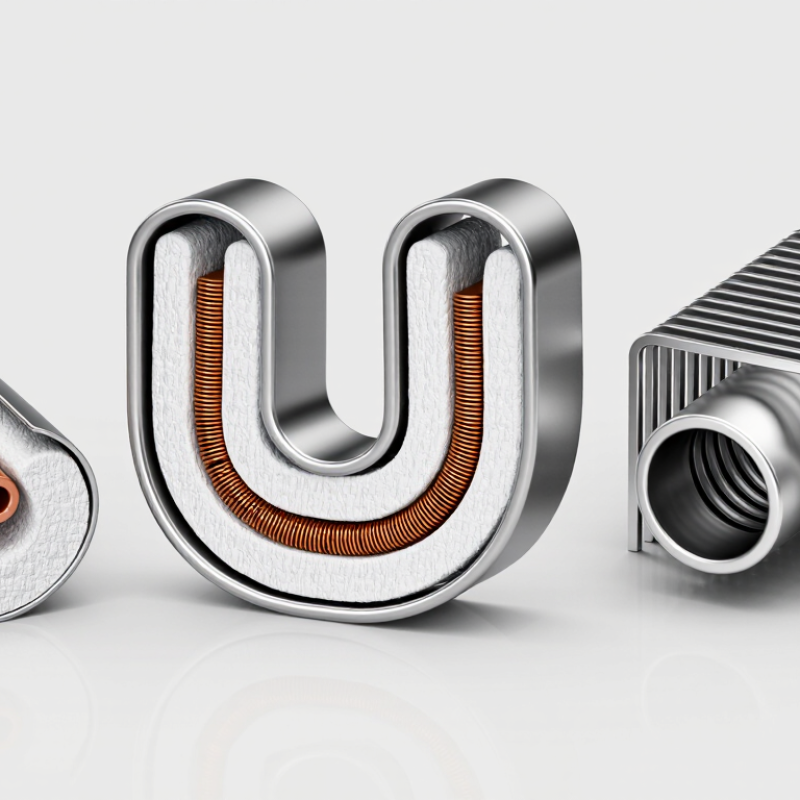
Tubular Heater: Definition and Core Components
A tubular heater is an electrical resistance element housed inside a sealed metal tube. Its core is a coiled resistance wire, commonly nickel-chromium, surrounded by compacted magnesium oxide insulation. The insulation electrically separates the coil from the sheath while conducting heat outward. End seals, terminals, and mounting fittings complete the assembly. Small details matter. Sheath material depends on the operating environment, while coil spacing and heater length influence heat distribution. A heater fitted tightly into a metal block transfers heat differently from one warming moving air.
The U.S. Department of Energy’s 2008 Improving Process Heating System Performance: A Sourcebook for Industry estimates that process heating accounts for about 36% of energy use in U.S. manufacturing. That figure describes process heating broadly, not tubular heaters alone. It helps explain why correct sizing and installation matter. IEC 60519-1:2020 sets general safety requirements for industrial electroheating installations, including considerations relevant to system design. In practice, watt density, airflow, fluid movement, and contact with the heated surface all affect performance. A hot spot may come from poor fit, not a faulty element. There is no single ideal construction for every job, and specifications deserve careful review.
