
Top 10 Trackless Transfer Cart Manufacturers in China
Moving a heavy die across a factory floor can look simple until the route changes, the load shifts, or production space gets tight. A Trackless Transfer Cart offers flexible, rail-free movement for materials between workstations, warehouses, and assembly areas. But the right model depends on more than its advertised capacity. Floor condition, turning space, travel distance, charging arrangements, and operator workflow all matter.
This guide to the Top 10 Trackless Transfer Cart Manufacturers in China introduces suppliers for buyers comparing equipment and engineering support. It considers practical factors such as load range, drive and steering options, control systems, customization, safety features, and after-sales service. These details help frame useful questions before requesting a quotation or arranging a site assessment. A polished catalog is not proof of a dependable fit. Ask for clear specifications, relevant project references, and realistic delivery and support information. Details matter. Manufacturer capabilities and product configurations can change, so verify current information directly with each supplier. A shortlist is only a starting point. Your floor, load, and daily operating pattern should shape the final choice.
What Is a Trackless Transfer Cart?
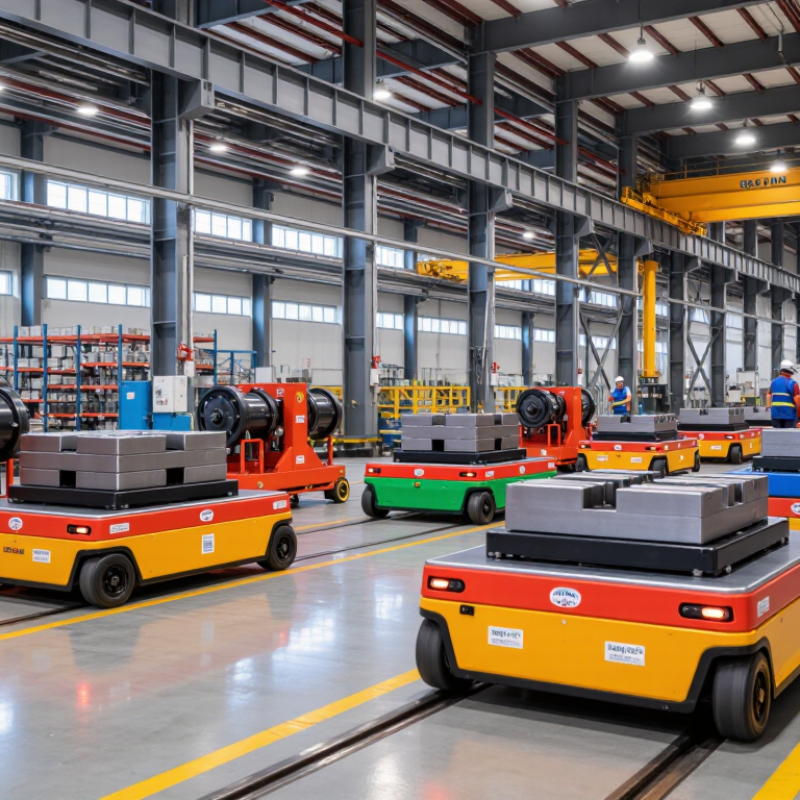
A trackless transfer cart is a powered, low-profile platform that moves materials across a factory floor without fixed rails. Operators may steer it manually, or it may follow a programmed route using sensors and onboard controls. A steel frame, battery pack, wheels, and emergency-stop controls are common features. Some carts carry heavy dies; others move crates between workstations. No rails. That matters when layouts change, though floor condition and turning space still limit performance.
Automation is expanding, but figures need careful interpretation. The International Federation of Robotics reported 541,302 industrial robot installations worldwide in 2023. That figure describes robots, not transfer carts, but it signals growing investment in automated production. ISO 3691-4:2020 covers safety requirements for driverless industrial trucks and their systems. Buyers should check load capacity, travel speed, stopping distance, charging needs, and how the cart behaves around people. A narrow aisle can expose poor turning assumptions.
Tips: Measure the heaviest load and tightest turn on site. Check floor joints and slopes, too. A cart that works on paper may still struggle beside a busy assembly line.
