
China Top 10 Winch Rocker Switch Manufacturers?
Winch Rocker Switch selection matters wherever a vehicle must pull reliably in mud, rain, or cold. A switch may look simple on a dashboard, but its contact design, current rating, terminal layout, and sealing affect dependable operation. Small details matter.
MarketsandMarkets estimated that the global automotive switches market would grow from USD 5.9 billion in 2022 to USD 7.3 billion by 2027, at a 4.3% compound annual growth rate. This report covers automotive switches broadly, not winch rocker switches alone. Still, it shows the scale of demand for vehicle control components and the need to assess suppliers carefully.
This guide examines ten manufacturers relevant to buyers comparing winch rocker switches. It considers product range, published specifications, customization, quality systems, and support for original-equipment and aftermarket projects. For each candidate, buyers should verify the actual datasheet: continuous and peak current ratings, momentary or latching action, illumination options, fitment, and environmental protection. A sealed face does not automatically mean the complete switch assembly is waterproof.
There is no universal ranking. Supplier suitability depends on the winch, wiring, installation conditions, and purchase volume. Some public company information is limited, so claims should be checked directly with manufacturers before sourcing. That takes extra time. It can prevent costly mismatches.
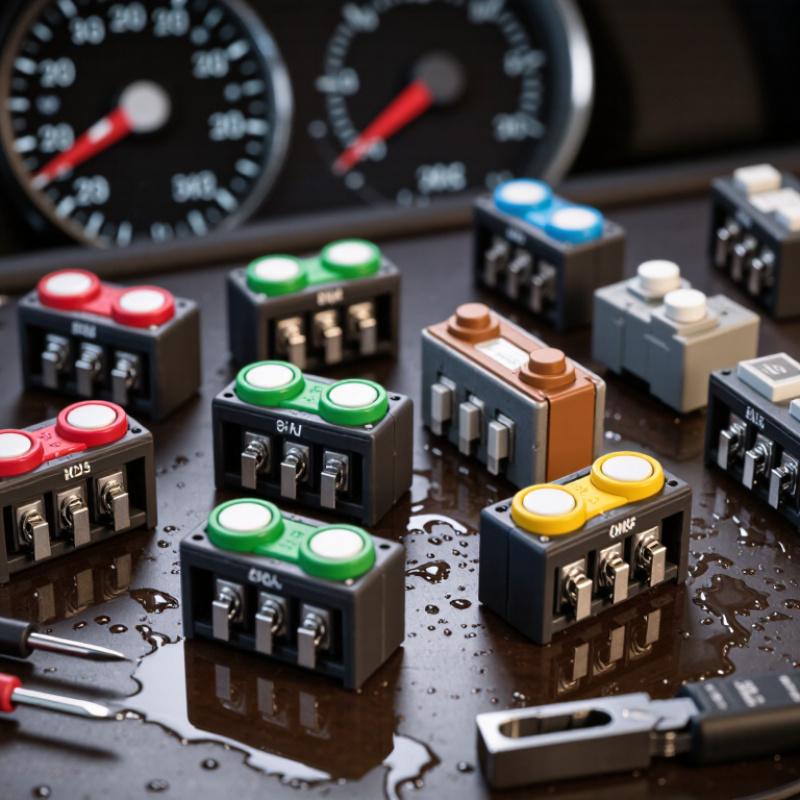
Winch Rocker Switches: Functions, Designs, and Common Applications
Winch Rocker Switches: Functions, Designs, and Common Applications
A winch rocker switch lets an operator control cable movement from a vehicle dashboard, handheld panel, or equipment console. Many designs use momentary action: press one side to pull in, and the other to pay out. Releasing the rocker stops the command. In many systems, the switch signals a solenoid or contactor rather than carrying the winch motor’s full current. Check the wiring diagram before installation.
Switches vary in shape, mounting depth, and protection against dust or moisture. Some have a center-off position, illuminated symbols, or a protective cover to reduce accidental operation. Common applications include recovery vehicles, utility trailers, and agricultural equipment. A switch that feels sturdy may still be unsuitable if its voltage, terminal layout, or environmental rating does not match the system. That detail is easy to miss.
Tips: Match the switch to the winch control circuit, not just the dashboard opening. Disconnect power before wiring, and use the specified fuse and cable sizes. Test both directions with the vehicle stationary and the area clear. If the rocker feels loose or responds inconsistently, stop and inspect the connections; guessing can make a small fault harder to trace.
China Top 10 Winch Rocker Switch Manufacturers? — Winch Rocker Switches: Functions, Designs, and Common Applications
A practical overview of ten common winch-switch configurations and design features. This is not a manufacturer ranking; switch layouts and electrical specifications vary by winch and vehicle.
| Switch Configuration or Feature | Typical Actuation | Function | Typical Control Role | Common Applications | What to Verify |
|---|---|---|---|---|---|
| Momentary three-position rocker | IN–OFF–OUT; returns to OFF when released | Provides directional commands while the operator holds the rocker | Commonly operates the winch contactor or solenoid control circuit | Vehicle dashboards, auxiliary switch panels, and wired winch controls | Confirm direction labels, return-to-center action, and compatibility with the winch control circuit |
| Momentary DPDT polarity-reversing switch | Two momentary directions with a center-off position | Can reverse polarity to control a compatible DC motor | Used only where the motor circuit and switch are specifically designed for direct motor switching | Some small DC actuators and purpose-designed low-power winch systems | Check the wiring diagram and DC motor load rating; many vehicle winches use contactors rather than switching motor current through the rocker |
| Momentary SPST rocker | ON while pressed; OFF when released | Opens or closes a single control path | May provide an enable, trigger, or auxiliary control input | Winch systems with a separate direction selector or control module | Verify whether the system requires one or two directional inputs and whether the switch is momentary or maintained |
| Maintained ON–OFF rocker | Stays in the selected position | Switches a circuit on or off until changed by the operator | Often used for auxiliary power or control enable rather than directional winch operation | Accessory panels and installations with a separate winch control | Ensure a maintained switch cannot leave a directional command energized unintentionally |
| Illuminated rocker | Momentary or maintained, depending on model | Provides a visible status or switch-location light | Indicator illumination may be wired to the switched circuit or a separate supply | Cab dashboards and low-light control panels | Check lamp or LED voltage, polarity where applicable, terminal layout, and illumination wiring |
| Sealed or weather-resistant rocker | Available in different switching arrangements | Helps limit entry of dust or moisture when installed as specified | Control input for an appropriately protected winch system | Off-road vehicles, utility vehicles, and exposed control panels | Confirm the stated ingress-protection rating for the complete installed assembly; a cover or boot alone does not establish a rating |
| Guarded rocker | Rocker is protected by a raised guard or cover | Reduces the chance of accidental operation | Can protect a directional or enable control from unintended contact | Busy dashboards, work vehicles, and equipment panels | Check that the guard does not obstruct deliberate operation or prevent access in an emergency |
| Panel-mount rocker | Snaps into a compatible panel cutout or mounts with hardware | Provides a fixed, accessible control location | Connects to the designated switch-control wiring | Vehicle dashboards, console panels, and equipment enclosures | Match the cutout dimensions, panel thickness, terminal type, and clearance behind the panel |
| Handlebar or remote-housing rocker | Compact thumb-operated rocker, often momentary | Allows directional commands without reaching a dashboard switch | Usually sends control signals to a compatible winch control system | ATVs, UTVs, and other vehicles with handlebar controls | Check mounting fit, cable routing, weather protection, and compatibility with the specific winch wiring |
| Dual-rocker control panel | Two separate rockers, commonly assigned to different functions | Separates winch direction commands or combines winch control with an auxiliary function | Each switch operates its own designated control input | Custom dashboards and multi-function accessory panels | Label each function clearly and confirm that the panel wiring matches the winch manufacturer’s circuit diagram |
Selection note: Rocker-switch appearance does not determine its electrical capacity. Check the switch’s DC rating, momentary or maintained action, terminal diagram, environmental rating, and compatibility with the winch circuit. Follow the winch wiring diagram and use appropriately rated contactors, fuses, and wiring where required.
