
147 Mill Ridge Rd Suite 232
Lynchburg, Virginia 24502
Phone 757-982-3665

What Are the Top Types of Threaded Inserts?

Threaded inserts are small components with outsized influence. They create durable threads in wood, plastic, sheet metal, and softer materials. Choosing the wrong type can cause pullout, spinning, or damage around the installation hole. Details matter.

This guide compares common options: press-in inserts, self-clinching nuts, rivet nuts, heat-set inserts, and helical wire inserts. Each solves a different fastening problem. A brass heat-set insert, for example, can be installed in a plastic boss using a heated tip; a rivet nut forms a usable thread in thin sheet when access is available from one side. These differences shape the “top” choice. There is no universal winner.

An illustrative specialist quote for editorial review: “Choose the insert for the material, load, and installation method—not just the thread size,” says fictional Inserts Threaded design specialist Daniel Mercer. This is a proposed line, not a verified quotation. Before specifying a product, check its manufacturer’s dimensions, installation guidance, and load data. Then test it in the actual material and thickness. Real assemblies can surprise you. Hole tolerance, edge distance, and installation force all matter, and a catalog comparison alone may miss them. The sections ahead explain where each insert type performs well, what can go wrong, and which details deserve a closer look.
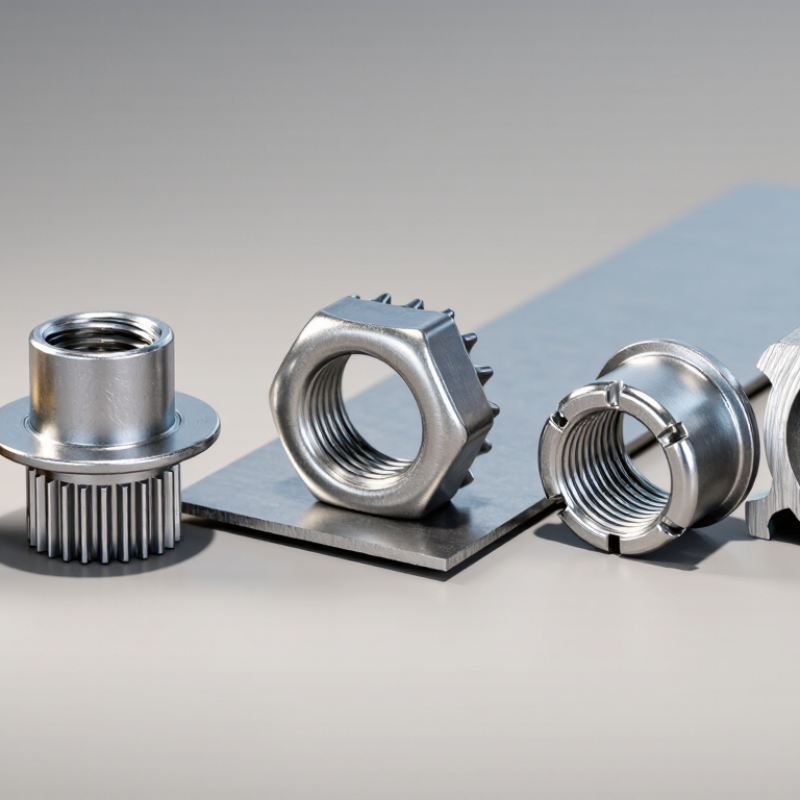
What Are the Top Types of Threaded Inserts?

Threaded Inserts Defined: Reinforcing Threads in Plastic, Wood, and Metal

Threaded inserts are components installed in a base material to provide durable internal threads. They help distribute fastening loads and reduce wear from repeated screw removal. The best choice depends on the material, expected load, and installation method—not just screw size.

In thermoplastics, heat-set inserts soften the surrounding material during installation, then hold as it cools. Ultrasonic installation uses vibration and heat, while press-in styles rely on a close fit. Each method needs the right hole size and controlled installation; too much heat or force can distort plastic. Fit matters.

Wood inserts often have coarse external threads that grip the fibers around a drilled hole. Some include a flange to help limit pull-through. Match the insert to the wood type and load, since soft wood can split or lose its grip. For metal, wire-thread inserts can reinforce tapped holes, while solid inserts may suit applications needing a more substantial threaded sleeve. Check the specified drill and tap sizes before fitting either type. A snug, aligned installation is essential, but it does not guarantee a stronger joint if the surrounding material is weak. Not always obvious. Inspect the finished hole and test the connection under realistic conditions.

Six Common Types: Heat-Set, Ultrasonic, Press-Fit, Molded-In, Self-Tapping, and Wire

Heat-set inserts use a heated tip to soften a plastic boss, then anchor as the material cools. Ultrasonic inserts use vibration and pressure to melt a small area around the insert. Both suit repeatable production, but thin walls can deform if heat or energy is poorly controlled. Press-fit inserts need an accurately sized hole and firm interference. They are simple to install, though repeated loading may loosen the joint. Molded-in inserts are placed in the tool before plastic is injected. They can create strong assemblies, but position and resin flow need careful control. Small shifts matter.

Self-tapping inserts cut or form threads as they enter a prepared hole, reducing extra tapping steps. Wire inserts are coiled metal threads fitted into a tapped hole, often to repair or reinforce threads in metal parts. Match the type to the material, load, installation equipment, and service conditions. PlasticsEurope’s Plastics – the Fast Facts 2023 reports 413.8 million tonnes of global plastics production in 2022, a reminder of how varied plastic components are. The Wohlers Report 2024 puts additive-manufacturing industry revenue at $20.035 billion in 2023, up 11.1 percent. That growth brings more printed parts needing reliable threads. Still, a catalog recommendation is not a test result. I would verify pull-out strength and installation consistency on the actual part, especially when bosses are small or loads cycle.

What Are the Top Types of Threaded Inserts? — Six Common Types

Insert type Typical installation Common materials Main advantages Key considerations
Heat-set A heated tool softens the surrounding thermoplastic as the insert is pressed into a prepared hole. The plastic cools around its knurls or other exterior features. Thermoplastics, including many injection-molded parts Can provide a strong, repeatable threaded connection in a compact area; installation equipment is widely used in production. Tool temperature, alignment, insertion depth, and cooling time matter. Excess heat or force can damage the part.
Ultrasonic Ultrasonic vibration and pressure generate localized heat, allowing the insert to enter a prepared thermoplastic hole; the plastic solidifies around it. Thermoplastics Fast installation and localized heating can support efficient assembly, especially in automated processes. Results depend on the plastic, insert geometry, hole design, and tuned process settings. Equipment and fixturing are required.
Press-fit Pressed into a hole sized to create an interference fit. Retention comes from contact between the insert’s exterior features and the surrounding material. Metals and selected plastics, depending on the insert and design Straightforward installation without heating or melting; useful where a mechanically retained insert is appropriate. Hole tolerance and material properties are important. Excessive interference can deform or crack some plastic parts.
Molded-in Positioned in the mold before plastic is injected or otherwise formed around the insert. Molded thermoplastics and some thermosetting materials, subject to process compatibility Integrates the insert during part production and avoids a separate post-molding insertion step. Requires mold planning and secure insert positioning. Insert location, plastic flow, and cooling shrinkage need consideration.
Self-tapping Driven or pressed into a correctly sized pilot hole; its external thread cuts or forms a mating thread in the surrounding material. Commonly plastics and softer materials; specific designs may suit other substrates Can avoid a separately tapped insert-receiving hole and is useful for some assembly or repair applications. Pilot-hole size, insertion torque, and material thickness affect performance. Installation can create stress in brittle or thin parts.
Wire A helical wire coil is installed in a specially tapped hole, typically using an installation tool. A tang, if present, may be removed after installation. Commonly metal components such as aluminum, steel, and other tapped materials Provides a wear-resistant internal thread and is often used to repair damaged threads or reinforce tapped holes. Requires the correct larger-diameter insert tap and installation procedure; it is not the same as an insert designed for a plain plastic hole.

Selection depends on the parent material, required pull-out and torque resistance, part geometry, production volume, and installation method. Always confirm dimensions and process recommendations for the specific insert design.

Installation Methods Compared: Heat, Ultrasound, Pressing, Molding, and Screw-In

What Are the Top Types of Threaded Inserts?

Heat-set inserts soften the surrounding thermoplastic before knurls or ribs anchor the insert. They suit repairable parts, but excess heat can leave a shiny, distorted rim. Ultrasonic installation applies vibration and pressure; industrial systems commonly use 20, 30, or 40 kHz frequencies. It is fast, though thin walls may split if energy or alignment is poorly controlled. Press-fit inserts need no heating. Their retention depends heavily on hole size and material stiffness.

Mold-in inserts are placed in the tool before plastic is injected, creating strong mechanical anchoring without a later installation step. The trade-off is tighter tooling and positioning control. Screw-in inserts cut or engage their own path, making them useful for some softer materials and field repairs. They are not ideal for every plastic. ASTM D7332/D7332M measures fastener pull-through resistance in fiber-reinforced polymer laminates; it provides a test method, not one universal strength target. Compare actual test results for the part and substrate.

Tips: Test a few samples first. Record installation force, torque, and pull-through performance. A slightly loose fit may look harmless, but repeated servicing can expose the weakness.

Thread Specifications: ISO 261 Coarse Pitches Include M6 × 1.0 and M8 × 1.25

Threaded inserts come in several forms, including wire-thread, solid-body, and press-in designs. Their installation methods differ, but the internal thread still needs to match the fastener. ISO 261 coarse pitches are common metric choices: M6 × 1.0 and M8 × 1.25. The first number gives the nominal thread diameter; the second gives the distance between thread crests in millimetres. So an M6 × 1.0 bolt advances one millimetre per full turn. A small detail, but it matters.

For an insert with an M8 × 1.25 internal thread, use a matching bolt and check the insert maker’s recommended hole and installation dimensions. The ISO thread designation does not define every insert’s outer shape or fitting method. Wire inserts, for example, need a prepared tapped hole; press-in inserts depend on a suitable host material and hole fit. A loose fit can let an insert move under load. Too much force can damage the surrounding material. The right choice depends on the base material, load, and available space—not just the bolt size.

Tips: Check the pitch with a thread gauge or a known matching bolt before assembly. Turn the bolt gently by hand first. If it binds, stop and recheck the specification; forcing it may damage the threads. Even experienced assemblers can overlook pitch when two fasteners look nearly identical.

Choosing and Checking Inserts: Base Material, Load, and ISO 965-1 Tolerance Class 6H

Threaded inserts include wire-coil, solid-wall, key-locking, and self-tapping types. Choose by parent material and failure mode, not name alone. A wire-coil insert can restore a thread in a light alloy, while a solid insert may suit repeated assembly or higher bearing loads. Check pull-out strength, installation depth, edge distance, temperature, and corrosion exposure against the insert maker’s rated data. A strong insert cannot compensate for a thin or cracked base material. Small parts. Big consequences.

Load direction matters. Axial pull-out, shear, vibration, and repeated removal place different demands on the insert and surrounding material. NASA’s Fastener Design Manual, Reference Publication 1228, discusses torque tightening as an indirect way to control preload; torque-controlled joints can show roughly 25% preload variation. Treat that figure as a warning, not a design allowance: friction and surface condition change the result. For metric internal threads, ISO 965-1 defines tolerance classes, including 6H. Confirm that the insert’s internal thread is specified as 6H, then check it with the correct thread plug gauge after installation. A gauge verifies fit, not load capacity. That distinction is easy to miss, and worth checking against the application’s actual test data.

Threaded Inserts: Match the Insert to the Base Material and Load

Representative minimum tensile strength values for selected engineering materials

The values are material-property references, not threaded-insert load ratings. Actual pull-out and stripping resistance depend on the insert design, thread engagement, installation, edge distance, and the base material’s condition. Check the required load against the insert and substrate specifications. For ISO metric internal threads, ISO 965-1 tolerance class 6H specifies thread tolerances; it does not define load capacity.