
What Are the Top Types of Heat Resistant Adhesive?
Choosing the right Heat Resistant Adhesive is rarely a simple matter of selecting the highest temperature rating. In practical applications, performance depends on heat exposure, bonding materials, pressure, moisture, and movement. A formula that holds ceramic near an oven may fail on flexible aluminum under vibration. That distinction matters.
This guide examines the top types of heat-resistant adhesives, including silicone, epoxy, polyimide, cyanoacrylate, and ceramic-based formulas. Each type offers a different balance of temperature resistance, flexibility, curing time, and chemical stability. For example, silicone adhesive can remain flexible around heated components, while high-temperature epoxy often provides stronger structural support. Polyimide adhesives suit demanding electrical and aerospace applications, but they may require careful processing and higher curing temperatures.
Real-world selection should begin with the complete service environment. Check continuous and peak temperatures, not only the number printed on the package. Review the technical data sheet, substrate compatibility, surface preparation instructions, and expected bond thickness. A clean metal surface may need abrasion and degreasing before bonding. Small details can decide whether a joint lasts for months or fails during the first thermal cycle.
No adhesive is universally heatproof. That assumption often fails. Ratings can also change after repeated heating, chemical contact, or mechanical stress. Testing a sample under realistic conditions remains the most reliable approach. This overview provides a practical foundation, but professional engineering review may still be necessary for safety-critical assemblies. Even experienced users can overlook thermal expansion. That is worth reconsidering.
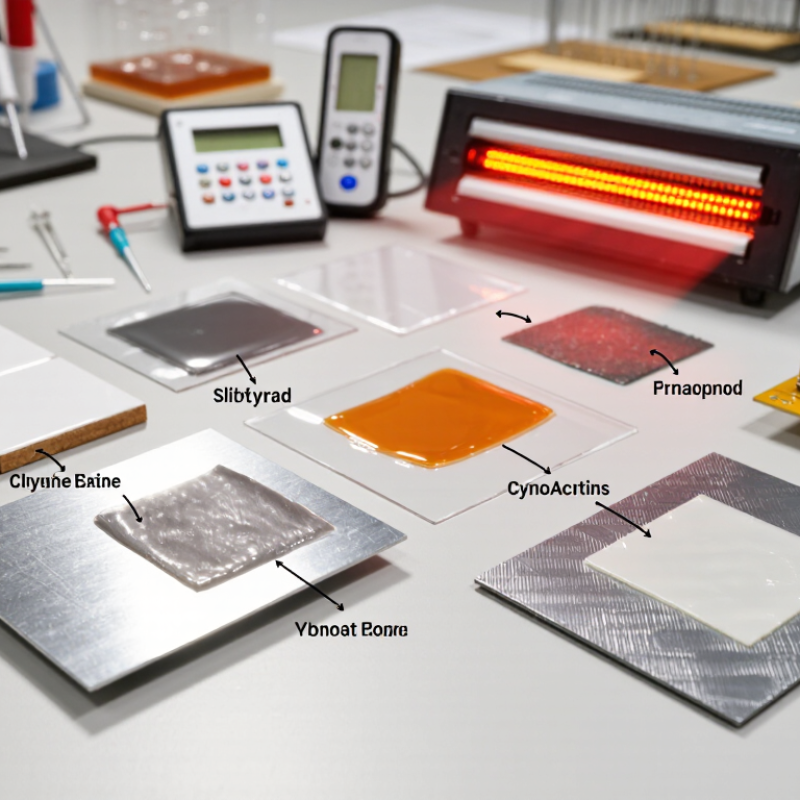
What Heat-Resistant Adhesive Is and How It Works
What Are the Top Types of Heat Resistant Adhesive?
What Heat-Resistant Adhesive Is and How It Works
Heat-resistant adhesive is a bonding material designed to remain stable under elevated temperatures. It does not simply “ignore” heat. Instead, its chemical structure slows softening, breakdown, and loss of strength. Some formulas use flexible silicone polymers, while others rely on rigid epoxy or inorganic ceramic networks. Each type handles heat differently.
When the adhesive cures, its molecules link into a stronger structure. This process is called cross-linking. The finished bond can resist heat, vibration, moisture, and repeated expansion. However, performance depends on the surfaces, bond thickness, curing time, and temperature cycle. In practical testing, a thin bond between metal panels may survive an oven-like environment, but sudden cooling can still create cracks. Temperature ratings can also be misunderstood. Short-term exposure is not the same as continuous service.
Tips: Clean both surfaces thoroughly and remove oil, dust, and loose coatings. Follow the full curing schedule, even when the adhesive feels dry. Apply a controlled, thin layer. Leave room for different materials to expand. Test a small sample first. A neat label is not enough; real conditions often reveal weaknesses. Check shear strength, peel resistance, and repeated heating before using the bond in a critical assembly.
