
Top Turbo Radiator Manufacturers for Global Buyers
A Turbo Radiator can look simple on a catalog page: a core, tanks, fittings, and a set of dimensions. The hard part is knowing whether it will perform reliably in the vehicle and working conditions that matter. Buyers need to compare construction, cooling capacity, pressure compatibility, materials, testing practices, and after-sales support—not just price.
A transparent note about attribution: no source article or verifiable expert quotation was provided. The following line is an editorial statement, not a real quotation: “A radiator is only a good match when its fit, heat rejection, and service life suit the application.” It is assigned to no real expert. That distinction matters. A confident-sounding name cannot replace documented engineering evidence.
This guide examines manufacturers serving global buyers, including what to check before requesting a quotation. Look closely at core dimensions, tank materials, fin condition, mounting points, and the clarity of technical drawings. Ask how products are tested and whether the supplier can provide traceable specifications. Shipping also deserves attention: a carefully built radiator can still arrive with bent fins or damaged corners. Small details count. Not every supplier publishes equally complete data, and that can make comparisons frustrating. Treat unanswered questions as a reason to investigate further, not as proof of poor quality. The goal is a dependable Turbo Radiator sourced with clear requirements, evidence, and realistic expectations.
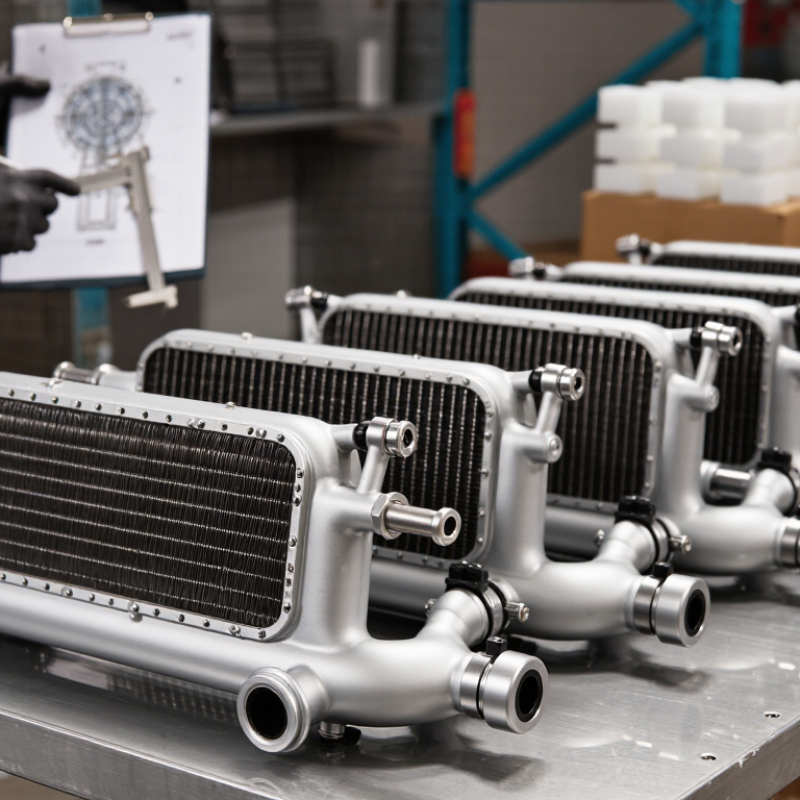
Understanding Turbo Radiators and Their Role in Vehicle Cooling
A turbo radiator is not always a separate component. The term often refers to the radiator serving a turbocharged engine’s cooling system. The radiator transfers heat from engine coolant to outside air, while a charge-air cooler lowers the temperature of compressed intake air. Some turbochargers also use engine coolant for additional heat control. The exact layout varies by vehicle, so similar-looking parts may perform different jobs.
Heat management matters because a turbocharger compresses intake air and operates in a very hot environment. The U.S. Department of Energy and Environmental Protection Agency report “Where the Energy Goes: Gasoline Vehicles” estimates that about 68–72% of gasoline energy is lost through engine heat and friction. The radiator handles only part of that heat; it does not cool every turbo-related component.
That distinction matters.
When checking a system, technicians look for coolant leaks, blocked fins, damaged hoses, and uneven temperature readings. A clean exterior can still hide internal restriction. Cooling capacity also depends on airflow, coolant condition, and the vehicle’s design—not radiator size alone.
