
2026 Top Titanium Bar Suppliers for Global Buyers
Choosing a Titanium Bar supplier in 2026 takes more than comparing price and delivery dates. Buyers need to understand how raw-material supply, alloy grade, manufacturing controls, and documentation affect the finished product. The U.S. Geological Survey’s Mineral Commodity Summaries 2025, in its titanium chapter, tracks global titanium mineral and sponge production. These upstream indicators help explain supply exposure, but they do not measure finished-bar availability or supplier performance. That distinction matters.
For product requirements, ASTM B348/B348M sets specifications for titanium and titanium-alloy bars and billets, including chemical and mechanical requirements. Buyers should confirm the applicable revision, grade, dimensions, condition, and inspection documents directly with each supplier. Ask for heat-level traceability and test certificates, then check whether the quoted product and records match the purchase specification. A polished certificate alone is not proof of consistent production.
Details count. A bar may look uniform on a rack, while its paperwork reveals a different grade or condition. That is why supplier comparisons should consider production capability, quality controls, dimensional tolerances, and delivery history—not just catalog claims. In this guide, we assess leading suppliers for global buyers using practical sourcing criteria and available evidence. No ranking can replace a buyer’s own technical review; supplier capabilities and lead times can change. Still, a careful shortlist is a useful start.
What Titanium Bars Are and How They Are Used
2026 Top Titanium Bar Suppliers for Global Buyers
What Titanium Bars Are and How They Are Used
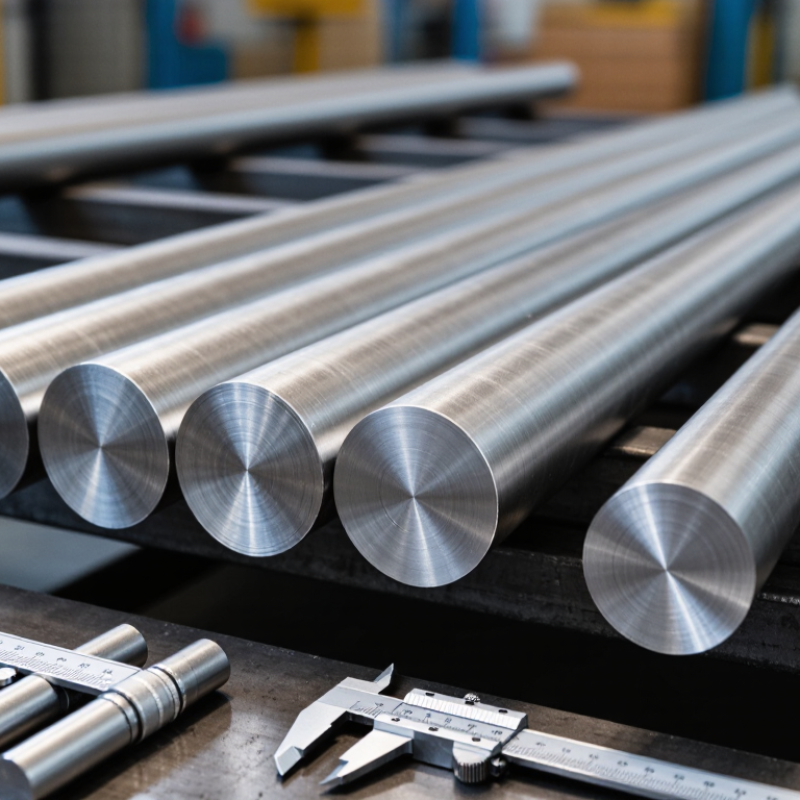
A titanium bar is a solid, elongated metal product, commonly supplied in round, square, or flat shapes. Buyers select dimensions and material grades to match the finished component and its service conditions. Titanium combines relatively low weight with strong corrosion resistance, though performance varies by grade and processing method. That matters. Bars may be forged or otherwise worked, and their surface condition can affect later machining. Not every bar suits every job.
Manufacturers machine titanium bars into shafts, fasteners, fittings, and structural parts. These components may serve aerospace equipment, marine systems, chemical-processing machinery, or medical devices. Each use has distinct requirements for strength, temperature, cleanliness, and traceability. A corrosion-resistant bar is not automatically right for a hot, highly loaded component. That distinction is easy to overlook when comparing material by weight or price alone.
