
Top 10 Telemecanique Sensors Suppliers for Global Buyers
Industrial automation depends on small components that must perform reliably in demanding conditions. Telemecanique Sensors products serve applications such as position detection, limit switching, and machine monitoring. For global buyers, choosing a supplier involves more than comparing unit prices. Stock availability, product authenticity, documentation, and technical support all matter.
The International Federation of Robotics reported 553,052 industrial robots installed worldwide in 2022, a 5% increase over 2021. Its World Robotics 2023 report points to expanding automation, where dependable sensing helps machines detect position and respond to changing conditions. IFR President Marina Bill said, “The new World Robotics report shows the highest level of robot installations in history.” That growth offers useful context, though robot figures alone cannot measure demand for any specific sensor brand.
This guide compares ten suppliers of Telemecanique Sensors for buyers serving different regions and industries. It considers product range, purchasing access, delivery reach, and after-sales assistance. A listing is not a guarantee of suitability. Check exact model references, certificates, lead times, and warranty terms before ordering. Ask for written confirmation. Even a polished catalogue may leave important details unclear. That is worth remembering when production depends on a sensor arriving on time and matching the machine specification.
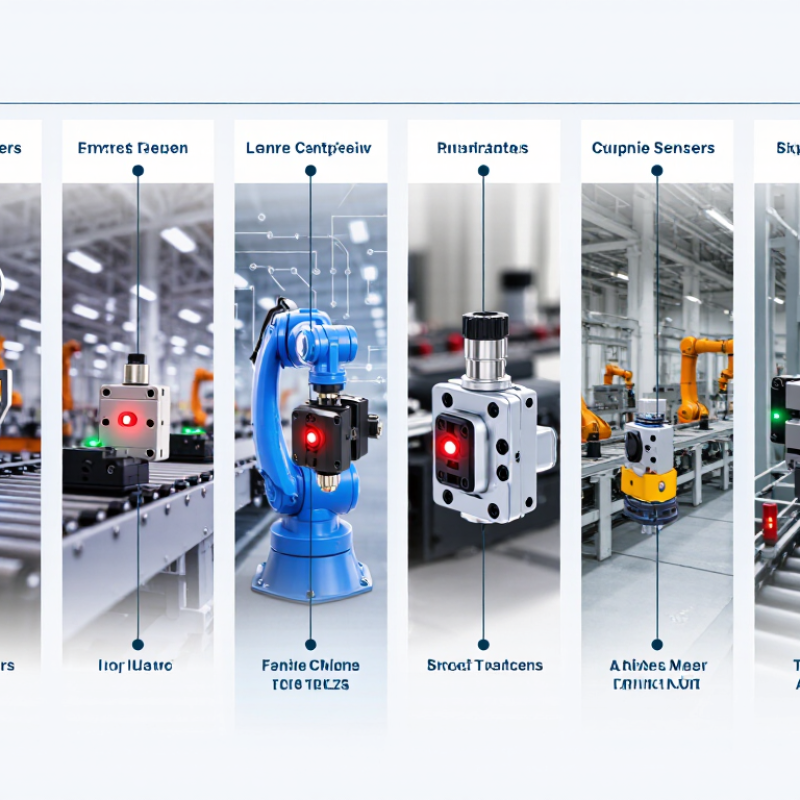
Understanding Telemecanique Sensors and Their Role in Automation
Industrial sensors turn physical events into usable signals. A proximity sensor can detect a metal part on a moving conveyor; a photoelectric sensor can confirm that a carton has reached the packing station. Controllers use these signals to adjust motion, trigger alarms, or stop equipment before a collision. Small devices. Big consequences.
The scale of automation makes dependable sensing essential. The International Federation of Robotics reported 4,281,585 industrial robots operating worldwide at the end of 2023, 10% more than a year earlier, in World Robotics 2024. Deloitte’s 2024 Smart Manufacturing Survey found that 86% of surveyed manufacturing executives expect smart manufacturing solutions to drive competitiveness within five years. Sensors provide much of the real-time information those systems need, including position, temperature, pressure, and vibration. Yet a sensor is only as useful as its installation and maintenance. Dust, vibration, poor alignment, or an unsuitable detection range can produce unreliable readings. That part is easy to underestimate. Buyers should compare sensing distance, response time, environmental protection, and compatibility with control systems, then test performance on the actual production line. A catalogue specification cannot fully predict shop-floor behavior.
