
2026 Top Tank Container Types for Global Buyers
Global buyers choosing a Tank Container in 2026 face more than a capacity decision. They must weigh cargo compatibility, cleaning requirements, insulation, heating, discharge speed, and the routes their units will travel. The International Tank Container Organisation’s 2024 fleet survey estimated 801,800 tank containers worldwide at the start of 2024, up 7.3% year over year. That scale signals a mature market, but not a simple one. A standard stainless-steel tank may suit many liquid movements; specialist cargoes can call for lined, heated, gas, or cryogenic designs. Details matter.
ITCO’s president, Reg Lee, is an industry voice on tank-container operations. His practical guidance can be paraphrased this way: match the equipment to the cargo and operating conditions, not just the purchase price. That distinction matters at a loading bay, where a wrong fitting or unsuitable insulation can disrupt an otherwise well-planned shipment. Buyers should also examine test records, maintenance history, valve arrangements, and support availability. Specifications deserve close reading.
This guide compares the main tank container types global buyers are likely to consider in 2026, from general-purpose units to specialized models. It uses ITCO’s fleet data as market context, not as a forecast of future demand. One caution: published fleet totals cannot tell buyers whether a particular unit fits their cargo, route, or handling setup. That assessment still requires qualified technical review and clear operating requirements.
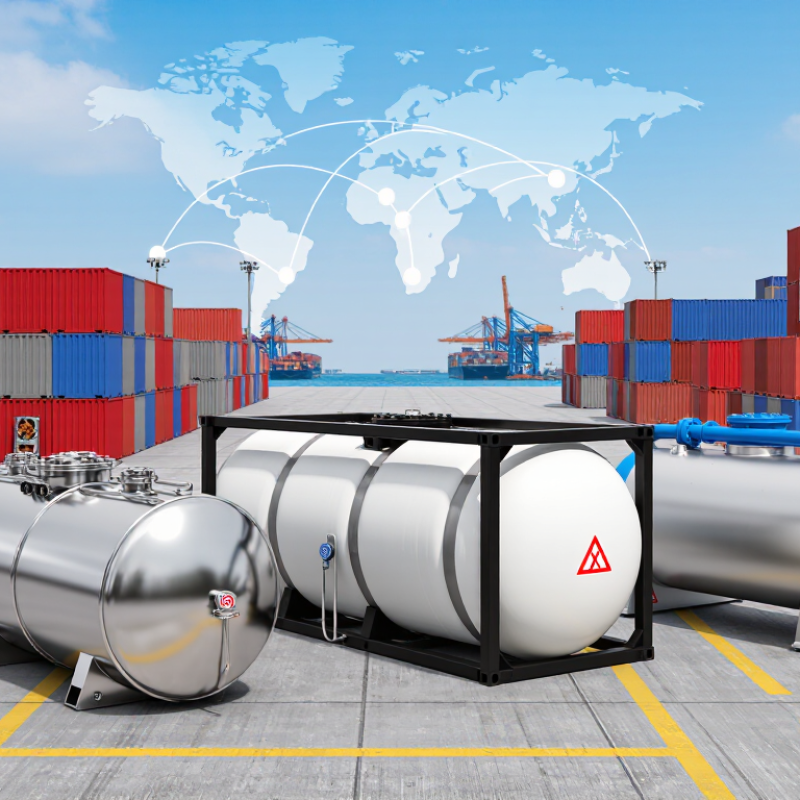
Tank Container Fundamentals and Operating Principles
2026 Top Tank Container Types for Global Buyers
Tank Container Fundamentals and Operating Principles
A tank container pairs a cylindrical vessel with a strong frame sized for standard transport equipment. The vessel holds liquid cargo, while the frame supports lifting and stacking. Its design rating, materials, and fittings determine which service it can safely perform. Standard tanks suit many compatible liquids; insulated or heated models help manage temperature-sensitive cargo. Not every tank has the same pressure limits or heating system. Check the equipment plate and technical documents.
During loading and unloading, pumps or gravity move liquid through designated valves. Pressure, temperature, and product compatibility matter throughout the trip. Liquid can surge as a container moves, so operating limits and any fitted baffles are important. A practical inspection checks closures, seals, visible damage, and valve condition. A clean-looking tank is not proof of readiness. Cleaning records and inspection status deserve equal attention. A familiar route does not eliminate the need to check the cargo and tank requirements.
Tips: Confirm the tank’s rating before loading. Verify that fittings match the transfer equipment. Keep temperature readings with shipment records when relevant. If a detail is unclear, pause and consult the equipment documentation or a qualified inspector.
