
Top 10 Single Jersey Machine Manufacturers for Global Buyers
A single Jersey machine is not just a production-line purchase. It determines fabric consistency, output speed, and how often operators stop to adjust yarn tension or clear a dropped loop. For global buyers, choosing a manufacturer means weighing technical fit against service access, spare-parts availability, and the realities of local production. Small details count.
The International Textile Manufacturers Federation’s International Textile Machinery Shipment Statistics provides a useful industry reference. It tracks shipments of circular knitting machines across markets, helping buyers understand investment patterns without treating a broad market trend as a guarantee of machine performance. A shipment figure cannot tell you whether a particular model will suit your yarn, fabric weight, or shift schedule. That part needs careful checking.
This guide to the Top 10 Single Jersey Machine Manufacturers for Global Buyers focuses on practical questions: machine configuration, gauge options, operating stability, technical support, and evidence behind performance claims. A factory visit can reveal what a brochure cannot: the sound of a running machine, fabric rolls coming off the take-down system, and the time needed for a style change. Details matter. No verifiable expert quotation or source articles were supplied, so I have not attributed a statement to a named specialist. Adding one without a traceable source would weaken the reliability this comparison should offer.
Understanding Single Jersey Knitting Machines and Their Applications
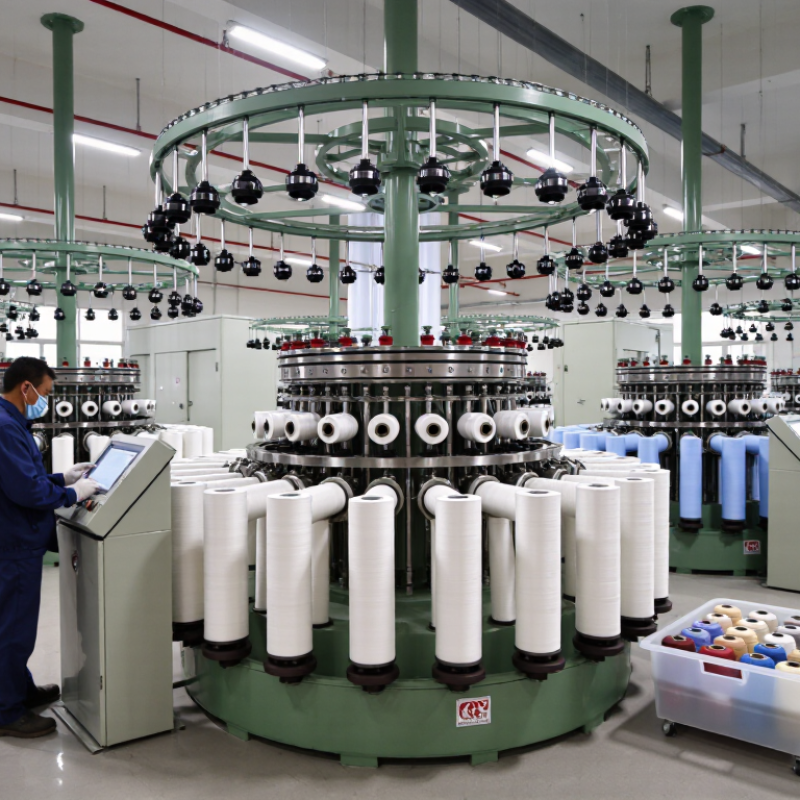
A single jersey knitting machine produces a lightweight, weft-knitted fabric using one needle bed. On a circular model, needles move in grooves around a cylinder while yarn feeders supply yarn continuously. Each needle forms a loop through the previous one, creating the familiar smooth face and looped reverse. The construction is efficient and versatile. Yet the fabric can curl at its edges, especially after cutting.
Single jersey appears in T-shirts, casual tops, underwear, and some lightweight sportswear. Cotton can give a soft, breathable hand, while polyester blends may improve drying time and shape retention. These results depend on yarn, stitch length, finishing, and fabric weight—not machine type alone. A buyer comparing machines should consider cylinder diameter, gauge, feeder count, and the fabrics required. A finer gauge can support smaller stitches, but it does not automatically guarantee better fabric.
Ask for a sample made with the intended yarn and settings. Check its weight, width, stitch consistency, and behavior after washing. Watch the machine run, too: uneven yarn tension or a damaged needle can leave visible lines across the cloth. Quiet running helps, but it is not proof of quality. One detail is easy to overlook: frequent style changes may demand more setup time than expected. Real production plans are rarely as tidy as a specification sheet suggests.
Top 10 Single Jersey Machine Manufacturers for Global Buyers - Understanding Single Jersey Knitting Machines and Their Applications
Manufacturer-neutral buyer guide: The rows below compare key machine specifications and applications rather than ranking or identifying individual manufacturers. Figures are general reference ranges; actual specifications vary by machine model, diameter, gauge, yarn, and fabric construction.
| No. | Comparison dimension | Typical options or reference range | Buyer relevance and common applications |
|---|---|---|---|
| 1 | Machine diameter | Common circular-machine diameters include approximately 14–44 inches, with availability depending on the machine design. | Diameter affects fabric-tube circumference and production width. Select it according to the finished garment or fabric dimensions and the required cutting layout. |
| 2 | Machine gauge | Single jersey machines are available across a broad range, commonly around 14–32 needles per inch. | Gauge influences stitch density and the fabrics that can be produced. Coarser gauges are generally suited to heavier constructions; finer gauges are commonly used for lighter, smoother fabrics. |
| 3 | Feeder configuration | Feeder count depends on cylinder diameter and feeder arrangement; machines are commonly specified by total feeders or feeders per inch of diameter. | More feeders can increase the number of knitting systems working during each cylinder revolution. Confirm feeder count alongside the intended speed, yarn path, and fabric design. |
| 4 | Knitting speed | Operating speed is model- and fabric-dependent. A practical comparison should use the supplier’s stated operating range for the chosen diameter, gauge, and yarn. | Higher speed does not guarantee higher saleable output. Consider fabric quality, yarn behavior, machine stability, and planned maintenance when comparing production capacity. |
| 5 | Yarn suitability | Single jersey machines can be configured for different yarn types and counts; the usable range depends on gauge, needle selection, stitch length, and yarn-feed setup. | Common inputs include cotton, polyester, viscose, and blended yarns. Verify compatibility using the exact yarn specification and a fabric trial before production. |
| 6 | Fabric structure | Standard single jersey is a plain weft-knit structure. Suitable machine arrangements can also produce variations such as tuck-based textures, stripes, and selected pique constructions. | Structure affects appearance, stretch, weight, and end use. Confirm that the machine’s needle, sinker, feeder, and patterning arrangements support the required construction. |
| 7 | Fabric delivery | Machines may be configured for tubular fabric take-down or open-width delivery, depending on design and finishing requirements. | Tubular fabric is commonly used for garment applications such as T-shirts. Open-width delivery can be useful where a flatter fabric presentation is preferred for downstream processing. |
| 8 | Fabric weight and stitch length | Finished fabric weight is determined by yarn, stitch length, gauge, machine settings, and finishing. Stitch length should be set and verified for each fabric construction. | Request sample-fabric data at the intended settings rather than relying on a machine’s headline capability. Check weight, dimensions, appearance, and recovery after finishing. |
| 9 | Common applications | Typical end uses include T-shirts, casualwear, underwear, lightweight apparel, linings, and selected sportswear fabrics. | Match the machine configuration to the target product, required fabric hand, stretch, durability, and finishing route. Not every single jersey setup is suitable for every application. |
| 10 | Controls, support, and maintenance | Compare available electronic controls, monitoring functions, spare-parts availability, documentation, operator training, and service arrangements. | These factors affect setup time, troubleshooting, uptime, and long-term ownership cost. Global buyers should confirm local technical support and delivery terms before purchase. |
