
What Are the Top Portable Metal Tool Box Types for Buyers?
Choosing the right Portable Metal Tool Box is not simply a matter of picking the largest container. Buyers must match box design with tools, transport habits, workspace limits, and daily working conditions. A compact cantilever box may suit electricians carrying small drivers, testers, and connectors. A deep drawer model may serve mechanics who need organized sockets, ratchets, and heavy wrenches. Chest-style boxes offer greater capacity, but their weight can become inconvenient after loading.
Tool-storage designer Mark Anderson says, “The best tool box is the one that protects access, not merely the tools.” That principle deserves attention. A box can look strong, yet waste time when fasteners jam, drawers sag, or the handle cuts into the hand. Real experience matters here. A steel box placed in a service van faces vibration, dust, and repeated opening. A home workshop box faces different pressures, including limited floor space and occasional rust.
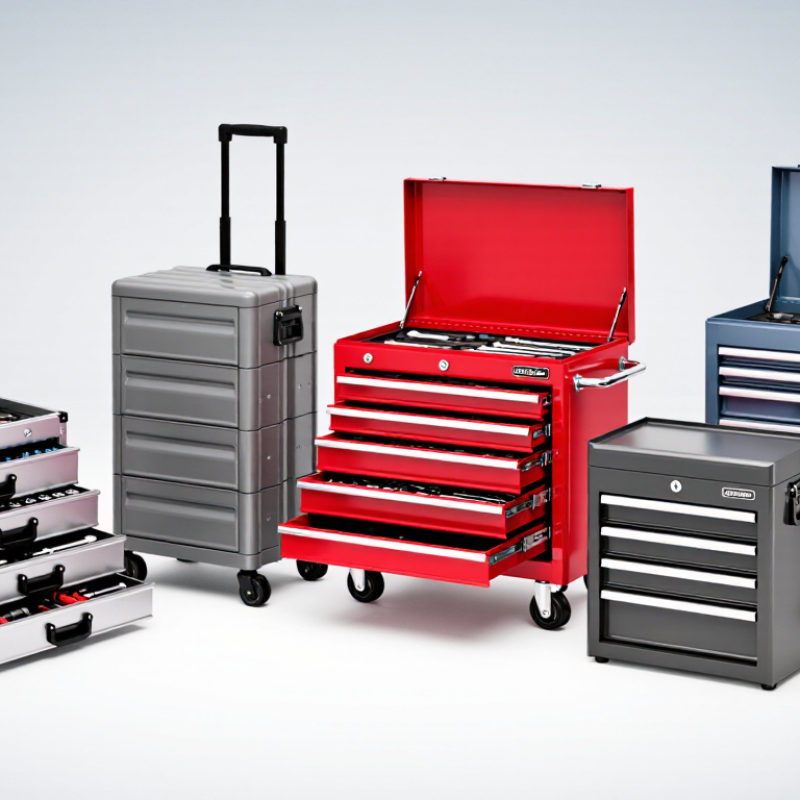
This guide examines the top Portable Metal Tool Box types for buyers, including cantilever, drawer, rolling, chest, and modular designs. Each type solves a different problem. None is perfect. A rolling box moves easily, but stairs expose its weakness. A compact case travels well, but its shallow tray may frustrate users with bulky tools. Buyers should inspect hinge movement, latch quality, steel thickness, drawer travel, and handle comfort before choosing. Small details decide long-term satisfaction. Sometimes, less capacity works better.
Portable Metal Tool Box Basics and Key Buying Criteria
Portable metal tool boxes come in several useful forms. Top-opening cases provide quick access to hand tools and small fasteners. Cantilever models expose multiple layers without requiring a full unpacking. Drawer-style boxes suit organized workbenches and controlled tool storage. Deep tray designs hold bulkier equipment, but they become heavy quickly. That matters. On-site technicians often carry a box farther than expected, especially across stairs or uneven floors.
A reliable choice starts with steel thickness, seam quality, and load rating. Thin panels may flex around the latch after repeated use. Look for reinforced corners, smooth hinges, and a handle with a comfortable grip. The empty weight deserves equal attention. I once chose a rigid case that protected tools well but became unpleasant after twenty minutes. That was my mistake. Measure the storage space, then compare the box’s internal height, width, and usable depth.
A corrosion-resistant finish helps in garages, vans, and humid work areas. However, thicker steel does not automatically mean better performance. Poor hinges can still ruin a sturdy box. Check whether the lid opens fully without scraping nearby surfaces. Test the latch with one hand while carrying a typical load. A fitted tray keeps small items visible, while removable dividers handle changing projects. For dusty environments, a close-fitting lid reduces contamination, though it may not create a complete seal. Small details often decide daily comfort.
