
Top 10 Petrol Tricycles for Global Buyers
Choosing a Petrol Tricycle is a practical decision about payload, fuel use, durability, and parts availability. For a trader moving produce through a crowded market, a sturdy rear deck matters more than a polished brochure. For a rural operator, dependable service support may decide whether the vehicle earns or sits idle. Details matter.
The data deserves careful reading. The Society of Indian Automobile Manufacturers (SIAM) reported about 692,000 three-wheeler sales in India during fiscal year 2023–24. That figure covers the wider three-wheeler category; it does not isolate petrol models or represent global demand. The International Energy Agency’s Global EV Outlook 2024 also documents strong electric three-wheeler uptake in India, a useful reminder that buyer preferences and operating costs are changing. Neither report ranks petrol tricycles worldwide. There is no single, authoritative global dataset that does so.
This guide compares ten models for international buyers, focusing on measurable specifications and practical ownership questions. Check payload ratings, engine details, fuel consumption claims, warranty terms, and local parts supply against the manufacturer’s documents. A quoted figure may not match real work. That deserves scrutiny. No independently verifiable quotation from a named Petrol Tricycle specialist was available for this introduction, so none is attributed here. Rather than invent expertise, we use published industry sources and flag where their coverage ends. The comparisons can still help—but local testing and dealer verification remain essential.
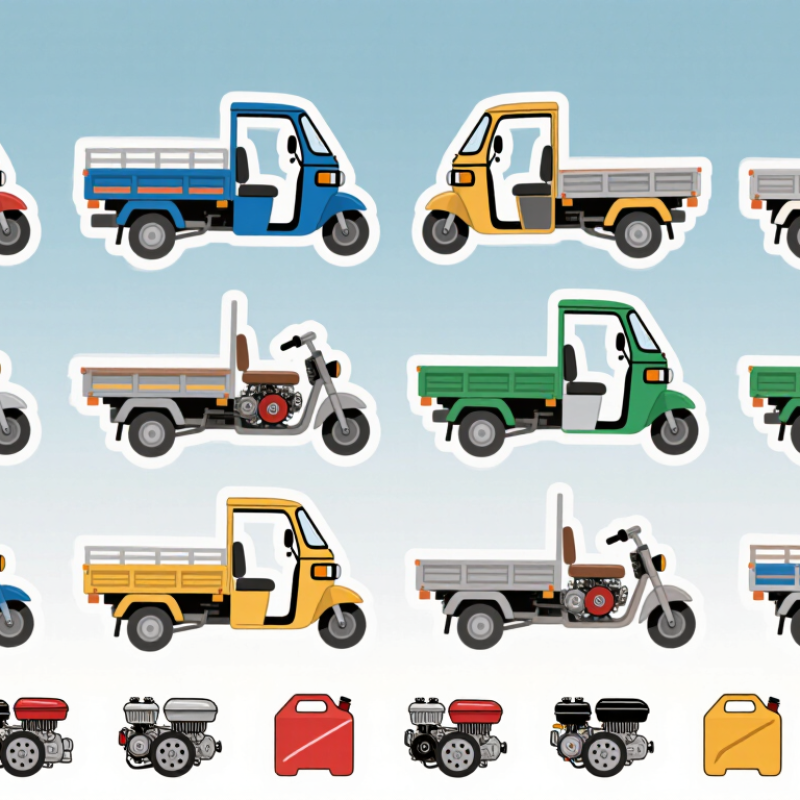
Petrol Tricycles: Design, Types, and Common Uses
Petrol tricycles pair a compact engine with a three-wheel chassis, giving them a different balance from two-wheel motorcycles. Their frames often place two wheels at the rear, where a cargo bed or passenger cabin can sit. A low loading height helps with sacks, crates, and tools. That matters.
Cargo models usually have an open rear platform, sometimes with folding side panels. Passenger versions add bench seating and a canopy, while utility models may use enclosed compartments for equipment. The body style changes the vehicle’s weight distribution, so buyers should compare the rated load with the work they expect to do. A tricycle that looks spacious can still feel strained when heavily loaded.
These vehicles commonly serve market deliveries, small farms, workshops, and short-distance passenger trips. Petrol engines can suit routes where refuelling access is practical, but fuel use and maintenance depend on load, terrain, and driving habits. On a rough lane, tyre condition and suspension become noticeable quickly. Not always. I would not judge a model by engine size alone; braking performance, frame strength, and parts availability matter too. Regular checks of tyres, brakes, steering, and fluid levels help keep daily operation predictable.
