
China Top PE Coloring Masterbatch Suppliers?
China has become a major production base for polyethylene color concentrates, serving packaging, agricultural film, pipe, cable, and consumer goods manufacturers. This makes supplier selection more complex than comparing price lists. A reliable evaluation should examine pigment dispersion, carrier compatibility, batch consistency, technical support, and export experience.
Industry research supports this wider view. Grand View Research identifies packaging as a leading application area for the global masterbatch market. Smithers also reports continuing demand for color and additive solutions in flexible packaging and durable plastics. PlasticsEurope’s market publications show polyethylene remains one of the most widely used polymer families worldwide. These findings help explain why China’s PE Coloring Masterbatch suppliers compete across both high-volume commodity grades and specialized formulations.
However, supplier rankings are rarely absolute. Public reports often combine color, additive, black, and white masterbatch segments. Their market boundaries may differ. Therefore, this guide focuses on practical evidence, including factory capability, laboratory testing, pigment quality, technical documentation, and customer feedback. A strong supplier should provide a clear technical data sheet, recommended let-down ratio, migration information where relevant, and samples for production trials.
Small details matter.
A uniform pellet surface can indicate stable processing, but it cannot prove final performance. Buyers should test color strength, melt flow, heat stability, and dispersion under actual extrusion conditions. This article reviews leading Chinese suppliers through an experience-based and evidence-conscious lens, while recognizing that product fit matters more than popularity. Supplier claims deserve verification. That is where careful purchasing begins.
What Is PE Coloring Masterbatch?
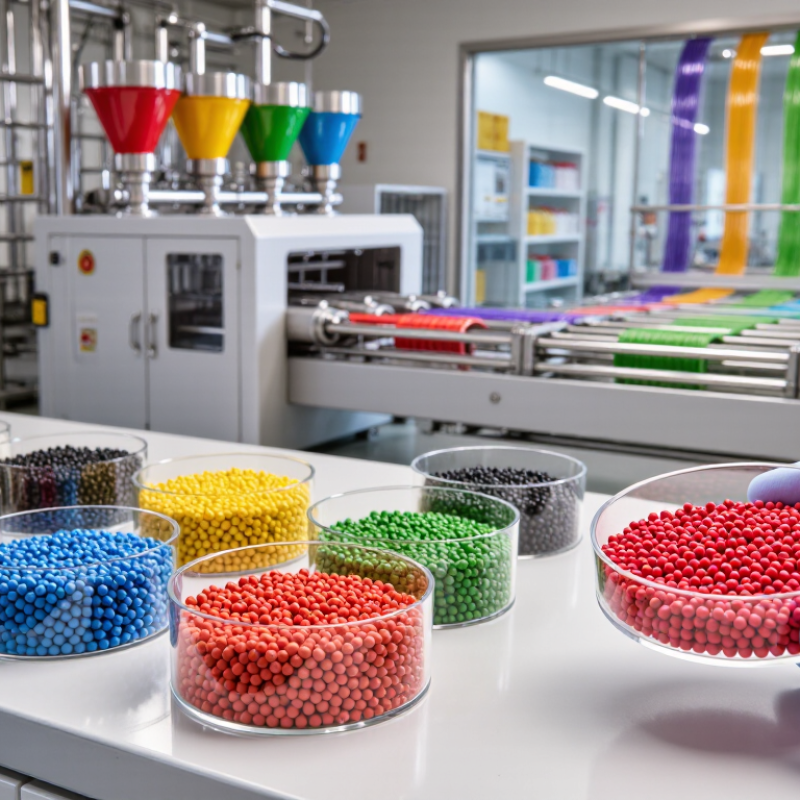
PE coloring masterbatch is a concentrated plastic additive used to color polyethylene products. It combines pigments, carrier resin, and carefully selected processing aids. The pigment is distributed through the carrier during controlled compounding. Manufacturers then mix the masterbatch with natural PE resin during extrusion or molding. Small pellets, strong color.
The carrier resin should match the application, such as film, pipe, bottle, or injection-molded parts. A suitable masterbatch improves dispersion and reduces pigment dust in the workshop.
Typical use levels range from 1% to 5%, but the correct ratio depends on shade strength and product thickness. Operators should check melt temperature, screw speed, and residence time. Excessive heat can weaken color stability or create surface streaks.
Reliable suppliers usually provide pigment information, dosage guidance, technical data, and batch traceability. Buyers should request molded samples, light-resistance results, migration data, and compatibility testing before regular production. A color that looks correct on a white laboratory plaque may appear different in a thin film. This happens often. Production trials matter more than attractive samples. Color matching is rarely perfect on the first attempt, especially when recycled PE or different resin grades are involved. Careful suppliers discuss these limitations instead of promising identical results in every process.
