
Who Are the Top Mobile Excavator Manufacturers in China?
China’s mobile excavator market brings together established construction-equipment groups and specialist manufacturers. Their machines may look similar in a product photo, yet differ sharply on a muddy site, a narrow city street, or a roadwork project with frequent stops. For buyers, the useful questions are practical: How quickly can the excavator travel between work areas? Does its hydraulic system respond smoothly under load? Are parts and trained service technicians available nearby?
This guide examines leading Chinese manufacturers through those details, rather than relying on rankings alone. It considers product range, operating performance, manufacturing experience, service support, and the kinds of jobs each brand is suited to. A compact machine may reach a restricted urban site, while a larger wheeled excavator may better handle repeated movement between road projects. Neither is automatically the right choice. Tire condition, attachment compatibility, operator comfort, and maintenance access matter, too.
A note on attribution: no source articles or verifiable expert quotation were provided, so I cannot responsibly invent a named specialist’s words. That caution reflects a real limitation of manufacturer comparisons: specifications are not the whole story, and claims should be checked against current product documentation and local dealer support. A closer look at China’s top Mobile Excavator manufacturers can help buyers build a shortlist, but site conditions and service access should guide the final decision.
What Defines a Mobile Excavator?
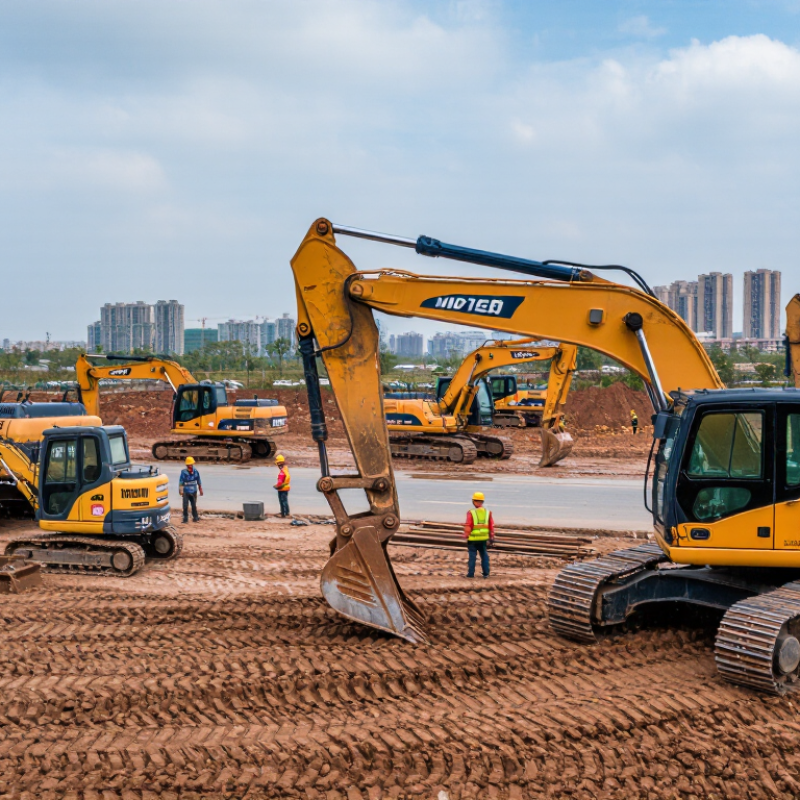
A mobile excavator is a hydraulic excavator mounted on wheels, rather than continuous tracks. Its upper structure rotates, while the boom, stick, and bucket dig, lift, and load. The wheeled undercarriage lets it move between nearby work areas without a transport trailer. That distinction matters. Mobility does not mean every machine can travel legally on every public road; weight, speed, and local rules still apply. Many models use a dozer blade or outriggers to steady the chassis during digging. On firm pavement, wheels are quick and convenient. On wet clay, loose gravel, or steep ground, they can lose traction and stability.
For buyers, “mobile” describes a trade-off, not a promise of better performance everywhere. Check travel speed, axle configuration, ground pressure, turning clearance, and support-leg setup against the actual site. A machine that shifts quickly between roadside drainage jobs may be less suitable for soft, uneven excavation. The UNEP Global Status Report for Buildings and Construction 2024/2025 reports that the sector used 34% of global energy and produced 37% of energy- and process-related CO₂ emissions in 2022. Those figures cover buildings and construction broadly, not excavators alone, so they should not be read as machine-level data. Still, fuel use and idle time deserve attention. I would also inspect tire wear and stabilizer response; mobility is useful, but it can be overrated.
