
What Are the Top Massage Table Types in 2026?
What Are the Top Massage Table Types in 2026? The answer depends on where, how, and by whom the table will be used. A mobile therapist carrying equipment up narrow stairs has different needs from a spa setting up a dedicated treatment room. Weight, stability, padding, adjustability, and cleaning requirements all matter. There is no single best table for every practice.
Demand for qualified massage services provides useful context. The U.S. Bureau of Labor Statistics projects employment of massage therapists to grow 18% from 2023 to 2033, much faster than the average for all occupations. That projection does not measure massage table sales, but it points to a growing professional field where practical equipment choices matter. A table that is easy to transport, quick to adjust, or comfortable during longer sessions can affect everyday workflow.
This guide compares portable folding, stationary, electric lift, hydraulic, and specialty Massage Table designs. It looks at real-world details: carrying weight, working height, face-cradle fit, frame construction, and the space needed around the table. Manufacturer specifications are useful, but they do not replace hands-on testing or checking warranty terms. Some published weight limits can also be confusing; static capacity is not always the same as working capacity. That distinction deserves more attention than it often gets.
The goal is not to crown one universal winner. It is to help readers match table type to treatment style, budget, client needs, and room layout—while recognizing that a promising specification on paper may feel different in practice.
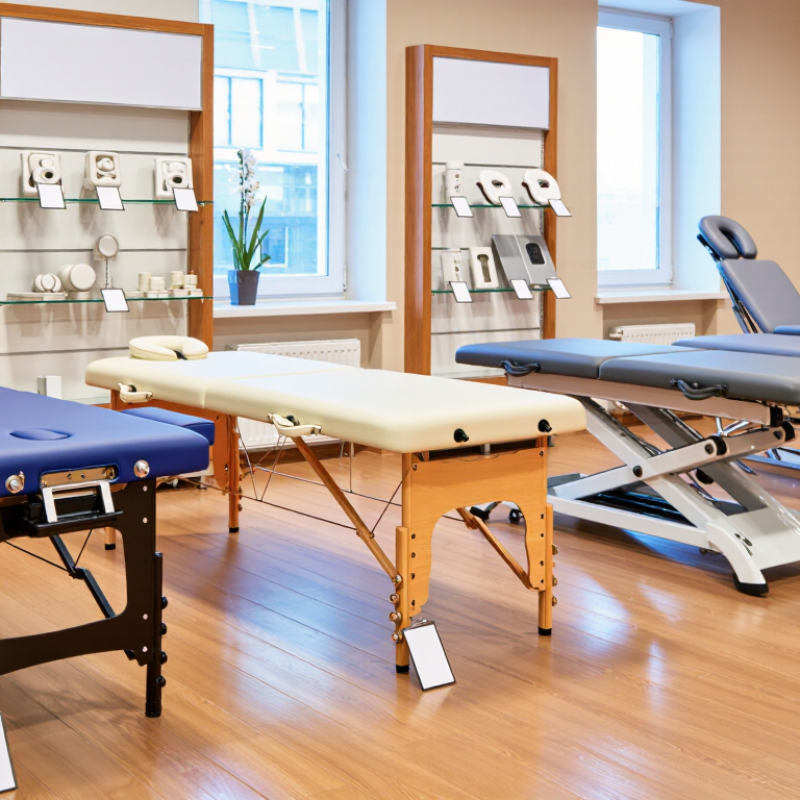
Massage Tables in 2026: Types, Uses, and Key Specifications
Massage tables in 2026 generally fall into three practical categories: portable, stationary, and electric. Portable tables suit mobile therapists and small rooms; folding legs and a carry handle make transport easier. They often weigh about 25–40 pounds, though lighter models may feel less stable. Check both the working-weight rating and the table’s own weight. These are not the same. A rating should reflect pressure from movement, not just a client lying still.
Stationary tables are a steady choice for dedicated treatment rooms. Wider tops can help larger clients feel secure, while adjustable legs accommodate therapists of different heights. Electric tables raise and lower with a foot control, useful when clients need easier access or treatments require frequent height changes. Look for a clear height range, a stable base, and controls that remain reachable during a session. Foam thickness and density affect comfort; upholstery should wipe clean without feeling cold or slippery. Small details matter. Test the face cradle, arm supports, and hinge locks before buying. Specifications can look convincing on paper, but a table that wobbles on your actual floor is still a poor fit.
