
Who Are the Top Hydraulic Couplers Manufacturers in China?
Hydraulic Couplers connect hoses, tools, and machines under pressure, so a small mismatch can cause leaks, downtime, or unsafe operation. Their importance grows alongside the wider hydraulic equipment market. Grand View Research estimated that market at about US$42.4 billion in 2023, with continued growth projected through 2030. This figure covers hydraulic equipment broadly, not couplers alone. That distinction matters.
China has a large manufacturing base, but a supplier’s location does not prove its quality. This guide compares manufacturers through practical evidence: product range, pressure and flow specifications, material options, testing procedures, customization, and export support. It also considers whether a maker clearly documents compatibility with relevant standards, including ISO 7241 for quick-action couplings. Fit matters more. A polished catalog is useful, but it cannot replace traceable test data or a sample that performs reliably in the intended application.
The companies discussed here should be treated as candidates, not as a definitive ranking. Public information can be incomplete, and factory capabilities may vary by product line. Buyers should confirm operating pressure, fluid compatibility, connection dimensions, and warranty terms directly with each manufacturer. Not just price. The aim is to help readers ask sharper questions and identify Chinese Hydraulic Couplers suppliers whose claims can be checked against real specifications and service needs.
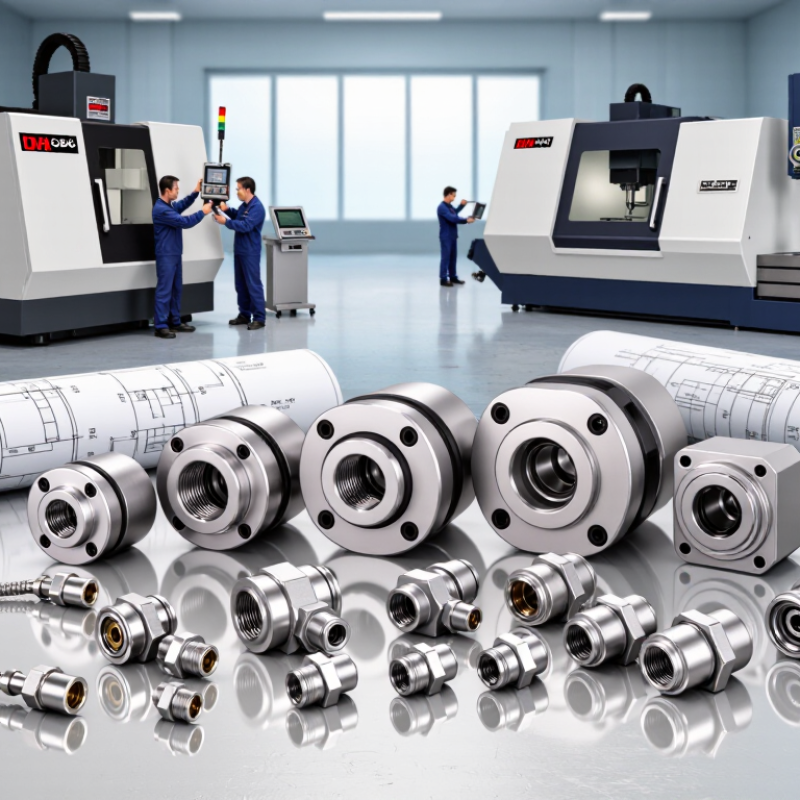
What Hydraulic Couplers Are and How They Work
A hydraulic coupler connects or disconnects fluid lines, allowing oil to move between a machine and an attachment. Many quick-connect designs use a spring-loaded valve inside each half. When the halves lock together, internal valves open and create a continuous flow path. When separated, the valves close to limit fluid loss and keep debris out. Click. Connected.
Couplers must match the system’s pressure, flow, fluid, and temperature requirements. A mismatch can cause leaks, restricted flow, heat, or difficult connection. ISO 7241-1:2014 sets out dimensions, performance requirements, and test methods for common hydraulic quick-action couplings. For flat-face designs, ISO 16028:2006 specifies interchangeability and performance requirements. These standards provide measurable checks, but they do not make every coupling suitable for every machine. Check the equipment documentation and inspect seals, threads, and faces before use. In practice, even a small scratch can matter. The tidy textbook explanation misses one thing: couplers often fail through wear, contamination, or rushed handling.
