
What Are the Top HDPE Floaters for Global Buyers?
Global buyers comparing Hdpe Floaters need more than a buoyancy claim. They need to know how each product performs in real water, under real loads, and after repeated handling. A floater that looks sturdy in a catalog may behave differently when exposed to sunlight, changing water levels, or a rough dock edge.
The strongest options usually pair suitable HDPE resin with consistent wall thickness, secure fittings, and a design matched to its intended use. Ask suppliers for dimensions, load guidance, UV-stability details, and inspection information. Check how the floats connect, too. A loose fastener can matter more than a polished product photo. Details add up. No single model suits every project, and buyers should compare specifications rather than rely on broad claims.
A verified industry quotation would add useful perspective here. The supplied material does not identify an expert or provide a source, so inventing a name or quotation would be misleading. Editorial placeholder: “[Verified expert name]: ‘[Confirmed quotation about selecting HDPE floaters].’” Replace it only after confirming the person’s expertise and exact words. That extra check is worth the effort. Even a careful comparison can miss a site-specific issue, such as wave exposure or uneven loading. This guide examines the practical differences buyers can verify before choosing Hdpe Floaters for global projects.
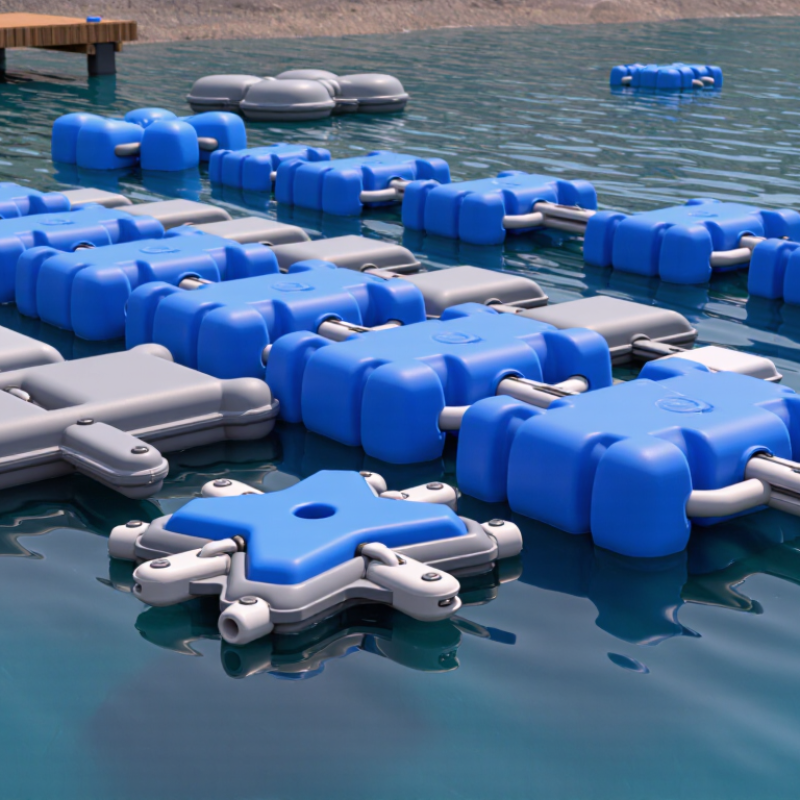
HDPE Floater Types: Rotomolded, Pipe-Based, and Modular Designs
HDPE floaters are not one standard product. Their construction affects buoyancy, handling, maintenance, and suitability for different water conditions. Rotomolded floaters have a molded shell with few seams, which can reduce potential leak points. Check wall thickness, UV resistance, and the specified load rather than judging by appearance alone. A sample section can reveal whether fittings feel secure and edges are properly finished.
Pipe-based designs use sealed HDPE pipe as the buoyant body, often with frames or brackets holding the assembly together. They can suit long, straight layouts, such as floating walkways or service platforms. Ask how end caps are sealed and how joints handle repeated movement. Fit matters. A small gap around a clamp can become a noisy wear point when waves keep the structure moving.
Modular floaters connect smaller units into a larger platform, making transport and layout changes easier. Their connectors need close attention: inspect locking parts, pin materials, and replacement availability before ordering. A modular layout may also flex more than expected under uneven loads. Not always. Compare rated capacity with the actual equipment, people, and wave exposure, then allow a practical safety margin. One detail buyers sometimes overlook is access for inspection beneath the platform; cleaning and checking connections should not require dismantling the whole structure.
