
Top 10 Hairpin Tube Benders for Global Buyers
Choosing among the Top 10 Hairpin Tube Benders for Global Buyers takes more than comparing brochure speeds. A machine may form neat U-bends on a showroom sample, yet struggle with thin-wall copper, changing tube diameters, or a full production shift. Look closely at bend consistency, tooling changes, automation, operator access, and the support available after installation. Small details matter. A stubborn clamp can slow an entire line.
Manufacturing quality expert W. Edwards Deming is widely associated with the principle, “Quality comes not from inspection, but from improvement of the production process.” That idea fits this purchase: buyers should assess how each Hairpin Tube Bender performs in a repeatable process, not just how polished its specifications look. Ask for sample bends using your tube material and dimensions. Check the bend radius, ovality, end alignment, and cycle time. Then ask how quickly wear parts can be supplied. A test on real production material is worth more than a confident sales promise.
This guide compares machines for different budgets, output targets, and factory setups. Some buyers need flexible changeovers; others need dependable, high-volume forming. There is no perfect machine. Even a strong option may bring trade-offs in footprint, training, or maintenance. The ranking is a starting point, not a substitute for checking your own requirements. One overlooked detail can become a daily headache.
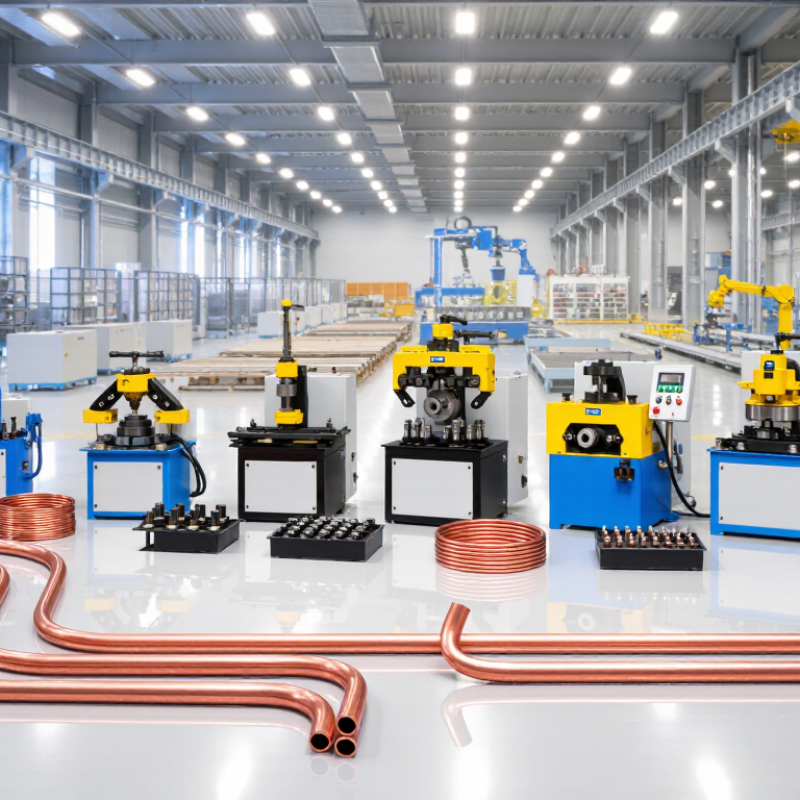
What Hairpin Tube Benders Do in Tube-Processing Operations
What Hairpin Tube Benders Do in Tube-Processing Operations
Hairpin tube benders form straight copper or aluminum tubing into U-shaped circuits for heat-exchanger coils. A feeder sets the tube length, clamps secure it, and forming tools guide each bend. The aim is more than a smooth curve. Consistent bend radius and leg spacing help tubes fit later coil-assembly steps. Small errors matter. A kink can restrict flow, while uneven legs may slow assembly. Operators should check tube diameter, wall thickness, material temper, and tool condition before running a new batch.
This is not a forecast of bender sales, but it highlights the scale of demand for cooling equipment. On high-volume lines, hairpin benders can reduce manual handling and produce repeatable parts. Still, automation is not magic. Thin-wall tubing can flatten, and a setup that works for one alloy may mark another. Measure sample bends for ovality, leg pitch, and end position before full production. Changeovers can take longer than the bending itself.
