
Top Gr5 Titanium Tube Manufacturers Worldwide
Gr5 Titanium Tube is valued for its high strength-to-weight ratio, corrosion resistance, and performance in demanding environments. It commonly refers to Ti-6Al-4V, a titanium alloy used in aerospace, chemical processing, energy, and other engineered applications. Boeing’s 2024 Commercial Market Outlook projects demand for 43,975 new commercial airplanes between 2024 and 2043. That forecast signals continuing pressure on aerospace supply chains, though it does not measure titanium-tube demand directly.
For buyers, a manufacturer’s name is only a starting point. Material traceability, dimensional consistency, heat-treatment control, and documentation can matter as much as price. ASTM B861 covers seamless titanium and titanium-alloy pipe, while ASTM B862 addresses welded pipe; buyers should check the applicable specification and product form rather than assume every tube meets the same requirements. That distinction matters. A polished catalog cannot prove batch quality, and published capabilities may not reflect current production capacity.
This overview examines leading Gr5 Titanium Tube manufacturers worldwide through practical criteria: manufacturing scope, quality systems, export experience, and application fit. USGS mineral-commodity reporting offers useful context on titanium feedstocks, but it cannot rank finished-tube suppliers. A limitation worth keeping in view. Supplier data can change, and public claims are not always independently verified. Readers should confirm certifications, mill test reports, tolerances, and delivery terms directly before making a sourcing decision.
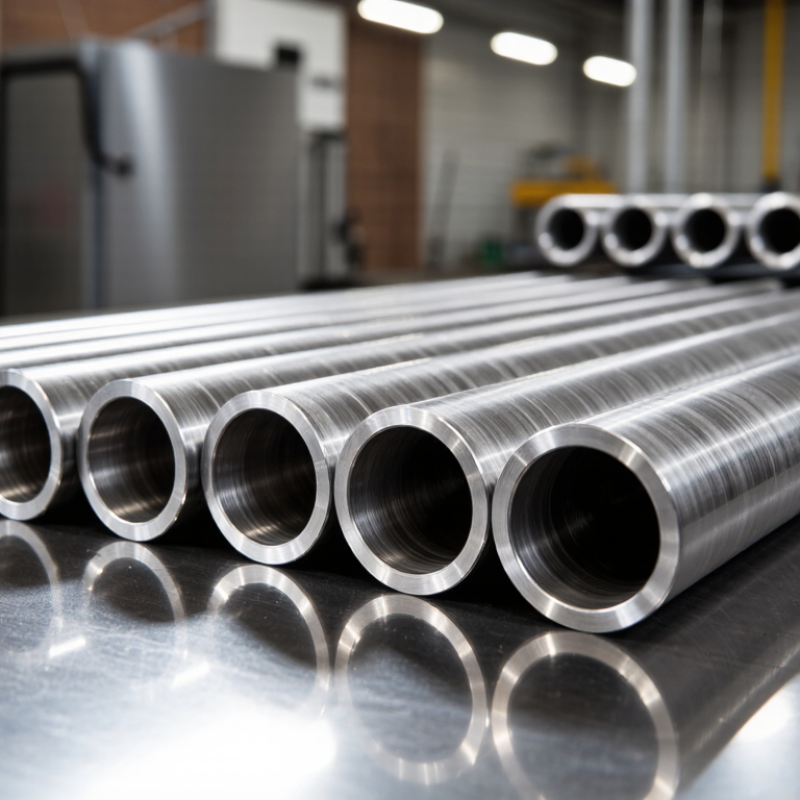
Grade 5 Titanium Tube: Ti-6Al-4V Composition and 4.43 g/cm³ Density
Grade 5 titanium tube is made from Ti-6Al-4V, an alloy containing titanium, aluminum, and vanadium. Typical specifications call for 5.5–6.75% aluminum and 3.5–4.5% vanadium, with titanium forming the balance. Exact limits depend on the applicable material standard. Small numbers matter. They affect how a tube is specified and verified.
Its density is approximately 4.43 g/cm³, giving it a low mass for its size compared with many steels. For design teams, this can help reduce component weight without making the tube feel flimsy in the hand. Grade 5 also offers a useful balance of strength and corrosion resistance. Yet density alone cannot predict performance; wall thickness, heat treatment, and service conditions matter too.
When evaluating tubing, check the certified chemistry, dimensions, and mechanical test results against the intended specification. A clean cut end and consistent wall thickness are useful visual checks, but they do not replace documentation. One detail is easy to overlook: processing history can influence properties, even when the alloy name is unchanged. A datasheet looks reassuring, though real service conditions may expose gaps in the design assumptions.
