
Top Automobile Bushing Manufacturers for Global Buyers
Choosing an Automobile Bushing manufacturer involves more than comparing prices or browsing a polished catalogue. These small components help control vibration, limit noise, and support suspension movement under changing road conditions. Their performance depends on material selection, design, manufacturing consistency, and fit with the vehicle application. Details matter.
For global buyers, supplier evaluation should include production capabilities, quality-control practices, testing methods, export experience, and communication standards. Ask how manufacturers manage rubber or polyurethane compounds, metal bonding, dimensional checks, and batch traceability. Request application data and samples where practical, then compare them against your technical requirements. A lower quoted price may not reflect service life, shipping costs, or the effort needed to resolve quality issues.
This overview introduces manufacturers serving international automotive markets and the factors buyers can use to assess them. It is intended as a starting point, not a substitute for technical validation or direct supplier checks. Capabilities can vary between product lines and production sites. A company’s reputation alone is not enough. Confirm current certifications, capacity, lead times, and warranty terms before making a decision. Some details may remain difficult to compare, especially when suppliers describe testing differently. That deserves a closer look. The right partner is one whose evidence, products, and support match the demands of your vehicle program.
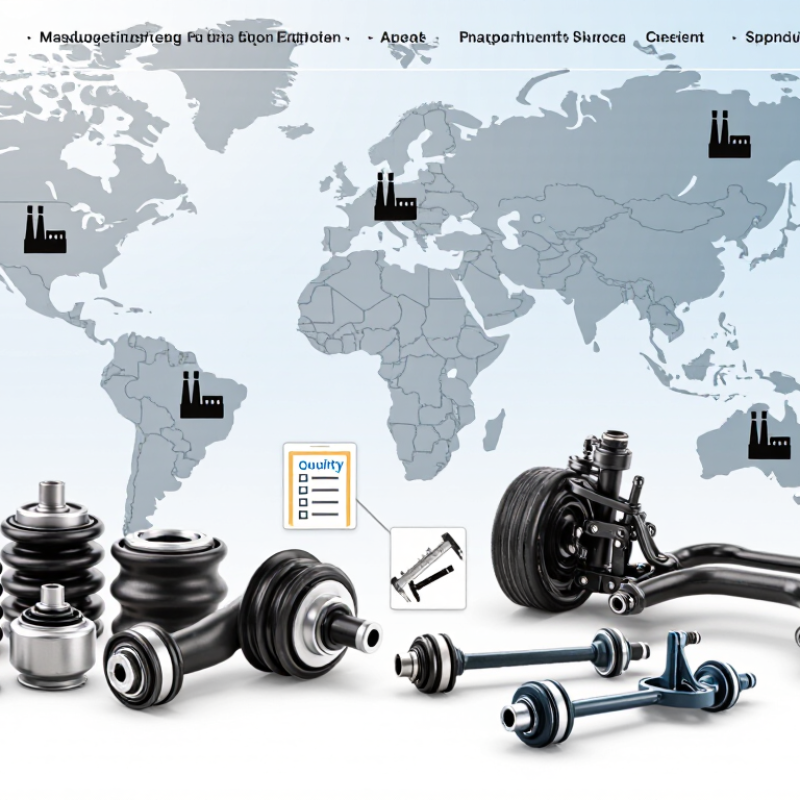
What Automobile Bushings Are and How They Function
An automobile bushing is a flexible joint fitted between parts that move slightly against one another. Most use resilient material, often rubber, held between metal sleeves. It cushions vibration, reduces harsh noise, and permits controlled movement at suspension or mounting points. That movement matters. A control-arm bushing can flex when a wheel crosses a pothole. It then helps the arm return to its working position.
Bushing design balances comfort with control. A very soft bushing may absorb bumps well but allow more unwanted movement. A firmer one can sharpen response, yet transmit more vibration into the cabin. The right balance depends on its location, vehicle design, and operating conditions. Over time, heat, age, road salt, and fluid exposure may weaken some materials. Cracks, separation, clunks, or uneven tire wear can be clues, but none proves a bushing is the cause. Inspection should include the surrounding joint and fasteners, not just the visible rubber. Small part, real effect. Diagnosis is not always obvious: a bushing may look acceptable while behaving differently under load.
| Bushing Type | What It Is | Typical Automotive Locations | How It Functions | Common Material or Construction | Key Buyer Evaluation Points |
|---|---|---|---|---|---|
| Rubber bonded to metal | An elastomer element bonded to one or more metal sleeves or components. | Control arms, suspension links, subframes, and engine or transmission mounts. | Allows limited movement while isolating vibration and reducing the transfer of noise and impact loads to the vehicle body. | Natural or synthetic rubber bonded to steel or other specified metal components. | Bond integrity, rubber compound, dimensions, load direction, environmental resistance, and consistency between production batches. |
| Hydraulic bushing | An elastomer bushing with internal fluid-filled cavities or channels. | Selected suspension and powertrain mounting applications. | Fluid movement within the bushing helps provide frequency- and direction-dependent damping, in addition to supporting movement and isolating vibration. | Elastomer body with sealed cavities containing fluid; design varies by application. | Leak resistance, damping behavior, temperature range, durability, dimensional fit, and application-specific validation. |
| Polyurethane bushing | A bushing made from a polyurethane elastomer, typically used as a replacement or performance-oriented component. | Suspension links, stabilizer bars, and selected chassis mounting points. | Supports and guides relative movement; its stiffness and damping characteristics differ from those of rubber and depend on the material formulation and geometry. | Molded polyurethane, sometimes used with separate inner sleeves or grease provisions. | Hardness specification, fit, noise and lubrication requirements, temperature suitability, and compatibility with the vehicle application. |
| Spherical bearing or joint bushing | A pivoting joint with a spherical bearing surface, sometimes incorporated into a suspension link or mount. | Selected control arms, suspension links, and performance or heavy-duty chassis applications. | Permits angular articulation while locating connected components; it is not primarily designed to isolate vibration like a compliant rubber bushing. | Metal bearing surfaces or a lined bearing arrangement, depending on design. | Permitted articulation, radial and axial load capacity, wear resistance, sealing, corrosion protection, and maintenance requirements. |
| Stabilizer bar bushing | A compliant support that holds a stabilizer bar in its chassis brackets while allowing bar rotation. | Stabilizer (anti-roll) bar mounting brackets. | Supports the bar and permits rotational movement as the suspension moves; it can also limit vibration and unwanted noise. | Usually molded elastomer; material and shape depend on the vehicle design. | Bar diameter and tolerance, bracket fit, material durability, resistance to environmental exposure, and noise performance. |
| General manufacturing capabilities to assess | Production and engineering processes relevant to multiple bushing designs. | Applicable across suspension, chassis, and powertrain bushing programs. | Process control helps ensure that the finished part meets specified geometry, material, bonding, and performance requirements. | May include elastomer compounding and molding, metal forming or machining, surface preparation, bonding, and assembly. | Review documented quality systems, material traceability, inspection methods, change control, production capacity, and ability to meet the buyer’s drawings and validation plan. |
| Application validation | Testing and inspection used to verify a bushing against its intended vehicle application and specifications. | Design qualification, production approval, and ongoing quality control. | Checks whether the bushing maintains the required fit and functional behavior under specified loads and environmental conditions. | Test methods and acceptance limits should be defined for the specific part and application. | Request relevant dimensional inspection, stiffness or load testing, durability results, environmental testing, and applicable customer-specific approvals. |
