
Top 10 Fiber Disc Suppliers for Global Buyers
Choosing a Fiber Disc supplier is about more than comparing catalog prices. Buyers need consistent abrasive performance, dependable delivery, clear specifications, and responsive technical support. A disc that cuts quickly on a weld seam may wear unevenly on stainless steel or leave a finish that needs extra work.
Dr. Stephen Malkin, a recognized researcher in grinding technology, offers a useful principle for evaluating abrasive products. A buyer-focused paraphrase of his work is: “Match the abrasive to the material, operation, and finish target.” That sounds obvious. In practice, it is easy to overlook when a quote lists only grit and diameter.
This guide compares ten suppliers for global buyers. It considers product range, abrasive grain, backing, grit options, available sizes, quality documentation, sample access, and export support. These details can help buyers shortlist vendors for production trials, rather than relying on polished product claims alone. Ask how a disc performs under your actual pressure, tool speed, and workpiece conditions. Request consistent batch specifications, too. Small differences matter.
A low price can be useful. But it is not the whole story. Supplier pages may not answer every question, and published performance figures may not match your shop floor. Treat this list as a starting point, then verify fit through samples, technical discussions, and measured results. The best choice may not be the most famous brand.
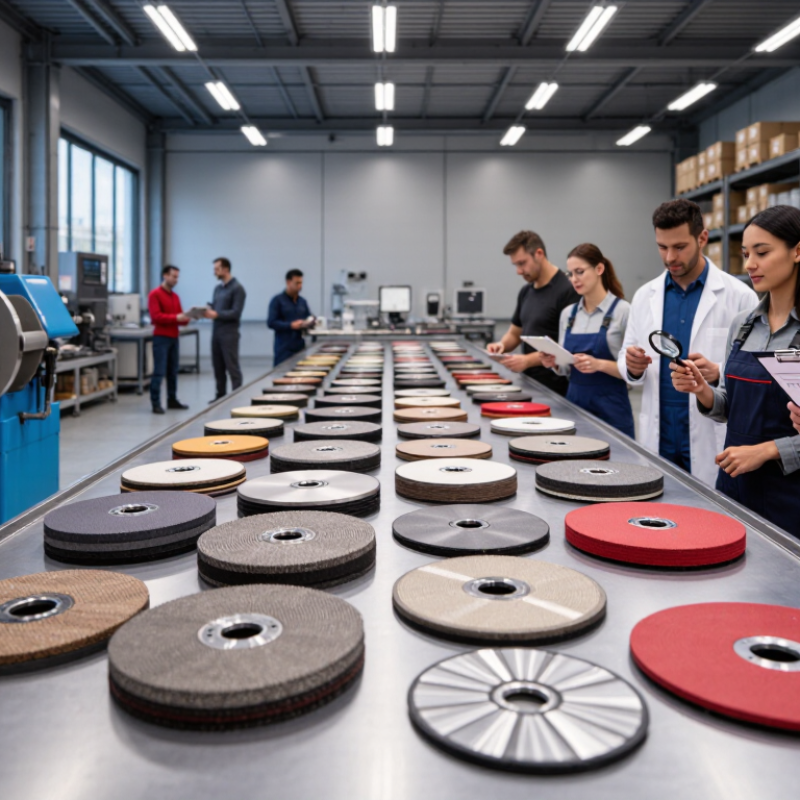
Understanding Fiber Discs and Their Industrial Uses
Fiber discs are abrasive discs bonded to a stiff fiber backing and fitted to a compatible backing pad. They are commonly used with angle grinders for weld blending, rust removal, deburring, and smoothing metal edges.
Aluminum oxide suits many general-purpose jobs; zirconia and ceramic grains can be useful on demanding metals. The right choice depends on the workpiece, required finish, and pressure. More pressure is not always faster. It can build heat, load the disc, and leave visible scratches.
Look closely at the disc before use. Check its maximum speed and diameter against the tool, and replace discs with cracks or damaged edges. Keep the work area clear, use suitable eye and respiratory protection, and follow the tool and disc makers’ instructions. Small details matter.
The U.S. Bureau of Labor Statistics recorded 2.8 million nonfatal workplace injuries and illnesses in private industry in 2022; this figure is not specific to abrasive work, but it underscores why routine controls matter.
A disc can also wear unevenly when held at an inconsistent angle. Not magic. Test a small area first, since the best grit on paper may still leave a finish that needs another pass.
