
China Top Diesel Pile Hammer Suppliers in Southeast Asia
Southeast Asia’s ports, bridges, industrial sites, and transport links rely on foundations built for demanding ground conditions. In this market, Diesel Pile Hammers in Southeast Asia remain a practical option for driving piles where impact energy, mobility, and straightforward field maintenance matter. Buyers comparing China-based suppliers should look beyond catalogue ratings. Hammer weight, impact frequency, pile compatibility, fuel use, spare-part access, and operator support all affect performance on site.
The Asian Development Bank’s 2017 report, Meeting Asia’s Infrastructure Needs, estimated that developing Asia would require US$26 trillion in infrastructure investment from 2016 to 2030, including climate-related costs. This is a regional infrastructure estimate, not a diesel-hammer market forecast. That distinction matters. Still, the scale of planned construction helps explain why equipment quality and dependable supplier service deserve close scrutiny. A hammer that looks competitive on paper may lose value when parts arrive slowly or site conditions differ from the specification.
Small details matter. Before choosing a supplier, compare verified technical documents, manufacturing and inspection records, warranty terms, and local service arrangements. Ask how the equipment performs with the pile types and soils on your project, and request references where possible. No source material was provided for a verifiable quotation from a named regional diesel-hammer expert, so I have not invented one. That gap is worth addressing in a published version: a properly sourced expert comment would strengthen the comparison and help readers assess supplier claims with greater confidence.
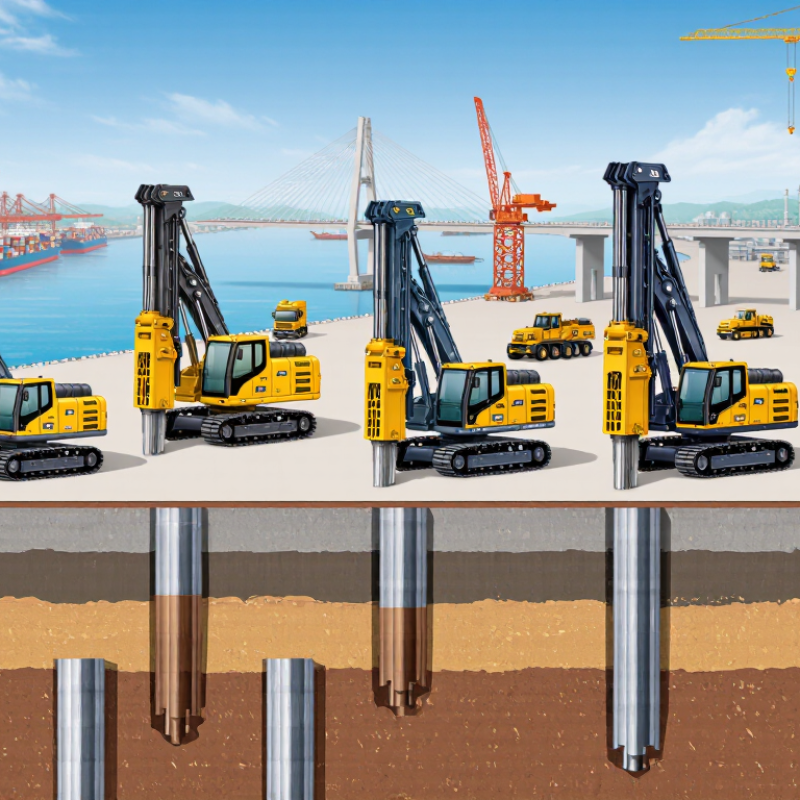
Diesel Pile Hammer Fundamentals: Ram Mass, Stroke, Blow Rate, and Energy
Ram mass sets the hammer’s impact capacity, but mass alone cannot predict pile penetration. Stroke is the ram’s travel before impact, and it strongly affects the energy available per blow. As a simple comparison, a 3,000-kilogram ram moving through a 2-metre stroke represents about 59 kilojoules of gravitational potential energy, before losses. Diesel combustion makes actual performance more complex. Treat this figure as an estimate, not a field reading. FHWA’s 2016 Design and Construction of Driven Pile Foundations manual recommends wave-equation analysis to assess the hammer, pile, and soil as one system.
Blow rate describes impacts per minute; it affects installation speed, but faster is not automatically better. A high rate can change soil response and increase stress in the pile. Watch the real signals: ram stroke, penetration per blow, and pile-head condition. ASTM D4945 outlines high-strain dynamic testing, which measures force and velocity during impact to assess transferred energy and pile response. Useful data. Still, one test does not capture every soil layer or operating change. In Southeast Asia, variable ground conditions make verified field records especially valuable. A supplier’s rated energy is a starting point, not proof of energy delivered at the pile.
