
Top 10 Chemicals Defoamer Suppliers for Global Buyers?
Choosing a Chemicals Defoamer supplier is rarely just a matter of comparing prices. Global buyers need products that control foam without disrupting the process, damaging equipment, or affecting the quality of the finished product. The right choice depends on the application: a wastewater tank, paper machine, coating line, and fermentation vessel can each require different chemistry. Small trials matter. A product that performs well in a supplier’s sample test may behave differently in a plant’s actual water, temperature, and mixing conditions.
This guide introduces ten suppliers for buyers to evaluate, not as a universal ranking. Useful comparisons include product range, technical support, supply consistency, documentation, and experience with the relevant industry. Ask for technical data sheets and safety data sheets, and confirm that products meet the requirements of your destination market and intended use. Price alone misleads. Check dosage, handling needs, and performance over a full operating cycle; a low-cost option may need more frequent addition. Practical details count, too, such as delivery lead times and whether a supplier can help troubleshoot persistent foam. Supplier claims deserve careful review, and independent plant trials are valuable where feasible. No supplier is best for every process, and this overview cannot replace application-specific testing. Use it as a starting point for focused questions and a more reliable shortlist.
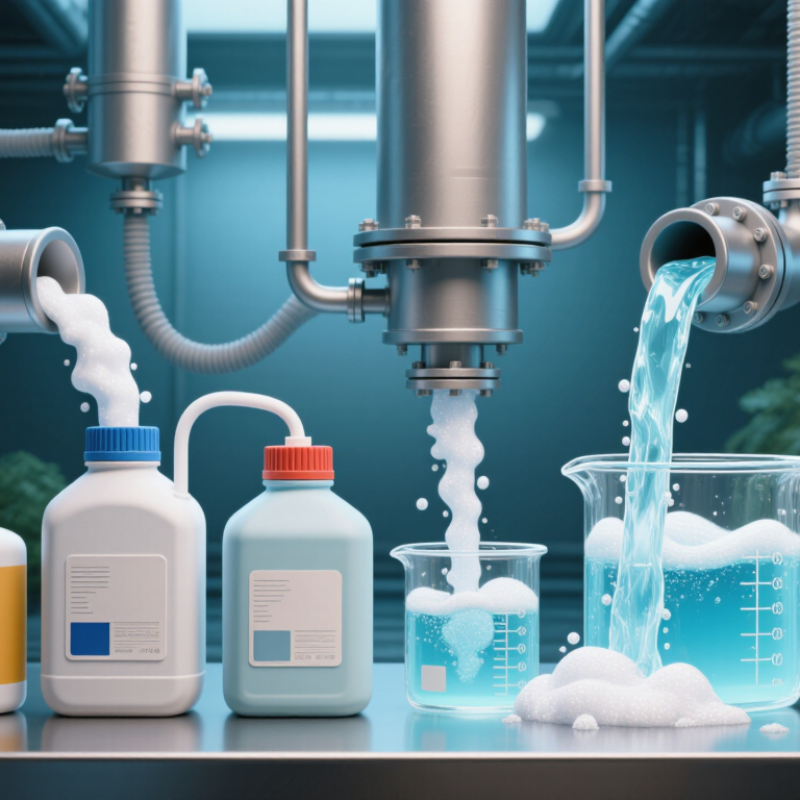
Defoamer Chemistry: Silicone, Mineral-Oil, and Water-Based Formulations
Defoamer chemistry shapes how a product behaves in a real process, not just how quickly foam disappears. Silicone-based formulations can work at low dosages and often spread rapidly across foam films. In a paper-coating line, operators may notice fewer persistent bubbles after a small adjustment. But silicone can cause surface defects or interfere with later coating steps when compatibility is poor.
That matters. Check the process, not only the foam.
Mineral-oil defoamers can suit systems where oil droplets disperse well and residue is acceptable. Water-based formulations may be easier to handle in aqueous processes, though storage stability and temperature can affect performance. None is universally best. A practical supplier discussion should cover active content, recommended dosage, mixing method, and performance across operating temperatures.
Ask for technical data and run a controlled trial using the actual process water or formulation. A clear beaker test helps, but it cannot reproduce every pump, shear rate, or residence time. I would treat trial results as useful evidence, not a guarantee.
