
Top Cooling Equipment Types for Global Buyers
Global buyers are entering a more demanding Cooling Equipment market. Rising temperatures, urban growth, and stricter energy standards are changing purchasing decisions. The International Energy Agency reports that space-cooling demand could more than triple by 2050 without stronger efficiency measures. That projection affects factories, hospitals, data centers, supermarkets, and homes.
Fatih Birol, Executive Director of the IEA, called cooling demand “one of the most critical blind spots in today’s energy debate.” His warning remains practical. A low-priced chiller may create higher electricity costs, maintenance delays, and uncomfortable indoor conditions. Buyers should examine seasonal efficiency, refrigerant type, noise levels, service coverage, controls, and total ownership cost. The best choice depends on climate, building use, grid reliability, and local technical skills.
The UNEP-led Cooling Emissions and Policy Synthesis Report also highlights the need for efficient equipment and lower-impact refrigerants. This makes heat pumps, variable-speed systems, evaporative coolers, industrial refrigeration units, and advanced air-conditioning systems important categories to compare. Small details matter. A dusty condenser can reduce performance. Weak after-sales support can stop a cold chain.
No single technology fits every market. That point is easy to overlook. This guide compares leading Cooling Equipment types for global buyers, using performance data, operating conditions, and practical procurement concerns. Reported efficiency figures can vary by test method. Buyers should verify certifications and local compliance before signing contracts.
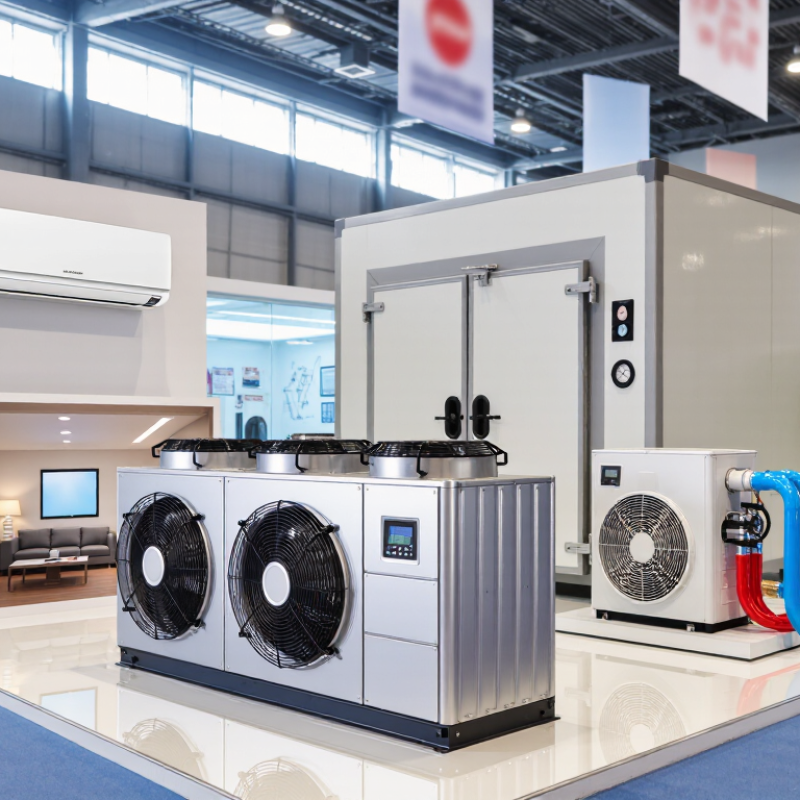
Global Cooling Demand: 1.6 Billion Room AC Units Installed (IEA)
Global cooling demand is no longer a niche market. The International Energy Agency reports about 1.6 billion room air-conditioning units installed worldwide. That figure covers homes, offices, clinics, shops, and classrooms. It also creates a major purchasing challenge. Equipment must match climate, room size, power supply, and maintenance capacity. One model cannot serve every market.
Split systems suit many permanent installations because they cool quietly and efficiently. Window units simplify replacement where wall openings already exist. Portable units offer mobility, but their exhaust hoses need careful placement. Inverter-driven systems can adjust output instead of cycling constantly. This may reduce energy use in suitable conditions. Buyers should compare seasonal efficiency, sound levels, cooling capacity, voltage, refrigerant requirements, and spare-part access. Bigger is not always better. Oversized equipment may cool quickly but control humidity poorly.
Procurement teams should request test data, installation instructions, warranty terms, and local service evidence. Check filters, drainage, corrosion protection, and performance under high outdoor temperatures. These details matter near coastlines and in dusty urban areas. Field feedback helps, yet it can be incomplete. A successful unit in one building may disappoint in another. Budget models can look attractive, but weak installation support may erase the saving. I would also question forecasts treating all 1.6 billion units as equivalent. Age, efficiency, usage hours, and climate differ widely.
