
Top 10 Container House Manufacturers for Global Buyers
Container House projects are attracting attention as buyers seek faster, adaptable ways to add living and working space. The broader case for off-site construction is substantial, but it needs careful interpretation. McKinsey’s 2019 report, “Modular construction: From projects to products,” estimated that modular building could create a $130 billion annual market in the United States and Europe by 2030. That estimate covers modular construction broadly, not container homes alone. The distinction matters.
Urban demand adds context. The United Nations Department of Economic and Social Affairs projected that 68% of the world’s population would live in urban areas by 2050 in its 2018 World Urbanization Prospects report. Yet a shipping container is not automatically a comfortable home. Insulation, ventilation, corrosion protection, structural changes, and local climate can affect performance and cost. Small details matter: a poorly placed window, for example, can reduce privacy or make a room harder to cool.
This guide compares ten Container House manufacturers for global buyers, focusing on practical evidence rather than polished renderings alone. It considers product range, customization, documented quality controls, project experience, delivery capability, and after-sales support. Buyers should also ask what is included in a quoted price, from foundations and utility connections to transport and installation. A low initial quote may leave important work outside the package. And the numbers are not guarantees. Manufacturer claims deserve independent checking, especially when specifications vary by project.
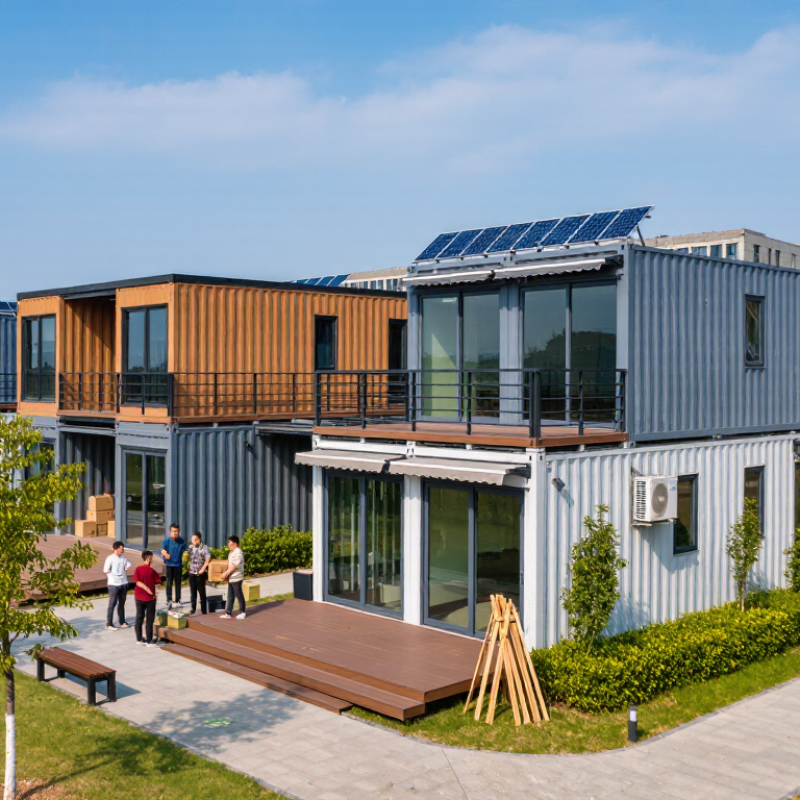
Container Houses: Manufacturing Models and Main Product Types
Container houses are produced through several manufacturing models. Conversion-based factories adapt steel freight containers, cutting openings for doors and windows and reinforcing the frame where needed. Purpose-built modular units use steel frames designed for buildings rather than cargo. Flat-pack systems ship panels and components separately, then assemble them on site. Each model affects transport, installation, and customization.
Main product types range from compact cabins and site offices to studios, family homes, and multi-unit buildings. A small cabin may need only one insulated room and basic services. A larger home requires careful planning for ventilation, plumbing, and electrical connections.
Look closely at insulation around steel framing, where thermal bridges can affect comfort. Also check how windows, roof joints, and floor finishes are detailed. A tidy layout can still conceal weak detailing.
Tips: Ask for drawings, material specifications, and a clear scope of factory work. Confirm which tasks happen on site. Compare usable interior dimensions, not just the exterior footprint. One detail is easy to miss: delivery access can limit the module size.
