
Top Types of Combination Sweeper Scrubbers for Buyers
A Combination Sweeper Scrubber can sweep loose debris and scrub floors in one pass, helping facilities reduce repeated machine trips. But “combination” does not mean every model suits every site. A compact ride-on may turn neatly around warehouse racks, while a larger unit can cover broad distribution-center aisles faster. Buyers should compare cleaning width, debris capacity, solution and recovery tanks, turning radius, runtime, and service access—not just headline productivity.
The need is substantial. The U.S. Bureau of Labor Statistics reports that janitors and building cleaners held about 2.4 million jobs in 2023, underscoring the scale of work behind clean indoor spaces. That figure is not a machine-sales forecast, but it gives useful workforce context. For market sizing, buyers can also consult commercial floor-cleaning equipment reports from firms such as Grand View Research, checking each report’s date, scope, and definitions before relying on a number.
A careful guide should also include an attributable industry expert’s view. However, no source material or verifiable quotation was provided here, so assigning a quote to a named expert would risk inventing evidence. That matters. A polished quotation can sound authoritative while saying little about a scrubber’s actual performance. Instead, this guide will compare the main machine types and the trade-offs buyers can verify through demonstrations: pickup on dusty concrete, edge cleaning, water recovery, operator visibility, and maintenance access. Small details matter. A squeegee that is awkward to reach can turn a routine shift into avoidable downtime.
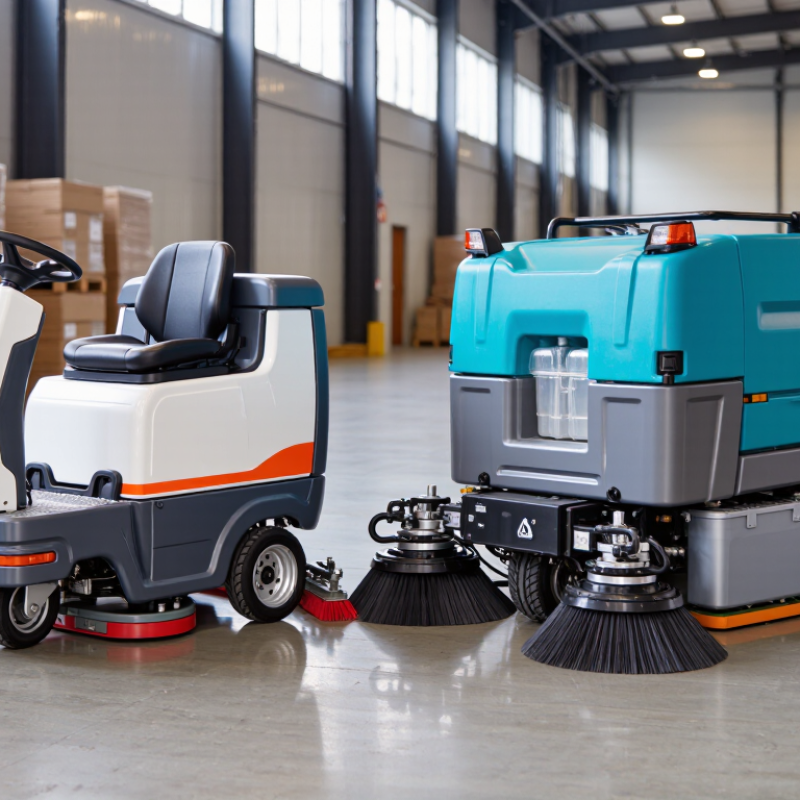
How Combination Sweeper Scrubbers Perform Two Cleaning Tasks
Combination sweeper scrubbers collect loose debris and wash the floor in one pass. A front broom or sweeping system feeds grit into a hopper, while brushes loosen stuck-on soil. The squeegee then gathers dirty solution into a recovery tank. This sequence reduces separate passes, but it does not make every floor equally clean. Damp dust, heavy grit, and oily residue can affect pickup and scrubbing differently.
ISSA’s 612 Cleaning Times reference provides task-based production benchmarks, a useful reminder that floor-care output depends on the task and conditions. For scale, a 28-inch cleaning path moving at 3 miles per hour covers about 73,920 square feet per hour on paper. That is a theoretical figure, not a realistic shift rate: turns, overlap, refills, and obstacles reduce coverage. Aisles with pallet edges may need slower travel, even when the floor looks open.
Tips: Check the broom, brush, and squeegee before each run. Measure the route first. Watch corners for grit the pickup system misses, and inspect the floor after a test pass. Recovery tanks can fill sooner than expected on heavily soiled floors; that trade-off is easy to underestimate.
