
China Top 180 Degree Concealed Hinge Supplier
Cabinet and furniture growth continues to shape demand for dependable hardware. Fortune Business Insights estimated the global furniture market at USD 677.09 billion in 2023, with a forecast value of USD 968.23 billion by 2032. This is a broad market indicator, not a direct measure of hinge sales. Still, it shows why buyers scrutinize small components that affect daily use.
A 180 Degree Concealed Hinge can support wide door access while keeping much of its mechanism out of sight. Yet the opening angle alone tells little. Door weight, panel thickness, mounting geometry, adjustment range, and cycle-test results all matter. Details matter.
For buyers comparing China-based suppliers, useful evidence includes dimensioned drawings, material specifications, inspection records, and samples tested on the intended cabinet. Ask how the supplier checks opening consistency and finish quality across production batches. Confirm whether the stated 180-degree movement fits your door and cabinet layout; product designs differ. A catalogue image cannot answer every question. This overview examines supplier capabilities, technical checks, customization, and sourcing considerations. It also recognizes a practical limitation: specifications can look convincing on paper, but installation and repeated use reveal weaknesses that documents may miss.
What Is a 180-Degree Concealed Hinge?
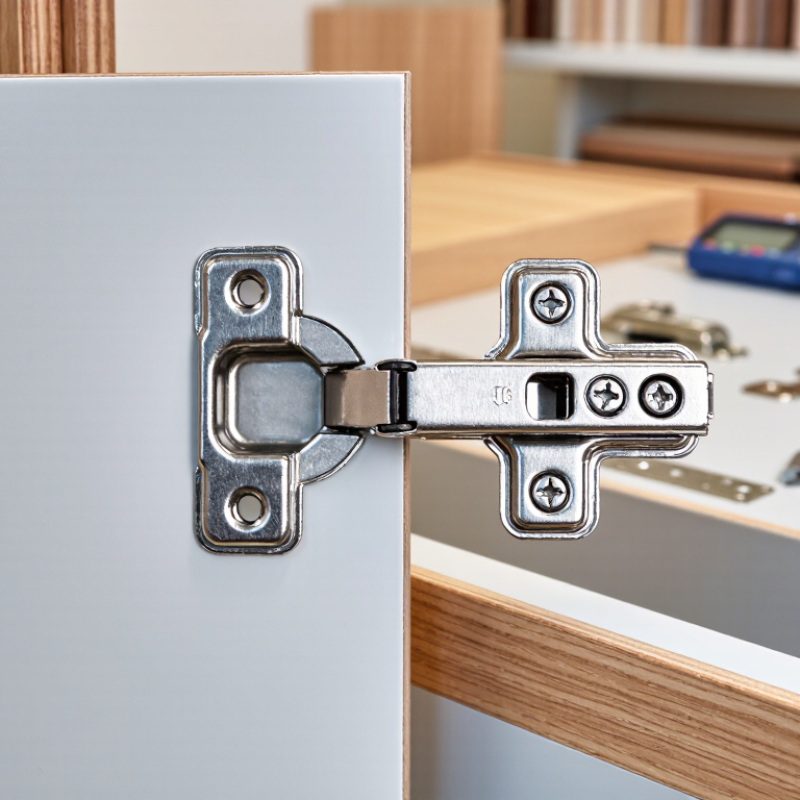
A 180-degree concealed hinge is a cabinet hinge designed to let a door swing wide while keeping most of its mechanism hidden when the door is closed. It connects the door to the cabinet frame through linked arms and pivot points. As the door opens, these parts guide it outward and around the cabinet edge. The wide opening can make drawers, shelves, and stored items easier to reach.
“180 degrees” describes the intended opening range, not a guarantee that every installation will reach exactly that angle. Cabinet walls, door thickness, mounting plates, and nearby handles can limit movement. That detail matters. Before fitting a hinge, check the manufacturer’s opening-angle specification and the available clearance. A careful installer also checks screw positions and door alignment, then tests the swing slowly. Small gaps count. In real projects, a hinge may look suitable on paper but still contact a side panel. Measuring the cabinet and door together is more reliable than choosing by angle alone.
