
What Are the Top Bolt Screw Types for Buyers in 2026?
Choosing the right Bolt Screw is less about finding one universal winner and more about matching the fastener to the job. A hex-head bolt may suit a steel frame, while a carriage bolt offers a smooth, rounded head for timber assemblies. Socket-head cap screws help where installation space is tight. Lag screws, machine screws, and flange bolts each solve different fastening problems. Small differences matter.
This guide compares common types buyers may encounter in 2026, with attention to head style, drive, thread, material, coating, and installation method. Buyers should check the product drawing and stated specifications, not rely on a product photo alone. A stainless fastener, for example, may resist corrosion in some settings, but the right grade depends on the environment and connected materials. There is no shortcut here.
The labels are not always used consistently across catalogs, and that can make comparisons harder than expected. We will clarify typical uses while noting where terminology or performance depends on the manufacturer’s specifications. Consider load, vibration, access for tools, exposure to moisture, and whether the joint may need frequent removal. A neat-looking fastener is not necessarily the right one. Reliable purchasing starts with measurable requirements, supplier documentation, and a careful fit check before ordering in volume.
How Bolts and Screws Differ in Design and Use
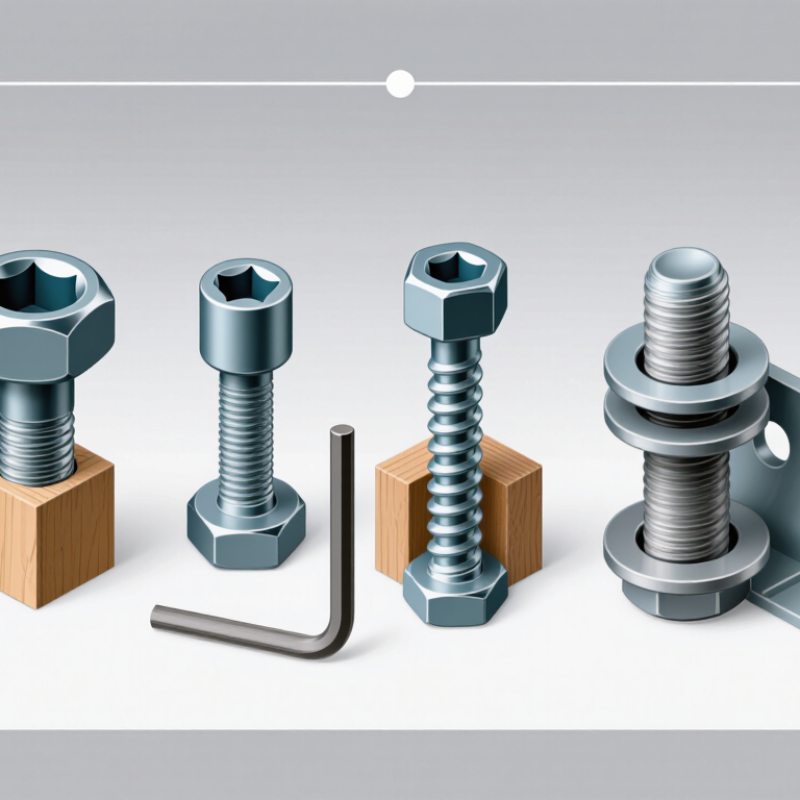
Bolts and screws may look similar on a workbench, but their connections differ. A bolt typically passes through an unthreaded clearance hole and is secured with a nut. Tightening often means turning the nut while holding the bolt head steady. A screw usually engages threads in the material or in a tapped hole. Some screws cut their own threads, so they can fasten parts without a separate nut.
The distinction affects what buyers should check. For a steel bracket joined to a frame, a bolt, nut, and washer can provide a firm, serviceable connection. For a cabinet panel, a wood screw’s tapered point and coarse threads can grip the material directly. Match the fastener’s diameter and length to the parts being joined, and consider whether vibration, moisture, or repeated removal is expected. Small details matter.
That rule is useful, but not perfect. Usage varies, and some fasteners called screws are used with nuts. Check the product specifications and installation instructions, not just the name. Head shape and drive type matter too: a hex head suits a wrench, while a countersunk head sits flush in a prepared surface. Choose the connection first, then compare material, coating, thread, and tool access. A neat-looking fastener is not necessarily the right one.
