
Top Aluminum Profile Manufacturers for Global Buyers?
Choosing among the top Aluminum Profiles manufacturers is not just a price comparison. Buyers need to check alloy consistency, dimensional tolerances, surface finish, production capacity, and delivery reliability. A polished sample matters. So does the batch behind it.
The International Aluminium Institute and CRU projected that global aluminium demand could rise by nearly 40% from 2020 levels, reaching 119 million tonnes by 2030. That forecast covers aluminium broadly, not profiles alone, but it signals growing pressure on suppliers. For buyers, supplier evaluation should therefore look beyond catalogue claims. Ask how manufacturers control extrusion temperatures, inspect die wear, and document each production run. These details can affect whether a long frame arrives straight, anodizes evenly, and fits the assembly line.
Miles Prosser, Secretary General of the International Aluminium Institute, has emphasized aluminium’s importance to the energy transition. That perspective is useful, but it is not a substitute for factory evidence. Request test records, material specifications, and clear answers about recycled content and sourcing. Compare lead times against actual capacity, not optimistic promises. One uncomfortable point: even a well-known manufacturer may not be the right fit for every order. This guide examines leading suppliers through practical criteria, helping global buyers weigh quality, customization, communication, and total landed cost before choosing a partner.
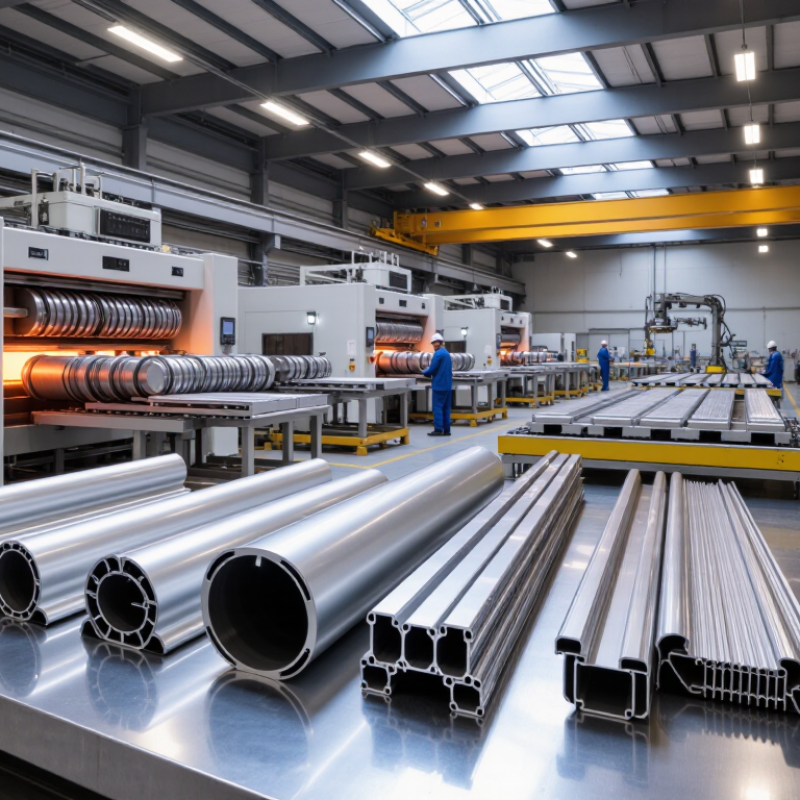
What Aluminum Profiles Are and How They Are Manufactured
An aluminum profile is a component with a consistent cross-section, such as a window frame, rail, or heat sink. Many are made by extrusion. A heated aluminum billet is pressed through a shaped steel die, producing a continuous length with the die’s cross-section. The profile is then cooled, stretched to correct distortion, cut, and often heat-treated to reach its required temper. Simple in outline. Not always simple to specify.
Alloy, wall thickness, die design, and cooling conditions affect strength, straightness, and dimensional accuracy. A thin-walled channel may save material, but it can also warp more easily during production. Buyers should check tolerances and temper requirements, not just the outer dimensions. Surface finishing, such as anodizing or powder coating, may follow fabrication. The International Aluminium Institute’s report Aluminium: The Element of Sustainability states that about 75% of all aluminum ever produced remains in use. That figure reflects aluminum’s long service life and recyclability; it does not guarantee that any particular profile will be recovered. A practical question remains: can the chosen design be manufactured consistently at the required volume?
