147 Mill Ridge Rd Suite 232
Lynchburg, Virginia 24502
Phone 757-982-3665

Top 10 Aluminum Perfume Bottle Suppliers for Global Buyers

Choosing a supplier for Aluminum Perfume Bottles involves more than comparing unit prices. Buyers also need to assess bottle weight, closure fit, surface finish, filling compatibility, and repeat-order consistency. A cap that feels loose or a coating that scratches during transit can undermine an otherwise polished product.

Industry data offers useful context, though it does not measure perfume packaging demand directly. The International Aluminium Institute reported global primary aluminum production of about 70.6 million tonnes in 2023. It also notes that recycling aluminum uses roughly 5% of the energy required to produce primary metal. These figures explain why recycled content and end-of-life planning matter, but actual outcomes depend on local collection systems and product design. Details matter. A sustainability claim should be checked against a supplier’s documentation, not inferred from the material alone.

This guide compares ten suppliers for global buyers, with attention to manufacturing capability, customization, quality controls, export experience, and communication. Ask for current specifications, sample bottles, coating details, and realistic lead times before committing to a large order. Confirm that pump or spray components work with the bottle neck and intended filling process. A sample can reveal issues that a product page cannot. No supplier is ideal for every brand; minimum order quantities, decoration options, and logistics can change the fit. The goal is a dependable shortlist, not a perfect-sounding promise.

Top 10 Aluminum Perfume Bottle Suppliers for Global Buyers

Understanding Aluminum Perfume Bottles and Their Global Market

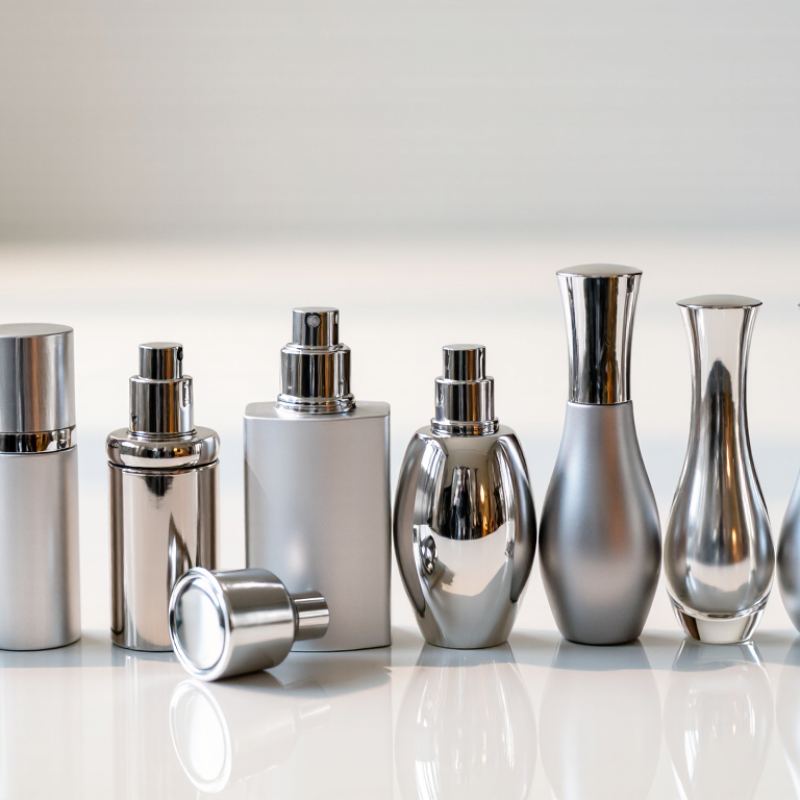
Aluminum perfume bottles sit at the intersection of packaging engineering and premium product design. Their low weight can reduce shipping load, while opaque walls help shield light-sensitive formulas. The metal also supports narrow shoulders, crisp edges, and fine surface finishes. Small details matter: an uneven neck can cause a pump to leak, and an incompatible inner coating may affect fragrance quality. Buyers should request compatibility testing, closure specifications, and sample bottles before approving production.

The global supply picture is substantial, but broad metal statistics do not reveal perfume-bottle demand. The International Aluminium Institute reported about 70.6 million tonnes of primary aluminum production in 2023. It also notes that recycling aluminum can use around 95% less energy than producing primary metal. That is useful, but not the whole footprint. Bottle design, recycled-metal content, coating, transport, and recycling access all influence impact. A recycled claim needs documentation, not just attractive packaging copy. Ask suppliers for material declarations and evidence of recycled content. Also check whether pumps and mixed-material components can be separated. It is a practical detail, often overlooked.

Key Criteria for Evaluating Aluminum Bottle Suppliers

Selecting an aluminum perfume-bottle supplier takes more than comparing unit prices. Ask for alloy specifications, wall-thickness tolerances, neck-finish dimensions, and coating-compatibility records. Request filled-bottle leak tests and drop-test results, not just attractive samples. Small details matter.

Check traceability from metal coil to finished bottle, along with lot-level inspection records and corrective-action procedures. The International Aluminium Institute reports that recycled aluminum uses about 95% less energy than primary aluminum. Treat that figure as context, not proof of a supplier’s footprint; request recycled-content evidence and the calculation boundary. The U.S. EPA’s 2018 Facts and Figures report put the aluminum-can recycling rate at 50.4%. Cans are not perfume bottles: liners, coatings, and local collection systems affect recyclability.

Compare production capacity, sample lead time, minimum order quantity, and shipment protection against the same forecast. A polished sample can hide variation across a full production run. One blind spot in any checklist is judging finish quality under showroom lighting; inspect bottles in neutral light and after contact with the intended fragrance. Ask for proof.

Profiles of 10 Aluminum Perfume Bottle Suppliers for Global Buyers

Global buyers can compare suppliers by production strengths rather than catalogue photos alone. A high-volume forming supplier is suited to standard cylindrical bottles and repeat orders; request sample measurements and production tolerances. A precision-machining supplier may handle unusual shoulders or threaded necks, but complex tooling can increase lead times.

A lightweight-packaging supplier focuses on thinner aluminum walls and lower shipping weight. Check that the bottle still feels sturdy in hand. A decoration specialist offers brushed, matte, or colored finishes; inspect samples under natural light for uneven coating.

A small-batch supplier can help test a new bottle shape without committing to a large run. Unit costs may be higher. A closure-focused supplier coordinates caps, pumps, and bottle openings, reducing fit problems during assembly. Ask for compatibility samples.

A recycled-material supplier can document its material inputs and explain how finish consistency is monitored. A regional export supplier may offer responsive communication and shorter transit routes, though capacity can vary by season.

A quality-led supplier provides inspection records for dimensions, coating, and leakage tests. Review the actual criteria, not just a certificate. A customization-focused supplier supports distinctive profiles, embossing, or surface textures, but prototypes may require several revisions.

A flexible contract supplier combines design assistance with adjustable order volumes. Its sample may look excellent, while a longer production run reveals color drift. Confirm repeatability, packaging protection, and delivery schedules before choosing a production partner.

Comparing Supplier Capabilities, Customization, and Minimum Orders

Supplier comparison should start with the bottle’s job, not a catalog photo. Ask for wall thickness, neck finish, pump compatibility, coating durability, and documented leak tests. Details matter. A 30-milliliter bottle with a narrow shoulder may look refined, yet its actuator can feel awkward in daily use. Request physical samples in the intended finish, then check color consistency under warm and cool lighting. For export orders, clarify carton strength, transit testing, and whether decoration survives rubbing. Capability is not just printing; it includes repeatable dimensions and stable assembly.

Minimum order quantities (MOQs) often change between standard bottles and custom tooling. Ask suppliers to quote stock-body, custom-color, and custom-shape orders separately, including setup charges and lead times. The International Aluminium Institute reports that recycling aluminum can use up to 95% less energy than producing primary aluminum. This makes recycled-content evidence useful, but it does not prove a bottle is recyclable in every local collection system. I still find MOQ comparisons slippery: a low opening quantity may carry higher unit costs or fewer finish options. Request the same specifications and annual-volume assumptions from every bidder.

Assessing Quality, Compliance, Shipping, and Sourcing Risks

When comparing aluminum perfume bottle suppliers, look beyond surface finish. Ask for the alloy specification, wall thickness, coating details, and closure tolerances. A bottle should feel consistent in the hand, with no sharp seams or uneven color. Request samples from a production run, not only a presentation sample. Samples can mislead.

Check whether the inner coating suits the fragrance formula and whether the pump and gasket materials have been compatibility-tested. Ask for test methods and records, such as leakage checks after temperature changes. Compliance documents should match the destination market and the exact bottle configuration. A certificate with a different coating or closure offers little reassurance. That matters.

Shipping can expose weak packaging quickly. Review carton strength, dividers, pallet stability, and protection against moisture during storage. Confirm lead times, minimum order quantities, replacement terms, and who pays for defects found after arrival. Keep a reserve supplier where practical. Still, extra checks add cost and slow decisions; buyers sometimes accept this trade-off too late. A careful review cannot remove every sourcing risk, but it can reveal where a supplier’s promises need evidence.

Top 10 Aluminum Perfume Bottle Suppliers for Global Buyers - Assessing Quality, Compliance, Shipping, and Sourcing Risks

How to read this table: The entries below are anonymous supplier profiles, not named or independently verified companies. Order is not a verified ranking. MOQ and lead-time figures are indicative market-planning ranges, not guarantees; confirm specifications, certificates, capacity, and shipping terms directly with each supplier.

Profile Typical offering Quality checks to request Indicative MOQ Indicative production lead time Compliance evidence to verify Shipping considerations Key sourcing risk
1. Stock-bottle specialist Standard aluminum bottles and closures; limited decoration options. Capacity and weight checks; closure fit; finish consistency; leak testing with the intended sprayer. Often 500–5,000 units for stock items; confirm by SKU. About 2–5 weeks, subject to stock and decoration. Request current quality-system documents and material declarations relevant to the destination market. Ask for packed-carton dimensions, gross weight, and pallet details before comparing freight quotes. Stock availability or color may differ from samples; confirm the production lot in writing.
2. Custom-shape OEM Made-to-order bottle shapes, dimensions, and tooling. Approved drawings; dimensional inspection; tooling trial samples; batch-to-batch fit and finish checks. Often 5,000–20,000+ units; tooling may be charged separately. About 6–12+ weeks, including tooling or sample approval. Verify ownership, storage, and permitted use of molds and technical drawings in the contract. Custom cartons and protective inserts can affect volume and freight cost; request a packing test. Tooling delays, dimensional changes, or unclear mold ownership can disrupt repeat orders.
3. Decoration-focused producer Printed, coated, anodized, or otherwise decorated aluminum packaging. Color approval under agreed lighting; print registration; coating adhesion and abrasion checks; rub and cure tests where applicable. Often 2,000–10,000 units per design or color; confirm setup minimums. About 4–8 weeks after artwork and color approval. Request ink/coating declarations and destination-specific chemical compliance documentation where applicable. Use separators or protective sleeves where finishes may scuff in transit. Color variation and decoration defects can increase rejects; define a written acceptance standard.
4. Integrated bottle-and-sprayer supplier Bottle, pump, collar, cap, and assembled packaging sourced as a set. Component compatibility; spray output and pattern; crimp or fit integrity; leakage and repeated-actuation tests. Often 1,000–10,000 sets, depending on components and customization. About 3–7 weeks if components are available; longer for custom parts. Request component material declarations and compatibility data for the intended fragrance formula. Confirm whether parts ship assembled or separately and how components are protected from contamination. A bottle may pass inspection while the pump or gasket fails with the actual formulation.
5. Refillable-format specialist Reusable or refillable bottle formats with replaceable or refill-compatible components. Repeated opening and closure cycles; refill interface fit; leakage after refilling; component durability. Often 2,000–10,000 units; custom refill systems may require higher minimums. About 4–9 weeks, depending on interface and testing requirements. Substantiate any recyclability or reuse claims for the exact components and target markets. Check the assembled product’s shipping orientation and protective packaging for moving parts. “Refillable” performance claims may not hold without user-cycle and leakage tests.
6. Premium-finish producer Higher-specification finishes, heavier components, or coordinated luxury packaging. Surface inspection under agreed lighting; finish durability; fit tolerances; approved master sample comparison. Often 3,000–15,000 units per design; bespoke details may raise the MOQ. About 5–10 weeks after specifications and samples are approved. Check claims and documentation for coatings, decorative materials, and packaging components separately. Premium finishes may need individual protection, increasing carton volume and handling needs. Higher unit value and cosmetic sensitivity increase the cost of damage and quality disputes.
7. Export-oriented packaging supplier Standard and customized bottles with established export packing and documentation processes. Pre-shipment inspection; carton drop or transit testing; lot traceability; quantity reconciliation. Often 1,000–10,000 units, subject to product and market. About 3–8 weeks, excluding international transit and customs clearance. Verify that certificates are current, authentic, issued to the relevant facility, and applicable to the ordered product. Agree Incoterms, export documents, carton marks, and responsibility for freight and insurance before ordering. Export experience does not guarantee correct classification, customs paperwork, or destination-market compliance.
8. Regional short-run converter Smaller production runs, regional sourcing, or localized decoration and assembly. Incoming-material checks; in-process inspection; documented final inspection; sample retention. Potentially 500–3,000 units for standard products; customization varies. About 2–6 weeks, depending on material availability and production queue. Request traceability records and any required market-specific declarations for the actual product configuration. Regional production may shorten transit, but verify actual origin, routing, and delivery terms. Smaller operations may have less backup capacity during demand peaks or equipment downtime.
9. Sustainable-materials-focused supplier Aluminum packaging promoted for recycled content, recyclability, or reduced material use. Verify alloy and wall-thickness specifications; test closure performance; confirm recycled-content evidence and chain of custody. Often 2,000–10,000 units; specialty material claims may affect minimums. About 4–9 weeks, depending on material sourcing and verification steps. Request supporting evidence for environmental claims; assess the complete pack, including pump, coating, and label. Confirm export packaging protects the product without undermining the intended material-reduction claim. Broad recyclability or recycled-content claims can be misleading if they are not substantiated for the finished package.
10. Trading company with factory partners Sourcing across multiple factories, often combining bottles, closures, decoration, and cartons. Identify the actual manufacturing sites; approve samples from the production site; inspect each critical component and lot. Often 1,000–10,000 units, depending on the factory and combined order. About 4–10 weeks; coordination across factories can add time. Check certificates against the actual production facilities, not only the seller’s office or another factory. Clarify whether goods ship consolidated or from multiple origins and who manages export documentation. Factory substitution, unclear accountability, and fragmented quality control can complicate corrective action.

Buyer checks before purchase: Approve a production-representative sample; define tolerances and defect remedies; verify factory identity and current compliance documents; test the bottle, closure, and intended fragrance together. Empty packaging and filled perfume can have different transport requirements: alcohol-based perfume may be regulated as dangerous goods, so confirm classification, packaging, carrier acceptance, and documentation for the filled product with a qualified shipper.